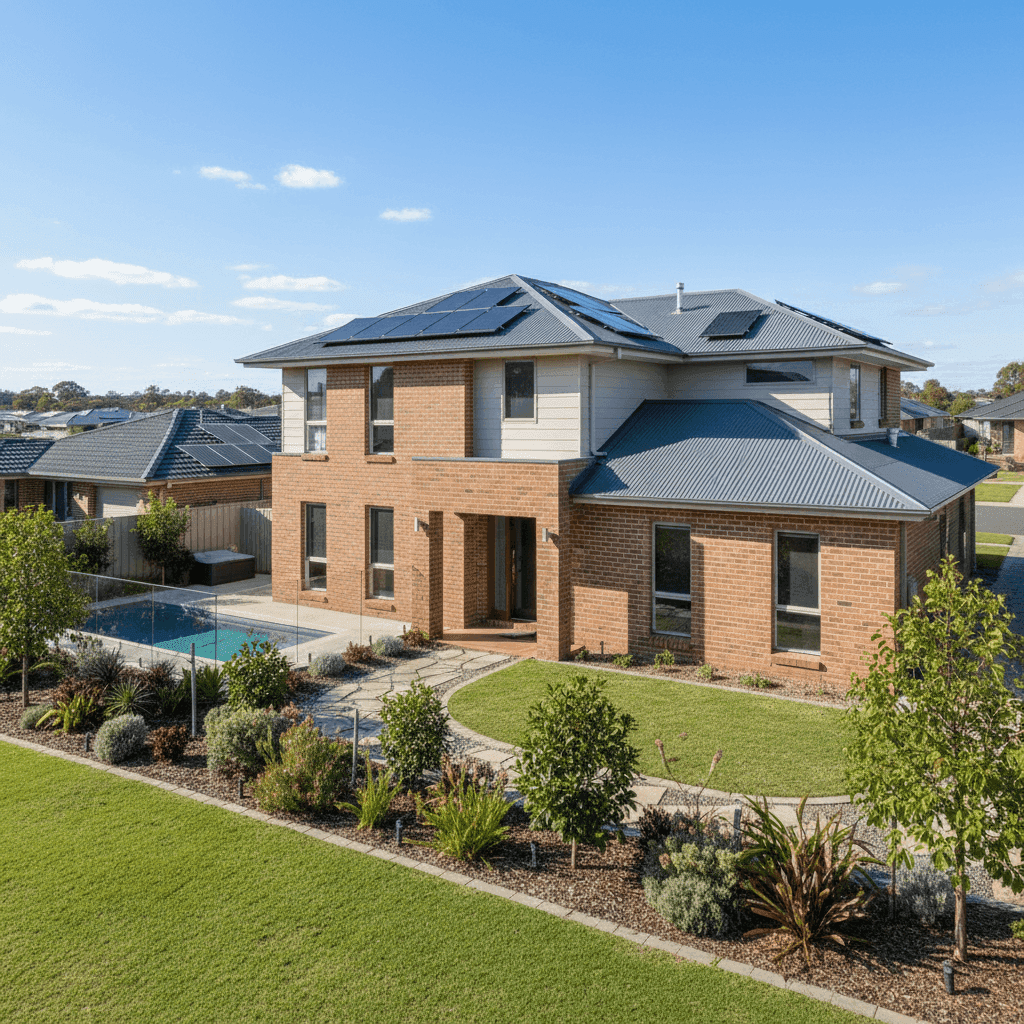
Green Point is a leafy, well-established suburb on the Central Coast of New South Wales, sitting within the 2251 postcode and offering the kind of spacious, family-friendly living that draws buyers away from Sydney's bustle. For a five-bedroom, four-bathroom free-standing home in this area — brick veneer walls, a Colorbond roof, built back in 1970, and sitting on stumps with a pool, solar panels, and ducted climate control — home and contents insurance is a significant household expense. This article breaks down a recent quote of $5,791 per year (or $555/month) for exactly this type of property, with a building sum insured of $1,664,000 and contents valued at $178,000, and puts it in context against local, state, and national benchmarks.
---
Is This Quote Fair?
The short answer: it's on the higher side, but not alarmingly so given the property's profile.
This quote has been rated Expensive (Above Average) when measured against comparable properties in the area. The suburb average for Green Point sits at $3,928/year, with a median of $3,472/year — meaning this quote comes in roughly 47% above the local average and about 67% above the median. That's a meaningful gap, and worth understanding before simply accepting the number.
However, context matters enormously in insurance pricing. A few things stand out immediately:
- The building sum insured is substantial. At $1,664,000, this is a high replacement-cost figure, which directly drives the building premium component. Larger, older homes with quality fittings often carry higher rebuild costs than their market value might suggest.
- The property sits at the 75th percentile of local quotes, which is $5,192/year — so this quote is above even that upper quartile marker, but not wildly out of range for a property of this size and specification.
- The excess is $1,000 for both building and contents, which is fairly standard. Opting for a higher excess is one lever homeowners can pull to reduce premiums.
The quote is expensive relative to the suburb, but the property itself is not a typical Green Point home — at 367 sqm with five bedrooms, four bathrooms, a pool, and solar, it's larger and more complex than the average insured property in the area.
---
How Green Point Compares
Understanding where Green Point sits in the broader insurance landscape helps frame whether this premium is a local quirk or part of a wider trend. You can explore the full data on the NSW insurance stats page or the national overview.
| Benchmark | Average Premium | Median Premium |
|---|---|---|
| Green Point (NSW 2251) | $3,928/yr | $3,472/yr |
| Central Coast LGA (NSW) | $8,387/yr | — |
| New South Wales | $9,528/yr | $3,770/yr |
| National | $5,347/yr | $2,764/yr |
A few observations worth noting here. The NSW state average of $9,528/year looks alarming, but the median of $3,770/year tells a very different story — the average is being dragged upward by high-value properties and high-risk areas. Green Point's median of $3,472/year is actually quite close to the NSW median, suggesting it's a relatively stable insurance market within the state.
Interestingly, the Central Coast LGA average of $8,387/year is notably higher than Green Point's suburb average, which may reflect that other parts of the LGA carry higher risk profiles — flood-prone areas or properties closer to bushland, for instance. Green Point itself appears to be a comparatively lower-risk pocket within the broader region.
At $5,791/year, this quote sits above the national average of $5,347/year but well below the NSW state average. For a property of this scale, that's a reasonable position to be in.
---
Property Features That Affect Your Premium
Several characteristics of this property have a direct bearing on the premium calculated, and it's worth understanding each one.
Age of construction (1970): Homes built over 50 years ago often attract higher premiums due to the increased likelihood of aging infrastructure — older plumbing, wiring, and structural elements can be more susceptible to damage and more expensive to repair or replace to modern standards.
Brick veneer walls: Brick veneer is generally viewed favourably by insurers. It offers solid fire resistance and structural durability, which can help moderate premiums compared to timber-framed or clad exteriors.
Colorbond steel roof: Steel roofing is durable and low-maintenance, and insurers typically regard it positively. It performs well in high-wind events and is less susceptible to storm damage than some alternatives.
Stump foundation: Homes on stumps (also called pier foundations) can be more vulnerable to certain types of damage, including subsidence and movement, which may influence how insurers assess risk. It also means underfloor access is a consideration in repair scenarios.
Swimming pool: A pool adds to the insured asset value and introduces liability considerations. It contributes to the overall contents and property valuation, and some insurers price this feature into their risk models.
Solar panels: Solar systems are increasingly common, but they add to the replacement cost of the home and can complicate roof-related claims. Ensuring your sum insured accounts for the solar installation is essential.
Ducted climate control: Like solar, ducted systems are a significant fixed asset. Their inclusion in the building sum insured is important — if they're not adequately covered, you could face a shortfall in a major claim.
367 sqm building size: This is a large home by any measure. Rebuild costs scale with size, and at this footprint, the $1,664,000 sum insured reflects the genuine cost of reconstructing a property of this scale to contemporary standards.
---
Tips for Homeowners in Green Point
1. Review your sum insured annually. Building costs have risen significantly in recent years, and a sum insured set even two or three years ago may no longer reflect true rebuild costs. Use a building cost calculator or speak with a quantity surveyor to make sure you're not underinsured — especially with a property this size.
2. Consider a higher excess to reduce your premium. With a $1,000 excess currently in place, there may be room to increase this to $2,000 or $2,500 if you're comfortable self-insuring smaller claims. This can meaningfully reduce your annual premium without significantly changing your coverage for major events.
3. Confirm your solar panels and ducted systems are explicitly covered. Not all policies automatically include fixed solar installations or ducted HVAC systems under building cover. Read your Product Disclosure Statement carefully and confirm with your insurer that these assets are included in your sum insured.
4. Shop around — even if you're happy with your current insurer. The Green Point suburb data shows a wide spread between the 25th percentile ($2,369/year) and the 75th percentile ($5,192/year). That's a significant range, and it demonstrates that different insurers price this suburb very differently. Comparing quotes is one of the most effective ways to ensure you're not overpaying.
---
Compare Your Quote with CoverClub
Whether this quote feels right or you suspect you could do better, the smartest move is to compare. CoverClub makes it easy to see how your premium stacks up against real data from your suburb and across Australia. Get a home insurance quote today and find out if there's a better deal waiting for you — without sacrificing the cover your home deserves.