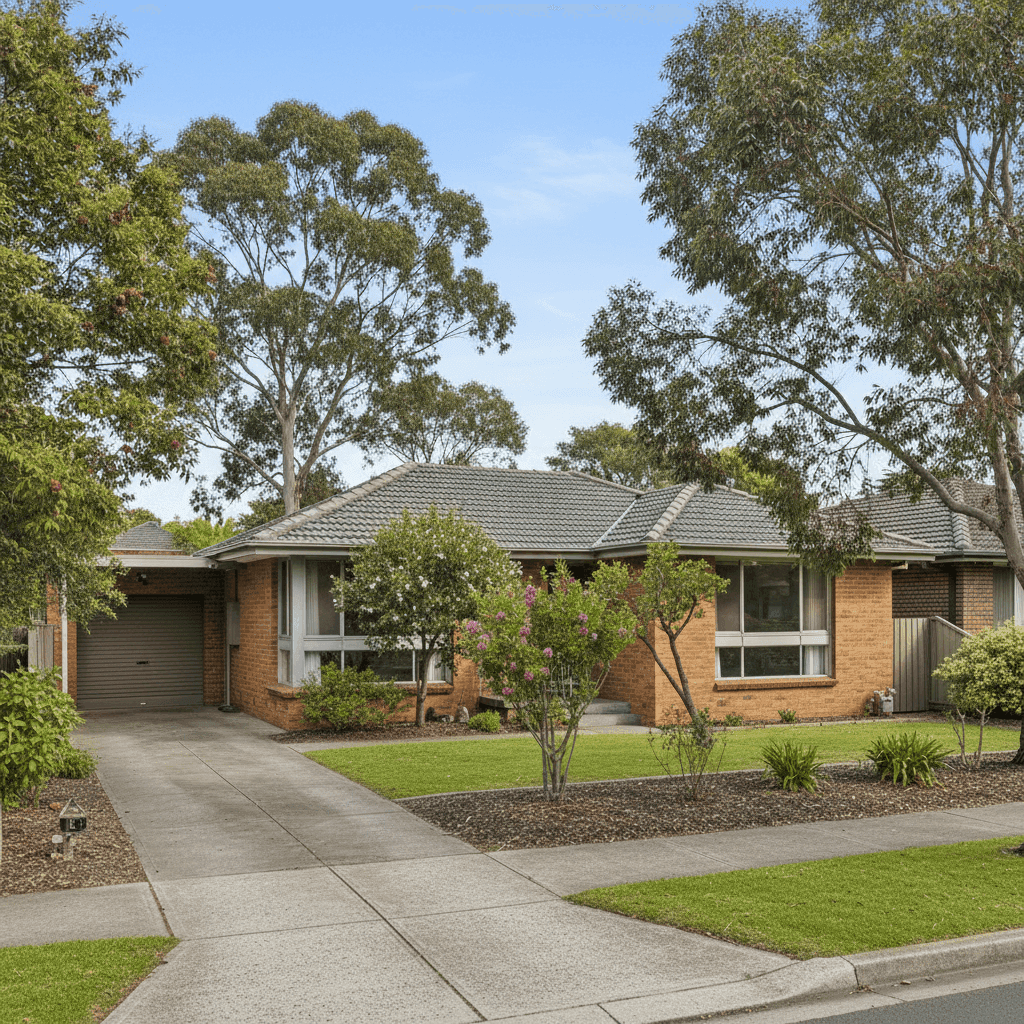
If you own a free standing home in Greensborough, VIC 3088, you're likely no stranger to the annual ritual of reviewing your home insurance. Nestled in Melbourne's north-eastern suburbs within the Nillumbik local government area, Greensborough is a well-established, family-friendly neighbourhood — and like most Australian suburbs, the cost of protecting your home here can vary considerably depending on who you ask.
This article breaks down a real home and contents insurance quote for a 3-bedroom, 3-bathroom brick veneer home in Greensborough, built in 1970, and puts that figure under the microscope against suburb, state, and national benchmarks.
---
Is This Quote Fair?
The quote in question comes in at $2,139 per year (or $198/month), covering a building sum insured of $650,000 and contents valued at $50,000, with a $1,000 excess on both building and contents.
Our price rating for this quote is Expensive — Above Average.
To put that in context, the suburb average premium for Greensborough sits at $1,848/year, with a median of $1,733/year (based on 68 quotes in our dataset). This particular quote lands above the 75th percentile for the suburb, which sits at $2,103/year — meaning it's pricier than roughly three-quarters of comparable quotes in the area.
That said, "expensive" is relative. There are several factors that can push a premium above the suburb average, including the age of the property, construction type, and the level of cover selected. A $650,000 building sum insured is a substantial figure, and the inclusion of contents cover adds to the overall cost. It's worth examining whether the quote reflects genuine risk factors or simply an insurer pricing conservatively.
---
How Greensborough Compares
One of the most useful ways to assess a quote is to zoom out and look at the bigger picture. Here's how Greensborough stacks up:
| Benchmark | Average Premium | Median Premium |
|---|---|---|
| Greensborough (3088) | $1,848/yr | $1,733/yr |
| Victoria (VIC) | $3,000/yr | $2,718/yr |
| National | $5,347/yr | $2,764/yr |
| Nillumbik LGA | $3,693/yr | — |
A few things stand out here. Greensborough's average premium of $1,848 is significantly below the Victorian state average of $3,000, and well under the national average of $5,347. This reflects the suburb's relatively low-risk profile — it's not a cyclone zone, flood risk is generally manageable, and the area doesn't carry the elevated premiums seen in parts of regional Victoria or coastal Queensland.
Interestingly, the Nillumbik LGA average of $3,693 is notably higher than the Greensborough suburb average. This suggests that other parts of the Nillumbik council area — which extends into the Yarra Ranges bushland — carry higher risk profiles that pull the LGA figure upward. Greensborough itself sits in a more urban pocket of the LGA.
For this quote at $2,139, the homeowner is paying above the suburb norm but well below the state and LGA averages — which, depending on the cover level and insurer, may still represent reasonable value.
---
Property Features That Affect Your Premium
Not all homes are priced the same, and insurers weigh up a range of property characteristics when calculating your premium. Here's how the features of this particular home come into play:
Brick Veneer Construction Brick veneer is one of the most common wall materials in Australian suburban homes and is generally viewed favourably by insurers. It offers solid fire resistance and durability, which can help keep premiums lower compared to timber-framed or clad homes.
Tiled Roof Terracotta or concrete tile roofs are considered a lower-risk roofing material than alternatives like Colorbond or corrugated iron in some contexts, though older tiles can be more susceptible to cracking and moss build-up. For a home built in 1970, the age of the roof may be a factor insurers consider.
Stump Foundation Homes on stumps (also known as piers) are common in older Melbourne properties and can be a slight premium influencer. Stumps can be susceptible to movement, particularly in areas with reactive clay soils, which may increase the perceived risk of subsidence or structural claims.
Timber and Laminate Flooring Timber flooring can be costly to repair or replace following water damage or fire, which may be factored into the contents and building replacement cost estimates.
Age of the Property (1970) A home built over 50 years ago introduces considerations around wiring, plumbing, and structural integrity. Older homes can attract higher premiums simply because the cost and complexity of repairs or rebuilds tends to be greater.
Ducted Climate Control The presence of ducted heating and cooling adds to the replacement value of the home's fixtures and fittings, which is reflected in the building sum insured.
No Pool, No Solar Panels The absence of a pool and solar panels removes two common sources of additional liability and replacement cost, which works in the homeowner's favour from a pricing perspective.
---
Tips for Homeowners in Greensborough
Whether you're reviewing your current policy or shopping around for the first time, here are some practical steps to help you get better value on your home insurance.
1. Check Your Building Sum Insured Carefully A $650,000 building sum insured is a significant figure. Make sure this reflects the actual cost to rebuild your home (not its market value). Overinsuring can mean unnecessarily high premiums, while underinsuring leaves you exposed at claim time. Tools like the Cordell Sum Sure calculator can help you estimate a realistic rebuild cost.
2. Consider Increasing Your Excess With both building and contents excesses set at $1,000, there may be room to increase these in exchange for a lower annual premium. If you have a healthy emergency fund and are unlikely to make small claims, a higher excess can be a smart trade-off.
3. Shop Around — Seriously Given that this quote sits above the 75th percentile for the suburb, it's well worth comparing alternatives. Insurers price risk differently, and the same property can attract quotes that vary by hundreds of dollars. Get a quote at CoverClub to see what other insurers are offering for your address.
4. Bundle Thoughtfully Home and contents insurance is often sold as a bundle, but that doesn't always mean it's the cheapest option. Some insurers offer better standalone building cover, while others discount heavily for bundling. Compare both scenarios to find the best outcome for your situation.
---
Ready to Compare?
If your current home insurance quote is feeling a little steep, you don't have to accept it at face value. CoverClub makes it easy to compare home and contents insurance quotes tailored to your specific property in Greensborough and across Australia. Start comparing today at CoverClub and see whether you could be paying less for the same level of protection.