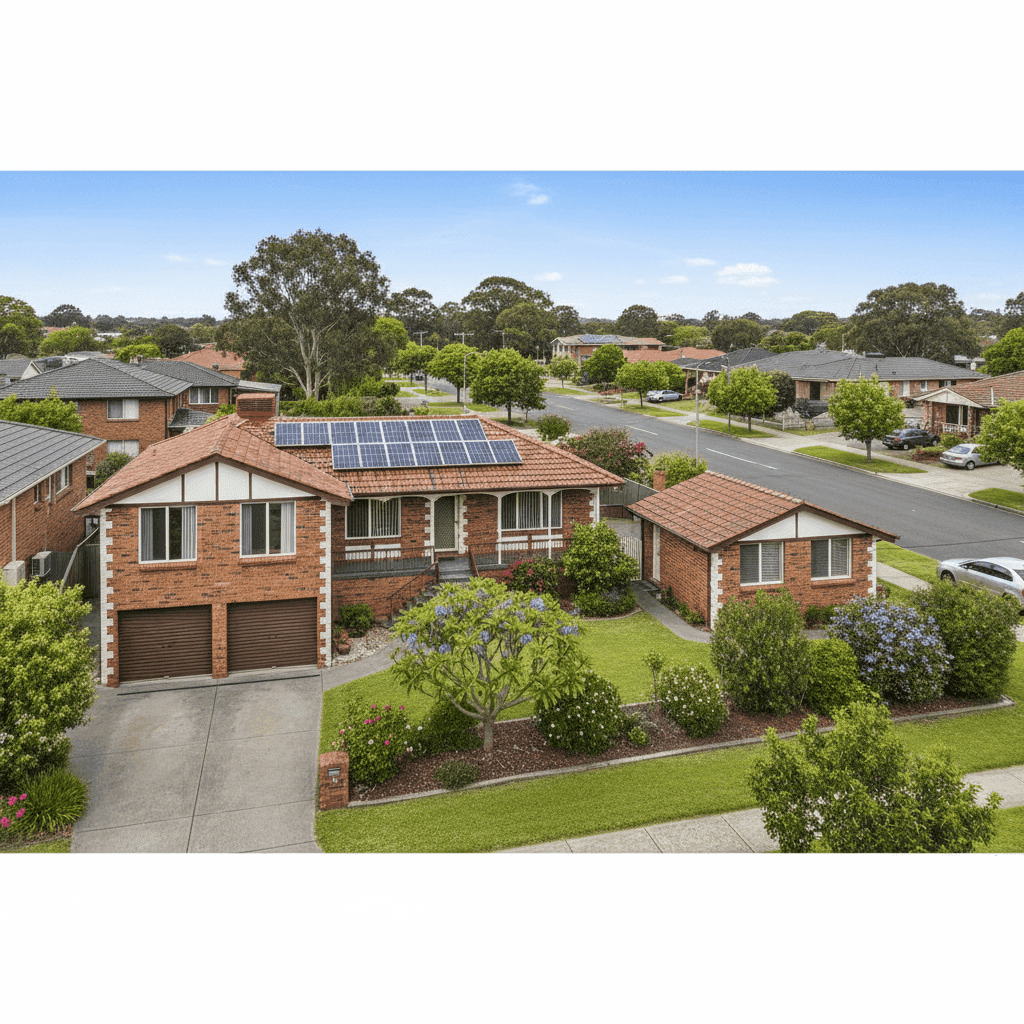
If you own a free standing home in Ryde, NSW 2112, you've probably wondered whether you're paying a fair price for building insurance — or quietly overpaying without realising it. In this article, we break down a real building-only insurance quote for a four-bedroom, two-bathroom brick veneer home in Ryde, comparing it against suburb, state, and national benchmarks so you can make a genuinely informed decision.
---
Is This Quote Fair?
The quote in question comes in at $1,774 per year (or roughly $170 per month) for building-only cover, with a building excess of $2,000 and a sum insured of $711,000.
Our price rating for this quote is FAIR — around average.
So what does "fair" actually mean in practice? It means this premium sits in a reasonable range relative to what other homeowners in Ryde are paying, but it's not the sharpest price available. Based on data from 32 quotes collected in the Ryde area, the suburb average sits at $2,268 per year and the median is $2,170 per year. At $1,774, this quote comes in below both the average and median — which is a positive sign.
However, it's worth noting that the 25th percentile for Ryde is $1,284 per year, meaning roughly a quarter of comparable quotes are even cheaper. If you're a cost-conscious homeowner, that gap is worth exploring. The 75th percentile sits at $3,176, so there's clearly significant variation in what insurers are charging for similar properties in this suburb.
In short: this quote is competitive, but not the lowest available. Whether it's the right choice depends on the insurer's policy terms, claim reputation, and what's actually included in the cover.
---
How Ryde Compares
One of the most telling ways to assess a home insurance quote is to zoom out and look at the broader picture. Here's how Ryde stacks up:
| Benchmark | Average Premium | Median Premium |
|---|---|---|
| Ryde (LGA) | $2,161/yr | — |
| Ryde suburb (2112) | $2,268/yr | $2,170/yr |
| NSW (state) | $9,528/yr | $3,770/yr |
| National | $5,347/yr | $2,764/yr |
A few things stand out here. The NSW state average of $9,528 is dramatically higher than the Ryde suburb average — but this is largely driven by high-risk regional areas, bushfire-prone zones, and flood-affected communities across the state that push averages up significantly. The state median of $3,770 is a more useful comparison for metro homeowners and still sits well above what Ryde residents typically pay.
Compared to the national median of $2,764, Ryde's median of $2,170 is actually quite favourable — suggesting that homeowners in this part of Sydney's north-west enjoy relatively moderate insurance costs by Australian standards.
You can explore the full breakdown of local pricing trends on the Ryde suburb stats page, or compare against the broader NSW state averages and national benchmarks.
---
Property Features That Affect Your Premium
Insurance pricing isn't arbitrary — it's driven by the specific characteristics of your property. Here's how the features of this Ryde home likely influence the premium:
Brick Veneer Construction & Tiled Roof Brick veneer walls and a tiled roof are among the most common combinations in Australian suburban homes, and insurers generally view them favourably. Both materials offer solid fire resistance and durability, which can help keep premiums lower compared to, say, timber cladding or a metal roof in a high-wind zone.
Slab Foundation A concrete slab foundation is standard for homes of this era and is generally considered low-risk by underwriters. It reduces exposure to subsidence and pest-related structural issues that can affect older homes on stumps or piers.
Construction Year: 2003 Homes built in the early 2000s benefit from modern building codes, including improved structural standards and fire safety requirements. This is a sweet spot for insurers — new enough to meet contemporary standards, but without the premium uplift sometimes applied to brand-new builds during the construction phase.
Solar Panels This property has solar panels installed, which are typically covered under building insurance as a fixed structure. However, it's worth confirming with your insurer that solar panels are explicitly included in your policy and that the sum insured accounts for their replacement value.
Ducted Climate Control Ducted air conditioning systems are a significant fixed asset and should be reflected in your sum insured. These systems can be costly to replace, and underinsurance is a real risk if the building sum hasn't been updated since installation.
Granny Flat The presence of a granny flat is an important factor. Many standard building policies cover a granny flat as part of the main dwelling — but not all do. It's essential to confirm whether your policy explicitly includes the granny flat structure, particularly if it's a separate building on the same title.
Timber and Laminate Flooring While flooring is often considered a contents or internal fitting, high-quality timber floors can affect the cost of reinstatement. If your sum insured was calculated without factoring in the cost of replacing timber flooring throughout a 235 sqm home, you may be underinsured.
---
Tips for Homeowners in Ryde
1. Review your sum insured regularly With a building sum insured of $711,000 for a 235 sqm home, it's worth checking whether this figure reflects current construction costs. Building costs in Sydney have risen sharply in recent years — the Housing Industry Association regularly publishes cost-per-square-metre benchmarks that can help you sense-check your coverage.
2. Confirm granny flat and solar panel coverage As noted above, these two features can easily fall through the cracks in a standard policy. Ask your insurer directly: Are the solar panels and granny flat covered under this policy, and are they included in the sum insured calculation? Get the answer in writing.
3. Shop the market — at least every two years Even if you're happy with your current insurer, loyalty doesn't always pay in home insurance. Premiums can drift upward at renewal without a corresponding improvement in cover. Comparing quotes every couple of years is one of the simplest ways to ensure you're not overpaying.
4. Consider your excess strategically This policy carries a $2,000 building excess. A higher excess typically reduces your premium, but it also means more out-of-pocket cost when you do claim. Think about what you could comfortably cover in an emergency — and whether adjusting the excess up or down makes financial sense for your situation.
---
Compare Quotes for Your Ryde Home
Whether you're reviewing an existing policy or shopping for the first time, comparing quotes is the fastest way to find the right cover at the right price. CoverClub makes it easy to see what multiple insurers would charge for your specific property — no guesswork, no obligation.
Get a quote for your home today and see how your current premium stacks up.