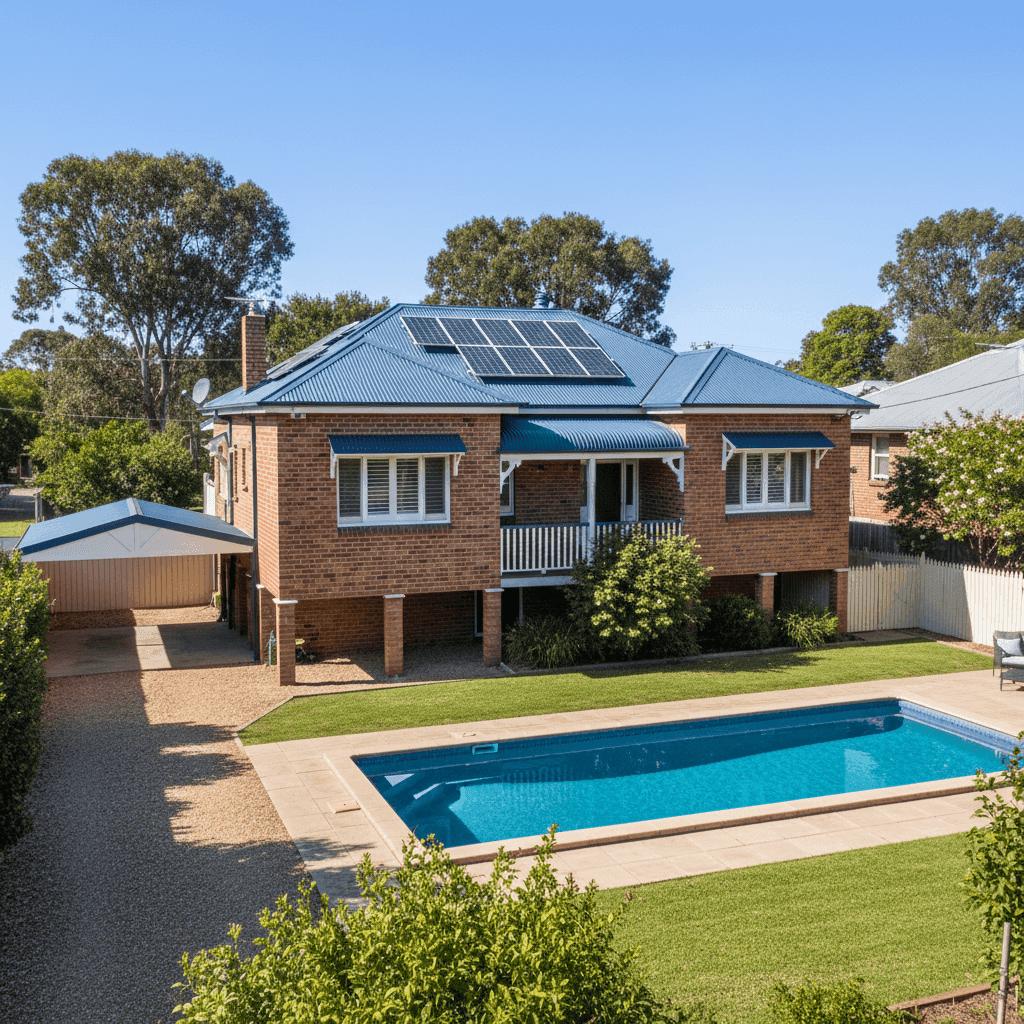
If you own a free standing home in Tarro, NSW 2322, you already know this Hunter Valley suburb offers a relaxed lifestyle close to Newcastle — but what does it cost to properly protect your home? This article breaks down a real home and contents insurance quote for a four-bedroom, three-bathroom property in Tarro, compares it against local, state, and national benchmarks, and offers practical advice to help you get the best value cover.
---
Is This Quote Fair?
The quote in question comes in at $7,425 per year (or $705 per month), covering both building and contents for a sum insured of $1,000,000 on the building and $248,000 on contents, each with a $1,000 excess.
Our price rating for this quote is Expensive — above average for the Tarro area.
To put that in context, the suburb average premium in Tarro sits at just $1,844 per year, with a median of $1,569. This quote is roughly four times the local suburb average — a significant gap that warrants a closer look.
That said, it's worth noting that raw suburb averages don't always account for the full picture. The sum insured here ($1,000,000 for the building alone) is substantially higher than what many Tarro homeowners may be insuring for, which naturally drives the premium upward. The contents cover of $248,000 also adds meaningfully to the total. Higher sums insured mean greater potential payouts for the insurer, and premiums are priced accordingly.
Still, even adjusting for coverage levels, this quote sits at the more expensive end of the spectrum, and it's worth exploring whether a comparable level of cover could be sourced at a more competitive price.
---
How Tarro Compares
Understanding how your premium stacks up across different geographies can be illuminating. Here's how the Tarro quote compares:
| Benchmark | Average Premium | Median Premium |
|---|---|---|
| Tarro (suburb) | $1,844/yr | $1,569/yr |
| LGA (Cessnock) | $2,462/yr | — |
| NSW (state) | $9,528/yr | $3,770/yr |
| National | $5,347/yr | $2,764/yr |
(Based on [NSW state data](https://coverclub.com.au/stats/NSW) and [national data](https://coverclub.com.au/stats/national) from CoverClub's quote database.)
A few things stand out here. The NSW state average of $9,528 is actually higher than this quote, suggesting that at a state level, $7,425 is not unusual — particularly for a well-appointed property with a high sum insured. However, the NSW median of $3,770 tells a different story: half of all NSW homeowners are paying less than that, meaning this quote is still above what most people pay day-to-day.
Nationally, the average sits at $5,347 and the median at $2,764. Again, this quote exceeds both figures.
The Cessnock LGA average of $2,462 is closer to the suburb figure than the state average, which suggests the broader region is generally considered a moderate-risk area for insurers. The gap between the LGA average and this particular quote is likely explained by the property's specific characteristics and the elevated sums insured.
It's also worth noting the suburb sample size here is 23 quotes — a reasonably small dataset, so suburb-level averages should be interpreted with some caution.
---
Property Features That Affect Your Premium
Several characteristics of this Tarro property have a direct bearing on what insurers charge. Let's walk through the key ones:
Age of construction (1920): This is one of the most significant premium drivers. A home built over 100 years ago carries inherent risks — ageing plumbing, wiring that may not meet modern standards, and structural elements that can be costly to repair or replace. Insurers price this risk accordingly.
Double brick construction: On the positive side, double brick is one of the most durable and fire-resistant wall types available. Insurers generally view this favourably, as it reduces the likelihood of total loss in many scenarios. It can, however, be expensive to repair when damage does occur, which is a balancing factor.
Stump foundation: Homes on stumps (also known as pier foundations) are common in older NSW properties and can be more vulnerable to subsidence, termite activity, and movement over time. This can push premiums higher compared to slab-on-ground construction.
Colorbond steel roof: A relatively modern roof type that performs well in harsh Australian conditions. Colorbond is resistant to fire, corrosion, and high winds, which insurers tend to view positively.
Timber and laminate flooring: Timber floors in older homes can be a claims risk — they're susceptible to water damage and can be costly to restore. This may contribute marginally to the premium.
Swimming pool: Pools add liability exposure (particularly for third-party injury) and can also increase the replacement cost of the property, both of which insurers factor in.
Solar panels: Solar systems add to the insured value of the home and can complicate roof repairs. Most insurers include them under building cover, but they do contribute to overall premium costs.
Ducted climate control: A high-value fixed asset that increases the building sum insured and contributes to a higher replacement cost estimate.
Building size (268 sqm): A larger-than-average footprint means more to rebuild — this is a key driver of the $1,000,000 building sum insured and the resulting premium.
---
Tips for Homeowners in Tarro
If you're looking to manage your home insurance costs without compromising on protection, here are four practical steps worth considering:
- Review your sum insured carefully. A $1,000,000 building sum insured is substantial. Use a reputable building calculator (such as the Cordell Sum Sure calculator) to verify your home's actual replacement cost. Over-insuring is a common and costly mistake — but so is under-insuring, so accuracy matters.
- Compare quotes from multiple insurers. The difference between the cheapest and most expensive quotes for the same property can be thousands of dollars. Get a quote through CoverClub to see how different providers price your specific risk profile side by side.
- Consider a higher excess. Increasing your excess from $1,000 to $2,500 or more can meaningfully reduce your annual premium. If you have the savings buffer to cover a larger out-of-pocket cost in a claim, this can be a smart trade-off.
- Keep records of your home's condition and upgrades. If you've updated the electrical wiring, replumbed, or restumped your 1920s home, document it. Some insurers will factor in recent renovations when assessing risk, potentially offering better rates for a well-maintained older property.
---
Compare Your Options with CoverClub
Whether you're renewing your policy or shopping around for the first time, it pays to compare. CoverClub makes it easy to benchmark your premium against real quotes from across Australia. Check Tarro suburb stats, explore NSW-wide trends, or get a personalised quote in minutes. With the right information, you can make a confident, informed decision about protecting one of your most valuable assets.