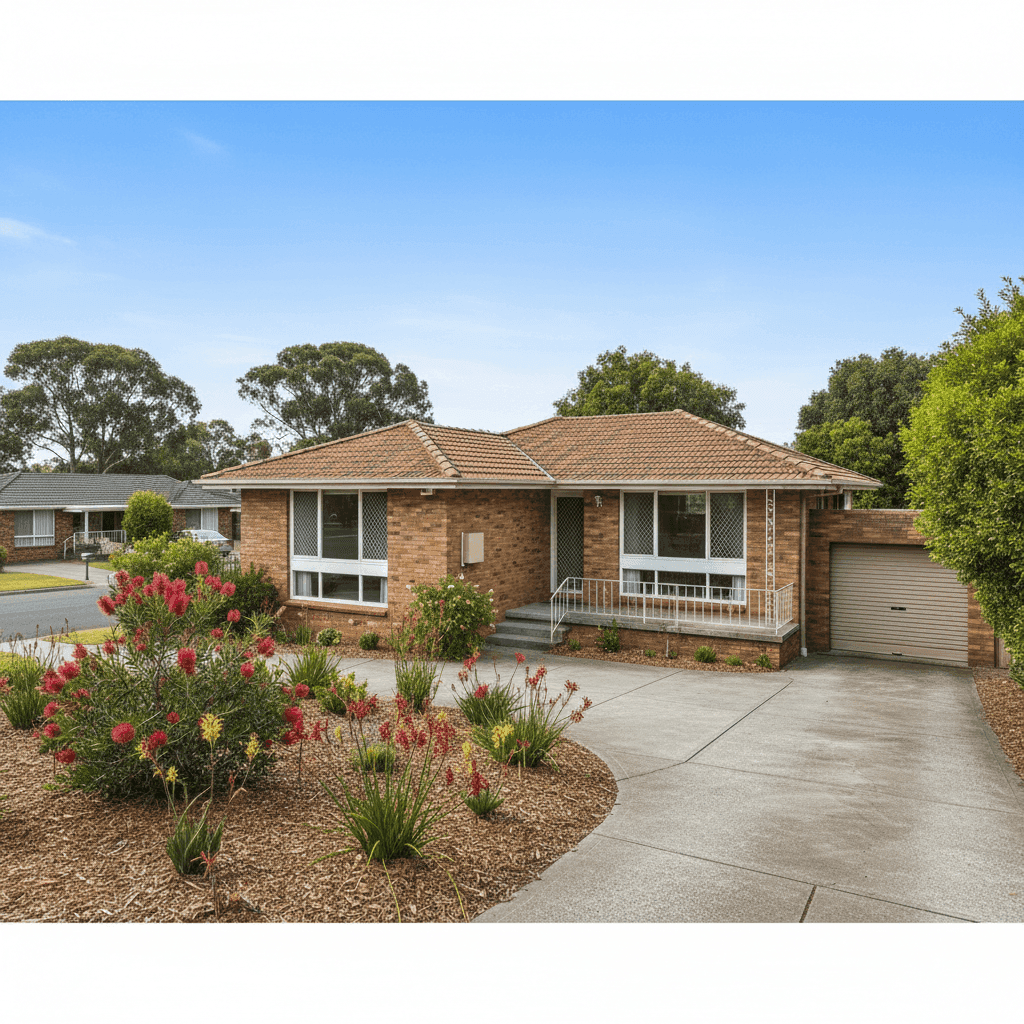
If you own a free standing home in Tuncurry, NSW 2428, you've probably noticed that home insurance premiums in coastal New South Wales can vary enormously. Tuncurry sits on the Mid-Coast — a region of beautiful beaches, tidal lakes, and the kind of lifestyle that attracts both permanent residents and holiday homeowners. But that desirable postcode comes with its own insurance story. In this article, we break down a real building insurance quote for a 3-bedroom, 2-bathroom brick veneer home in Tuncurry, and put it into context against suburb, state, and national benchmarks.
---
Is This Quote Fair?
The quote in question comes in at $3,546 per year (or around $340 per month) for building-only cover on a home with a sum insured of $597,000 and a building excess of $5,000.
Our price rating for this quote? Cheap — Below Average. That's genuinely good news for the homeowner.
To put it plainly: this premium is dramatically lower than what most Tuncurry homeowners are paying. The suburb average sits at $11,768 per year, and even the 25th percentile — meaning the cheapest quarter of quotes in the area — is still $10,327 per year. This quote at $3,546 sits well below that floor, making it an exceptional result by local standards.
It's worth noting that the suburb sample size is relatively small (8 quotes), so the averages should be interpreted with some caution. That said, the gap is so significant that it's hard to dismiss — this is a meaningfully competitive premium for this postcode.
---
How Tuncurry Compares
Understanding where Tuncurry sits in the broader insurance landscape helps frame just how unusual this quote is.
| Benchmark | Annual Premium |
|---|---|
| This Quote | $3,546 |
| Tuncurry Suburb Average | $11,768 |
| Tuncurry Suburb Median | $11,212 |
| NSW State Average | $9,528 |
| NSW State Median | $3,770 |
| Mid-Coast LGA Average | $5,840 |
| National Average | $5,347 |
| National Median | $2,764 |
A few things stand out here. First, Tuncurry's suburb average of $11,768 is notably higher than both the NSW state average of $9,528 and the national average of $5,347. This tells us that Tuncurry is an expensive postcode to insure — coastal exposure, flood risk, and storm vulnerability all play a role in pushing premiums up for many properties in the area.
Second, the NSW state median of $3,770 is actually much closer to this quote than the state average is. This reflects the fact that NSW premium data is heavily skewed by high-risk coastal and flood-prone postcodes — and Tuncurry is one of them. The Mid-Coast LGA average of $5,840 also confirms that this region generally attracts above-average premiums.
Against that backdrop, a quote of $3,546 — sitting below the national average and just under the NSW median — represents excellent value for a Tuncurry property. You can explore more local data on the Tuncurry suburb stats page.
---
Property Features That Affect Your Premium
Several characteristics of this particular home likely contribute to its competitive premium. Let's walk through the key ones.
Brick Veneer Construction Brick veneer is generally well-regarded by insurers. It offers solid fire resistance and structural durability compared to timber or clad exteriors, which can translate to lower risk assessments and, in turn, lower premiums.
Tiled Roof Terracotta or concrete tiles are considered a relatively resilient roofing material. They hold up well in storms and have a long lifespan, both of which insurers view favourably. A colorbond or metal roof might attract similar ratings, but tiles remain a solid choice from an underwriting perspective.
Slab Foundation A concrete slab foundation is typically seen as low-risk by insurers. Unlike raised timber stumps or piers, slabs are less susceptible to subsidence and pest damage, which reduces the likelihood of structural claims.
Built in 1980 Homes from this era are well past the early construction period where defects commonly emerge, but they're also old enough that some systems (electrical wiring, plumbing) may be ageing. Insurers generally price 1980s homes reasonably, though it's worth ensuring your sum insured reflects the true cost of rebuilding to current standards — not just the original build cost.
139 sqm Floor Area At 139 sqm, this is a modest-sized home. Smaller floor areas generally mean lower rebuild costs, which supports a lower sum insured and, consequently, a lower premium.
Ducted Climate Control The presence of ducted climate control is a notable inclusion. These systems add to the replacement value of the home and are factored into the sum insured. It's a feature worth double-checking is adequately covered under your policy.
No Pool, No Solar Panels The absence of a pool and solar panels removes two common sources of additional premium loading. Both features add complexity and cost to a rebuild, so not having them keeps the risk profile simpler.
---
Tips for Homeowners in Tuncurry
1. Review Your Sum Insured Regularly With a sum insured of $597,000 on a 139 sqm home built in 1980, it's important to ensure this figure reflects current construction costs — not the original build price or the market value of the land. Building costs in regional NSW have risen sharply in recent years. Underinsurance is a genuine risk, and it can leave you significantly out of pocket after a major claim.
2. Understand Your Excess Before You Claim This policy carries a $5,000 building excess — that's on the higher end. A higher excess typically lowers your annual premium, but it means you'll need to cover the first $5,000 of any building claim yourself. Make sure you have that amount readily accessible, particularly given Tuncurry's exposure to storm and weather events.
3. Check Your Flood and Storm Cover Tuncurry sits adjacent to Wallis Lake and the Tasman Sea, making it susceptible to both coastal storm surge and inland flooding. Not all home insurance policies automatically include flood cover — some treat it as an optional add-on. Read your Product Disclosure Statement (PDS) carefully and confirm exactly what weather-related events are covered.
4. Compare Quotes at Renewal The fact that this quote came in well below the suburb average is a strong reminder that premiums vary significantly between insurers — even for the same property. Don't simply auto-renew. Shopping around at each renewal cycle can save hundreds or even thousands of dollars, as this example clearly demonstrates.
---
Ready to Find a Better Deal?
Whether you're a first-time buyer or a long-term Tuncurry local, comparing home insurance quotes is one of the simplest ways to protect your budget. CoverClub makes it easy to see real quotes side by side, so you're never paying more than you need to. Get a quote today at CoverClub and find out how your current premium stacks up.