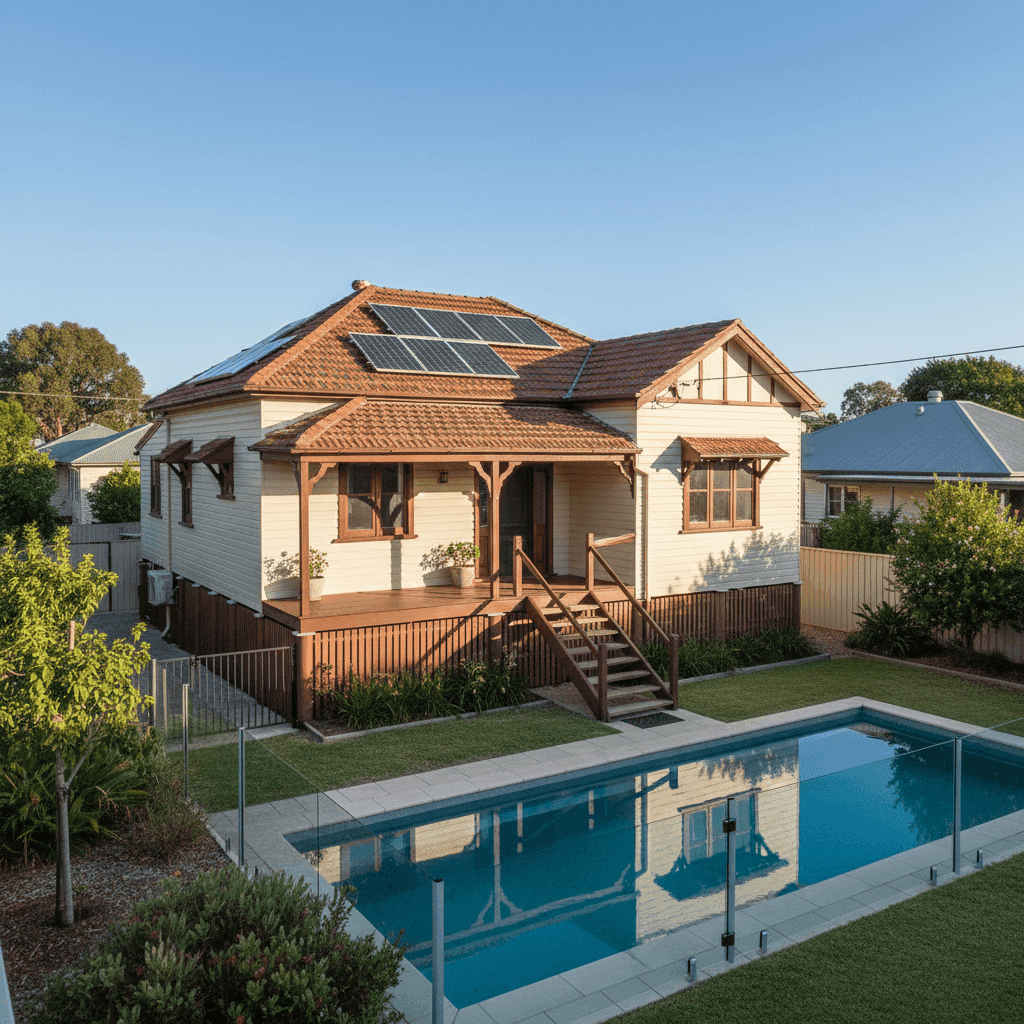
Abermain is a quiet residential suburb in the Hunter Valley region of New South Wales, sitting within the Maitland Local Government Area. It's home to a mix of older character properties and more established family homes — and this analysis looks at a 5-bedroom, free-standing home in the area, examining what it costs to insure and whether the quoted premium represents good value.
---
Is This Quote Fair?
The quote in question is $2,816 per year (or $280/month) for combined Home and Contents cover, with a building sum insured of $718,000 and contents valued at $90,000. The building excess sits at $3,000, while the contents excess is $1,000.
CoverClub's pricing engine has rated this quote as FAIR — Around Average, and the numbers back that up. Compared to the suburb average of $3,082/yr for Abermain, this quote comes in roughly $266 below the local average, which is a meaningful saving. It also sits just under the suburb median of $2,857/yr, placing it in the more competitive half of quotes seen in this postcode.
In short: this isn't a bargain-basement price, but it's a solid, competitive result — particularly for a property of this size and age.
---
How Abermain Compares
To put this quote in proper context, it helps to look at the broader pricing landscape across the suburb, state, and country.
| Benchmark | Premium |
|---|---|
| This Quote | $2,816/yr |
| Abermain Suburb Average | $3,082/yr |
| Abermain Suburb Median | $2,857/yr |
| Abermain 25th Percentile | $2,260/yr |
| Abermain 75th Percentile | $3,690/yr |
| Maitland LGA Average | $4,142/yr |
| NSW State Average | $3,801/yr |
| NSW State Median | $3,410/yr |
| National Average | $2,965/yr |
| National Median | $2,716/yr |
(Based on 29 quotes collected for the Abermain postcode)
A few things stand out here. First, the Maitland LGA average of $4,142/yr is significantly higher than what this homeowner is paying — a gap of over $1,300 annually. This suggests that some properties within Maitland are attracting much higher premiums, likely driven by flood risk zones and older building stock elsewhere in the LGA.
Second, the NSW state average of $3,801/yr is notably elevated compared to the national average of $2,965/yr, reflecting the broader pressures on home insurance across New South Wales — including weather volatility, rising rebuild costs, and a hardening insurance market. Against both of those state and national benchmarks, this Abermain quote holds up well.
The 25th–75th percentile spread ($2,260 to $3,690) also tells an important story: there's a wide range of pricing in this suburb, meaning that shopping around can make a real difference. A homeowner who simply accepted the first quote they received could easily be paying $800–$900 more per year than necessary.
---
Property Features That Affect Your Premium
Several characteristics of this property will be influencing the quoted premium — both positively and negatively.
Age and construction (built 1974): At just over 50 years old, this home falls into a category that insurers scrutinise carefully. Older homes can carry higher rebuild risk due to outdated wiring, plumbing, and materials that are more expensive to source or replicate. That said, the 1974 build era in NSW is generally well-regarded for solid construction.
Hardiplank/Hardiflex external walls: Fibre cement cladding like Hardiplank is generally viewed favourably by insurers. It's durable, fire-resistant, and low-maintenance compared to weatherboard or brick veneer, which can work in the homeowner's favour when it comes to pricing.
Tiled roof: Terracotta or concrete tile roofs are considered a standard, reliable roofing material in Australia. They perform well in most weather conditions and are relatively cost-effective to repair or replace, which typically keeps premiums moderate.
Stump foundation: Homes on stumps (also called pier and beam foundations) can be more susceptible to movement, pest ingress, and underfloor moisture issues. Insurers may factor this in, particularly for an older property. Regular maintenance of the subfloor space is important.
Timber and laminate flooring: While aesthetically popular, timber and laminate floors can be costly to replace after water damage events. This may contribute marginally to a higher contents or building sum insured.
Swimming pool: Pools add liability considerations to a home insurance policy. Most policies cover the pool structure under the building sum insured, but it's worth confirming that your policy explicitly covers pool equipment, fencing, and any liability arising from the pool.
Solar panels: Solar systems are increasingly common across NSW and most insurers now include them under building cover — but the specifics vary. Homeowners should confirm whether their panels, inverter, and mounting hardware are included within the $718,000 building sum insured.
No cyclone risk: Abermain is not classified as a cyclone risk area, which removes one of the more significant premium loading factors that affect properties in northern Queensland and parts of WA. This is a meaningful advantage.
---
Tips for Homeowners in Abermain
1. Review your building sum insured regularly With a 325 sqm home built in 1974, rebuild costs can be tricky to estimate. Construction costs have risen sharply in recent years, and being underinsured — even by 10–15% — can leave you significantly out of pocket after a major claim. Use a quantity surveyor or an online rebuild calculator to sense-check your $718,000 sum insured.
2. Confirm your solar panels and pool are fully covered Don't assume these features are automatically included. Ask your insurer specifically whether solar panels (including the inverter and racking system) and the pool structure and equipment are covered under your building policy, and whether any sub-limits apply.
3. Maintain your stump foundations Insurers may reduce or deny claims related to gradual deterioration or pest damage to stumps. Have a licensed inspector assess the subfloor every few years, and address any movement, rot, or termite activity promptly. Keeping records of maintenance can also support future claims.
4. Shop around at renewal time The wide pricing spread in Abermain — from $2,260 to $3,690 per year — shows that loyalty doesn't always pay. At each annual renewal, it's worth running a fresh comparison to ensure you're still getting competitive value. Even a modest saving of $300–$400/yr compounds significantly over time.
---
Compare Your Home Insurance Options
Whether you're reviewing an existing policy or shopping for cover for the first time, comparing quotes is one of the easiest ways to make sure you're not overpaying. CoverClub makes it simple to see how your premium stacks up against real data from your suburb and across Australia.
Get a home insurance quote today at CoverClub and see what you could be paying — in minutes, with no obligation.