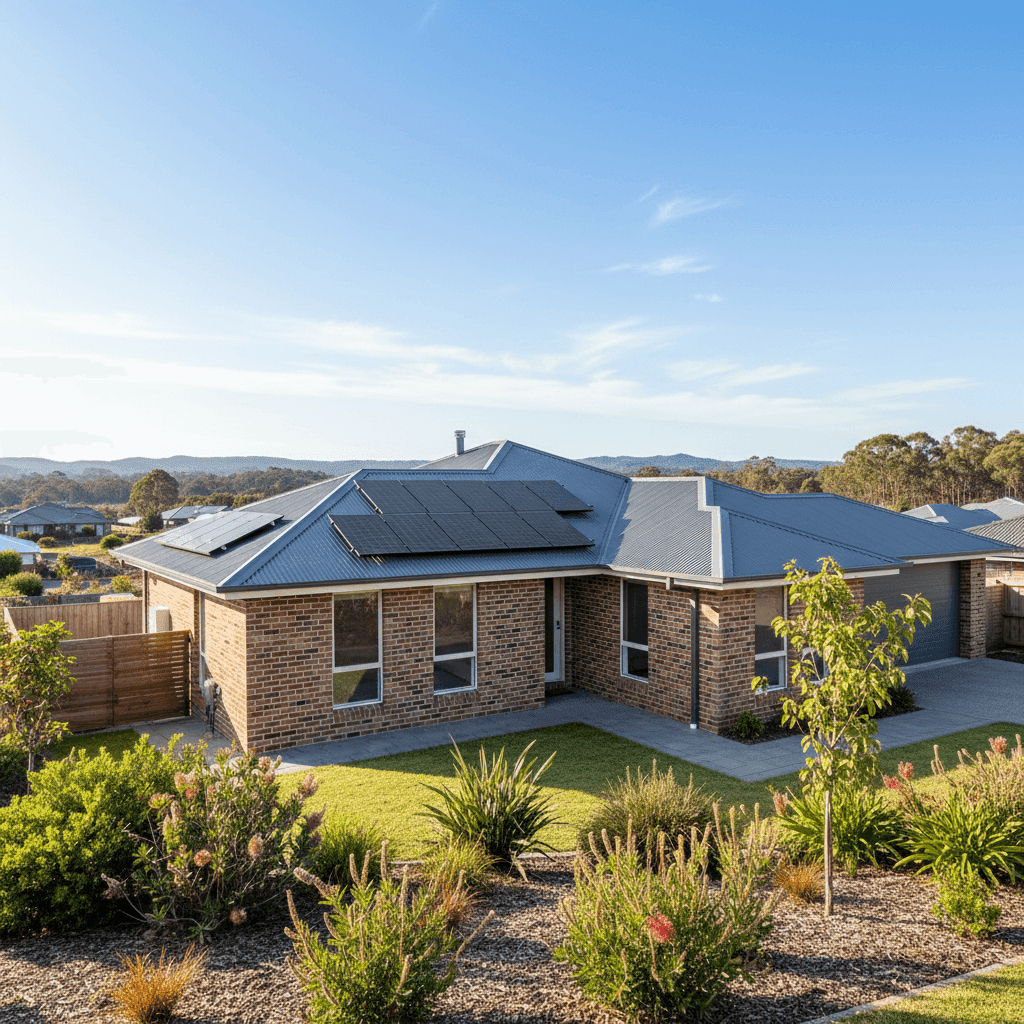
If you own a free standing home in Acacia Hills, TAS 7306, you've probably wondered whether you're paying a fair price for home and contents insurance — or whether there's a better deal out there. This article breaks down a real insurance quote for a four-bedroom property in the suburb, compares it against local, state, and national benchmarks, and offers practical tips to help you make the most of your cover.
---
Is This Quote Fair?
The quote in question comes in at $1,917 per year (or $193/month) for combined home and contents insurance, covering a building sum insured of $593,000 and $50,000 in contents, each with a $2,000 excess.
Our price rating for this quote is CHEAP — below the suburb average — which is genuinely good news for the homeowner. At nearly $700 less than the local suburb average of $2,618/year, this quote sits well below what most comparable properties in Acacia Hills are paying. It even undercuts the suburb's 25th percentile of $2,202/year, meaning it's cheaper than at least three-quarters of quotes recorded in the area.
To put it plainly: this is a competitive result. Whether you're shopping for the first time or reviewing your existing policy, a premium at this level for a four-bedroom brick veneer home with solar panels and ducted climate control represents solid value.
---
How Acacia Hills Compares
Understanding your premium in isolation only tells part of the story. Context matters — and the numbers here are telling.
| Benchmark | Annual Premium |
|---|---|
| This Quote | $1,917 |
| Acacia Hills Suburb Average | $2,618 |
| Acacia Hills Suburb Median | $2,499 |
| Acacia Hills 25th Percentile | $2,202 |
| Acacia Hills 75th Percentile | $3,226 |
| Waratah-Wynyard LGA Average | $2,461 |
| Tasmania State Average | $2,814 |
| Tasmania State Median | $2,326 |
| National Average | $5,347 |
| National Median | $2,764 |
You can explore the full breakdown of Acacia Hills insurance statistics, compare with Tasmania-wide data, or see how the suburb stacks up against national home insurance averages.
A few things stand out in this comparison. Tasmania's state average of $2,814 is notably lower than the national average of $5,347 — a significant gap that largely reflects the absence of cyclone risk and lower exposure to the extreme weather events that drive premiums sky-high in Queensland and northern Western Australia. Acacia Hills itself sits comfortably within the Tasmanian norm, and this particular quote beats even that favourable baseline.
The Waratah-Wynyard LGA average of $2,461 also provides useful local context — and again, this quote comes in well beneath it.
---
Property Features That Affect Your Premium
Insurance pricing isn't arbitrary. Insurers assess a range of property characteristics to determine risk, and several features of this home work in its favour.
Brick Veneer Walls Brick veneer is one of the more insurer-friendly wall materials available. It offers good fire resistance and structural durability compared to lightweight cladding or weatherboard, which can translate into lower premiums.
Steel / Colorbond Roof Colorbond roofing is widely regarded as a strong performer in Australian conditions. It's resistant to corrosion, handles bushfire ember attack better than some alternatives, and is less susceptible to storm damage than terracotta tiles. Insurers generally view it favourably.
Slab Foundation A concrete slab foundation is a stable, low-maintenance base that reduces the risk of subsidence or movement-related claims — another tick in the low-risk column.
Construction Year: 2007 Homes built after 1990 generally comply with more modern building codes, which means better structural integrity and safety features. A 2007 build is relatively recent in insurance terms, which tends to keep premiums more manageable than older dwellings that may have ageing wiring or plumbing.
Solar Panels This property has solar panels, which some insurers include automatically under building cover, while others may require them to be specifically noted. It's worth confirming with your insurer that your panels — and any associated inverter or battery system — are fully covered under your policy.
Ducted Climate Control Ducted systems are a fixed asset and typically covered under building insurance, but their replacement cost can be substantial. It's worth checking that your sum insured adequately accounts for the cost of replacing the system if needed.
Timber / Laminate Flooring Timber and laminate floors can be more expensive to repair or replace than tiles following a water damage event, so it's sensible to ensure your building sum insured reflects this.
No Pool, No Cyclone Risk The absence of a swimming pool removes a common source of liability and maintenance-related claims. And sitting outside any designated cyclone risk zone means the property avoids the significant premium loadings that apply in northern Australia.
---
Tips for Homeowners in Acacia Hills
1. Review your sum insured annually Building costs in Tasmania — like the rest of Australia — have risen considerably in recent years. A sum insured of $593,000 for a 130 sqm home may be appropriate today, but it's worth recalculating your rebuild cost each year using an independent estimator to avoid being underinsured if you ever need to make a claim.
2. Confirm solar panel coverage Solar panels are increasingly common, but coverage varies between policies. Some insurers cover them as part of the building; others treat them as a separate item or exclude damage from certain causes. Ask your insurer directly how your panels are covered and whether any exclusions apply.
3. Consider your excess carefully This policy carries a $2,000 excess on both building and contents. A higher excess typically reduces your premium, but it also means a larger out-of-pocket cost when you claim. Make sure the excess level you choose reflects what you could comfortably afford to pay in an emergency.
4. Don't set and forget Even if you're on a great rate now, insurers often increase premiums at renewal without much fanfare. Set a reminder to compare quotes at least once a year — particularly if your property or circumstances have changed. Getting a fresh quote takes only a few minutes and could save you hundreds.
---
Compare Your Own Quote at CoverClub
Whether you're a first-time buyer or a long-time homeowner in Acacia Hills, it pays to know where your premium sits relative to the market. CoverClub makes it easy to compare home and contents insurance quotes from multiple providers, so you can see exactly what's available for your property. Start comparing today and find out if you're getting the deal you deserve.