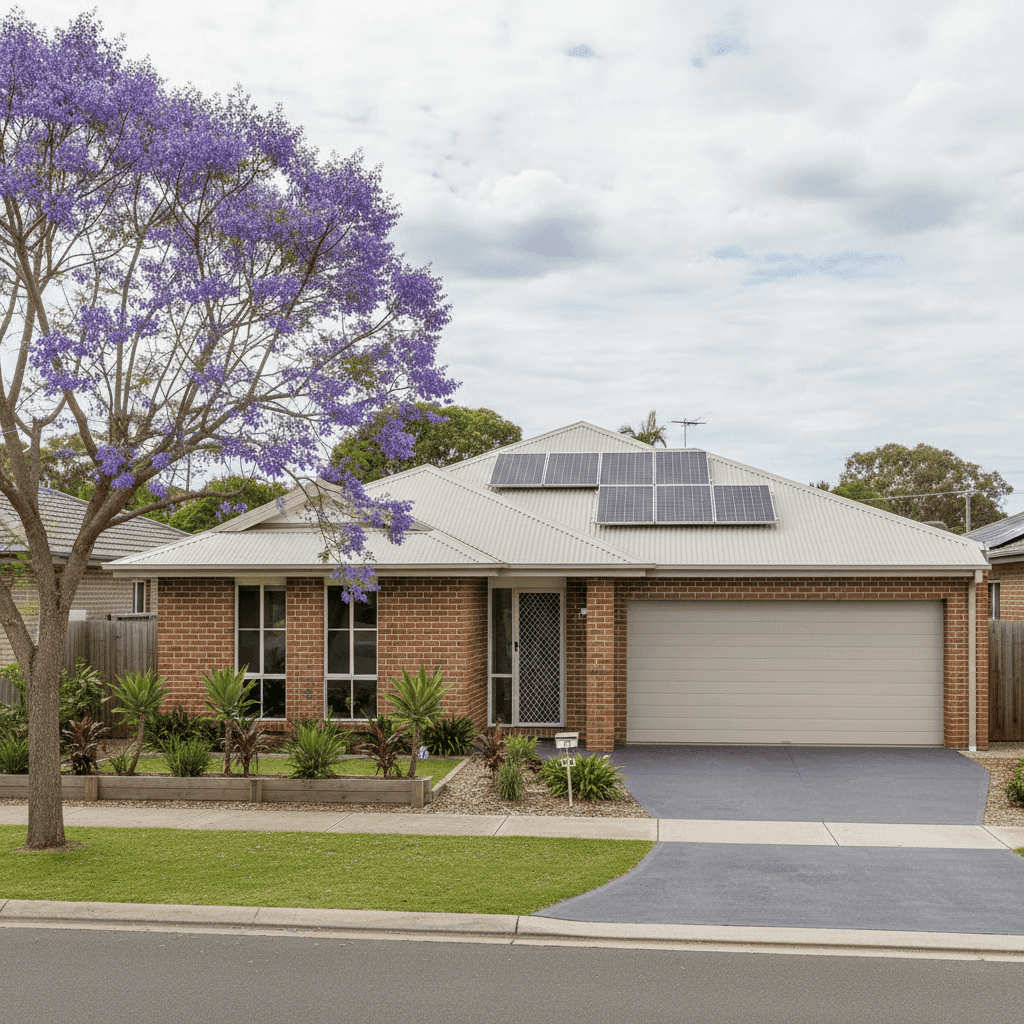
Acacia Ridge is a well-established southern Brisbane suburb known for its mix of residential streets and light industrial precincts. For owners of a free standing home in this pocket of Queensland, understanding what drives your home insurance premium — and whether you're getting a fair deal — can make a meaningful difference to your household budget. This article breaks down a real home and contents insurance quote for a four-bedroom brick veneer property in Acacia Ridge, compares it against local, state and national benchmarks, and offers practical tips to help you manage your costs.
---
Is This Quote Fair?
The quote in question comes in at $2,411 per year (or $231 per month) for combined home and contents cover, with a building sum insured of $853,000 and contents valued at $50,000. Both the building and contents excess are set at $1,000.
Our price rating for this quote is Expensive — above average for the Acacia Ridge area.
To put that in perspective: the suburb average premium sits at $1,429 per year, and the median is even lower at $1,105. This quote lands well above both figures, and also exceeds the suburb's 75th percentile of $1,922 — meaning it's pricier than roughly three-quarters of comparable quotes in the area.
That said, context matters. The building sum insured of $853,000 is a significant coverage amount for a 214 sqm home built in 2000. Higher insured values naturally push premiums upward, and insurers also weigh up features like solar panels and ducted climate control when calculating replacement costs. So while the premium is on the higher side, it's not without explanation.
---
How Acacia Ridge Compares
When you zoom out beyond the suburb level, the picture shifts considerably. Check out the Acacia Ridge insurance stats to see how local premiums have been trending.
| Benchmark | Annual Premium |
|---|---|
| This quote | $2,411 |
| Acacia Ridge suburb average | $1,429 |
| Acacia Ridge suburb median | $1,105 |
| QLD state average | $9,129 |
| QLD state median | $3,903 |
| National average | $5,347 |
| National median | $2,764 |
| Brisbane LGA average | $16,277 |
Compared to Queensland as a whole, this quote looks relatively modest. The state average of $9,129 is driven heavily by high-risk coastal and cyclone-prone regions in Far North Queensland, where premiums can be eye-watering. Brisbane's LGA average of $16,277 is a stark reminder of just how expensive insurance can get in parts of the city — likely influenced by flood-prone postcodes and premium inner-city properties.
Against national benchmarks, the quote also fares reasonably well. The national average of $5,347 and median of $2,764 suggest that, on a broader scale, $2,411 is not out of step — particularly for a well-appointed home with a substantial building sum insured.
The real question is whether the Acacia Ridge suburb comparison is the most relevant yardstick. With only 15 quotes in the local sample, the suburb data is a useful guide but not definitive. A relatively small sample can be skewed by outliers in either direction.
---
Property Features That Affect Your Premium
Several characteristics of this property have a direct bearing on the insurance premium:
Brick Veneer Construction Brick veneer walls are generally viewed favourably by insurers. They offer solid fire resistance and durability compared to timber or lightweight cladding, which can translate to more competitive premiums.
Steel/Colorbond Roof A Colorbond roof is another tick in the right column. Steel roofing is highly durable, resistant to ember attack, and typically cheaper to replace than terracotta or concrete tiles. This should work in the homeowner's favour at renewal time.
Slab Foundation A concrete slab foundation is standard for homes of this era and is generally considered low-risk by insurers. It reduces the likelihood of subsidence-related claims compared to older stumped or pier-and-beam foundations.
Solar Panels Solar panels add real value to a property, but they also add complexity for insurers. Panels need to be covered for damage from storms, hail, and falling debris, and their replacement cost is factored into the building sum insured. This can nudge premiums upward slightly.
Ducted Climate Control Ducted air conditioning is a significant fixed asset. Like solar panels, it contributes to the overall replacement cost of the home, which influences the building sum insured and, in turn, the premium.
No Pool, No Cyclone Risk Zone The absence of a swimming pool removes a common liability exposure, and the property sitting outside a designated cyclone risk area is a meaningful advantage in Queensland — cyclone loading can dramatically inflate premiums for properties in northern parts of the state.
Tile Flooring and Standard Fittings Tiled floors and standard-quality fittings suggest a practical, well-maintained home without the premium replacement costs associated with high-end finishes. This keeps the contents and building valuation grounded.
---
Tips for Homeowners in Acacia Ridge
1. Review Your Building Sum Insured At $853,000, the building sum insured is the single biggest driver of this premium. It's worth getting an independent building replacement cost estimate to ensure you're not over-insured. Many homeowners set their sum insured too high, paying more in premiums than necessary — but equally, being under-insured is a serious risk. Tools like the Cordell Sum Sure calculator can help you find the right figure.
2. Compare Multiple Quotes With the suburb median sitting at $1,105, there's clearly a wide range of pricing in Acacia Ridge. Different insurers weigh risk factors differently, so shopping around can uncover significantly cheaper options for the same level of cover. Get a quote through CoverClub to compare options side by side.
3. Consider Your Excess Level Both the building and contents excess on this policy are set at $1,000. Opting for a higher excess — say, $2,000 or $2,500 — can reduce your annual premium noticeably. If you have a solid emergency fund and are unlikely to make small claims, this trade-off often makes financial sense.
4. Bundle and Loyalty Discounts Some insurers offer meaningful discounts when you combine home and contents cover under a single policy (which this quote already does) or when you've been a continuous customer. It's worth asking your insurer directly what discounts are available, and whether switching payment to annual (rather than monthly) saves you money — monthly billing often attracts a small loading.
---
Compare Your Home Insurance Today
Whether you're renewing your policy or shopping for the first time, it pays to know where your premium stands. CoverClub makes it easy to benchmark your quote against real data from your suburb and beyond. Start comparing home insurance quotes now and make sure you're getting the right cover at a fair price.