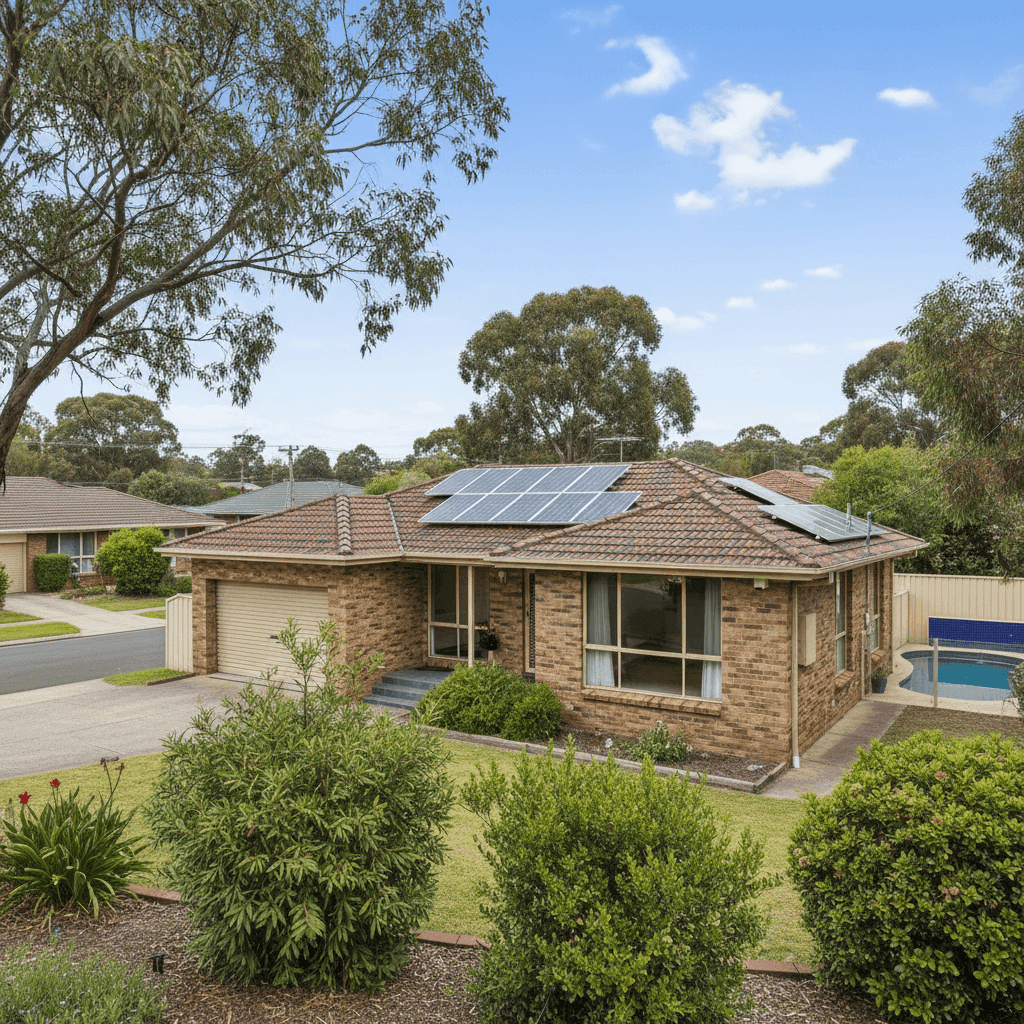
If you own a four-bedroom free standing home in Adamstown Heights, NSW 2289, you've probably wondered whether you're paying a fair price for home and contents insurance — or whether your insurer is quietly overcharging you. This article breaks down a real quote for a property in this suburb, compares it against local, state, and national benchmarks, and gives you practical tips to help keep your premiums in check.
---
Is This Quote Fair?
The quote in question comes in at $3,591 per year (or $344/month) for combined home and contents cover, with a $2,000 excess on both building and contents. The building is insured for $1,086,000 and contents are covered to $50,000.
Our price rating for this quote is EXPENSIVE — above average for the suburb.
To put that in context, the suburb average for Adamstown Heights sits at $3,008/year, with a median of $2,873/year. This quote lands above both of those figures, and also above the suburb's 75th percentile of $3,572/year — meaning it's more expensive than roughly three-quarters of comparable quotes we've seen in the area.
That said, "expensive" is relative. Compared to the broader NSW average of $9,528/year (heavily skewed by high-value and high-risk properties across the state), this quote looks quite reasonable. And against the national average of $5,347/year, it's still comfortably below the mark. The key takeaway: while this premium is on the higher side for Adamstown Heights specifically, it's not out of step with what Australians are paying more broadly.
---
How Adamstown Heights Compares
Here's a snapshot of how this quote stacks up across different benchmarks:
| Benchmark | Annual Premium |
|---|---|
| This Quote | $3,591 |
| Adamstown Heights Average | $3,008 |
| Adamstown Heights Median | $2,873 |
| Adamstown Heights 25th Percentile | $2,189 |
| Adamstown Heights 75th Percentile | $3,572 |
| Lake Macquarie LGA Average | $11,064 |
| NSW Average | $9,528 |
| NSW Median | $3,770 |
| National Average | $5,347 |
| National Median | $2,764 |
A few things stand out here. First, the Lake Macquarie LGA average of $11,064/year is extraordinarily high — likely pulled upward by waterfront and flood-prone properties elsewhere in the council area. Adamstown Heights, being an elevated suburb in the western hills above Newcastle, generally escapes the flood risk that affects lower-lying parts of Lake Macquarie, which helps keep local premiums more competitive.
Second, the gap between the NSW average ($9,528) and the NSW median ($3,770) tells you that a relatively small number of very expensive properties and high-risk locations are dragging the state average upward. The median is a more reliable guide for typical homeowners, and at $3,591, this quote sits just below the NSW median — which is actually a reasonable position.
Based on our sample of 28 quotes in the 2289 postcode, there's genuine room to shop around. The cheapest comparable quotes in the suburb come in around $2,189/year, suggesting potential savings of over $1,400 annually for a homeowner willing to compare options.
---
Property Features That Affect Your Premium
Several characteristics of this property influence how insurers price the risk — some favourably, some less so.
Brick veneer construction with a tiled roof is generally viewed positively by insurers. Brick veneer offers solid fire resistance and durability, while terracotta or concrete tiles are considered a low-risk roofing material compared to alternatives like timber shingles or corrugated iron in certain climates. This combination typically attracts more competitive premiums.
Stump foundations are worth noting. Homes on stumps (also known as pier foundations) are common in older Newcastle-area properties and can introduce some additional considerations around underfloor access, pest risk, and structural movement. The property is listed as elevated by less than 1 metre, which means it doesn't attract the significant surcharges associated with high-set Queenslander-style homes, but it's still a factor insurers account for.
Built in 1980, this home sits in a period where construction standards were solid but pre-date modern bushfire and seismic building codes. Older homes can attract slightly higher premiums due to the age of plumbing, wiring, and roofing materials, all of which carry higher replacement and repair costs.
The swimming pool adds liability exposure to the policy. Pools increase the risk of personal injury claims, which flows through to slightly higher premiums — particularly for home and contents policies that include legal liability cover.
Solar panels are another factor. While they add value and can reduce energy costs, solar panel systems represent a significant asset on the roof that needs to be covered. Damage from storms, hail, or fire can be costly to repair or replace, and insurers price this accordingly.
On the positive side, the property is not in a cyclone risk area, which removes one of the more significant premium loading factors seen in northern Australia.
---
Tips for Homeowners in Adamstown Heights
1. Review your sum insured carefully A building sum insured of $1,086,000 for a 235 sqm home works out to roughly $4,621 per square metre — which is on the higher end for standard residential construction. While it's always better to be slightly over-insured than under-insured, it's worth using a building cost calculator to verify this figure is appropriate for your property. Over-insuring inflates your premium without adding meaningful protection.
2. Shop around — seriously With a 28-quote sample showing a 25th percentile of $2,189/year, there are clearly cheaper options available in this suburb for comparable cover. Insurers price risk differently, and loyalty rarely pays. Compare quotes at CoverClub to see what the market is currently offering for your specific property.
3. Consider a higher excess This policy carries a $2,000 excess on both building and contents. If you have the financial buffer to absorb a higher out-of-pocket cost in the event of a claim, increasing your excess to $2,500 or $3,000 can meaningfully reduce your annual premium. Just make sure the excess is genuinely affordable if you ever need to claim.
4. Bundle strategically, but verify the savings Many insurers offer discounts when you combine home and contents cover under a single policy, as this quote does. However, bundling isn't always the cheapest option — sometimes separate specialist policies for building and contents can come in lower overall. It's worth running the numbers both ways.
---
Ready to Find a Better Rate?
Whether this quote represents good value for your situation depends on your property's specific risk profile and the level of cover included. What's clear is that there's meaningful variation in pricing across Adamstown Heights, and a few hours of comparison shopping could save you hundreds of dollars a year.
Get a home insurance quote at CoverClub and see how your premium stacks up against the market. You can also explore detailed suburb-level insurance data for Adamstown Heights, NSW state averages, and national benchmarks to make a fully informed decision.