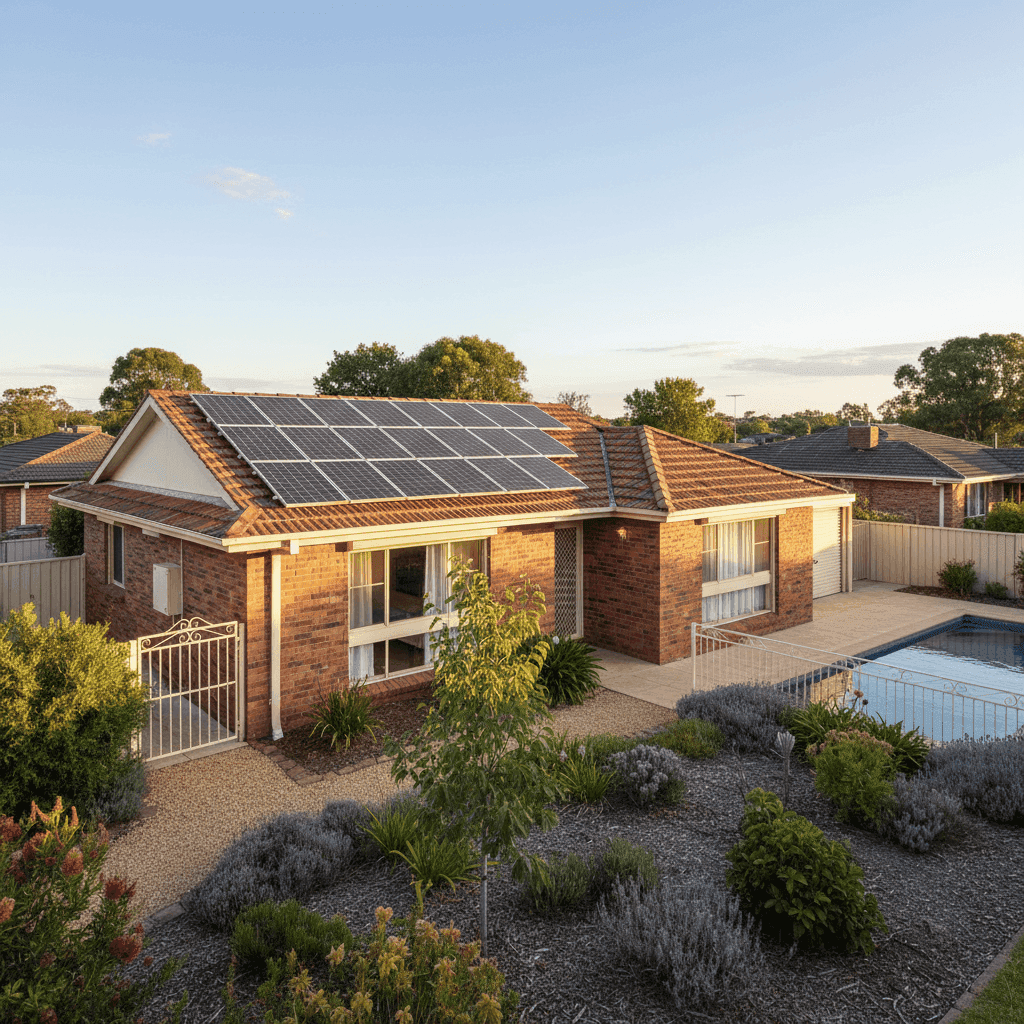
If you own a free standing home in Agnes Banks, NSW 2753, you already know this pocket of the Hawkesbury region offers a lifestyle that's hard to beat — semi-rural surroundings, generous block sizes, and a relaxed pace just an hour from Sydney. But with that lifestyle comes a property that's worth protecting properly, and understanding what you should be paying for home and contents insurance is an important part of that.
This article breaks down a real insurance quote for a 5-bedroom, 3-bathroom free standing home in Agnes Banks, compares it against local, state, and national benchmarks, and offers practical tips to help you get the best value cover.
---
Is This Quote Fair?
The annual premium for this property came in at $3,813 per year (or $359/month), covering both building and contents with a sum insured of $832,000 for the building and $249,000 for contents. Both the building and contents excess are set at $1,000 each.
Our price rating for this quote is FAIR — Around Average.
That assessment holds up when you look at the numbers in context. The NSW state average premium sits at $3,801 per year, meaning this quote is almost exactly in line with what most New South Wales homeowners are paying. It's a touch above the NSW median of $3,410, which suggests there are cheaper options in the state — but those may reflect smaller homes, lower sums insured, or properties in lower-risk areas.
Given the size of this home (286 sqm), the inclusion of a pool, solar panels, and ducted climate control, and the relatively generous contents cover, landing close to the state average is a reasonable outcome. You're not being gouged, but there may still be room to sharpen the premium with a bit of shopping around.
---
How Agnes Banks Compares
Understanding where Agnes Banks sits relative to broader benchmarks helps put this quote in perspective. Here's a quick snapshot:
| Benchmark | Annual Premium |
|---|---|
| This Quote | $3,813 |
| NSW State Average | $3,801 |
| NSW State Median | $3,410 |
| Penrith LGA Average | $3,642 |
| National Average | $2,965 |
| National Median | $2,716 |
A few things stand out here. First, the Penrith LGA average of $3,642 is notably lower than this quote, which might initially raise an eyebrow. However, LGA averages include a wide mix of property sizes, ages, and cover levels — a smaller, newer home in Penrith with lower sums insured will naturally pull that average down. For a larger, well-appointed home like this one, sitting above the LGA average is entirely expected.
Second, the gap between NSW averages and the national average of $2,965 is significant — nearly $840 per year. This reflects the broader reality that insuring homes in New South Wales tends to cost more than in many other parts of the country, driven by factors like flood risk, storm exposure, and higher property values across much of the state.
You can explore how Agnes Banks compares in more detail at the Agnes Banks insurance stats page, or zoom out to see the full NSW insurance landscape and national benchmarks.
---
Property Features That Affect Your Premium
Every home is different, and insurers price risk based on a detailed picture of your property. Here's how the specific features of this Agnes Banks home influence what you pay:
Brick veneer construction and tiled roof Brick veneer walls and a tiled roof are generally viewed favourably by insurers. Brick veneer offers solid fire resistance and durability, while tiles are more resilient than metal or Colorbond in certain weather conditions. This combination typically attracts more competitive premiums compared to homes with timber or fibre cement cladding.
Slab foundation A concrete slab foundation is considered low-risk from an insurance perspective — there's no subfloor cavity to worry about, and slab homes tend to be structurally stable. This is a minor positive factor in the risk assessment.
Timber and laminate flooring While aesthetically appealing, timber and laminate flooring can be more expensive to replace after water damage than tiles or carpet. Insurers factor this into contents and building valuations, which may contribute marginally to the premium.
Swimming pool Pools increase the replacement cost of the home and introduce a degree of liability risk. They're a known premium driver, particularly when it comes to accurately calculating your building sum insured.
Solar panels Solar panel systems — especially larger rooftop installations — are increasingly common in NSW but do add to the building's replacement value. If your system is significant in size, it's worth confirming it's adequately covered under your building sum insured.
Ducted climate control Ducted air conditioning systems are a meaningful fixed asset within the home and contribute to the overall building replacement cost. Ensuring your sum insured accounts for the full cost of reinstating this system is important.
Construction year: 1986 A home built in 1986 is approaching 40 years old. Older homes can carry slightly higher risk in the eyes of insurers due to ageing plumbing, electrical systems, and roofing materials. Regular maintenance and updates to key systems can help manage this risk — and potentially your premium.
---
Tips for Homeowners in Agnes Banks
1. Review your sum insured regularly Building costs in regional NSW have risen sharply in recent years. A sum insured of $832,000 for a 286 sqm home may be appropriate today, but it's worth reassessing annually. Underinsurance is one of the most common — and costly — mistakes homeowners make. Use a building cost calculator or speak with a quantity surveyor if you're unsure.
2. Consider a higher excess to reduce your premium Both the building and contents excess on this policy are set at $1,000. Opting for a higher excess (say, $2,000 or $2,500) can meaningfully reduce your annual premium. Just make sure the excess level is one you could comfortably cover out of pocket if you needed to make a claim.
3. Bundle your building and contents cover This quote already combines building and contents — a smart move. Most insurers offer a discount for bundling, and managing a single policy is far more convenient than juggling two. If you haven't already consolidated, it's worth doing.
4. Compare quotes at renewal time Loyalty doesn't always pay in insurance. Premiums can shift significantly from year to year, and insurers often offer better rates to new customers. Set a reminder to compare your options before your renewal date each year — even if you're happy with your current insurer, you may find a better deal elsewhere.
---
Ready to Compare?
Whether you're reviewing an existing policy or shopping for cover for the first time, comparing quotes is the single most effective way to make sure you're not overpaying. Get a home insurance quote at CoverClub and see how your premium stacks up against the market — it only takes a few minutes.