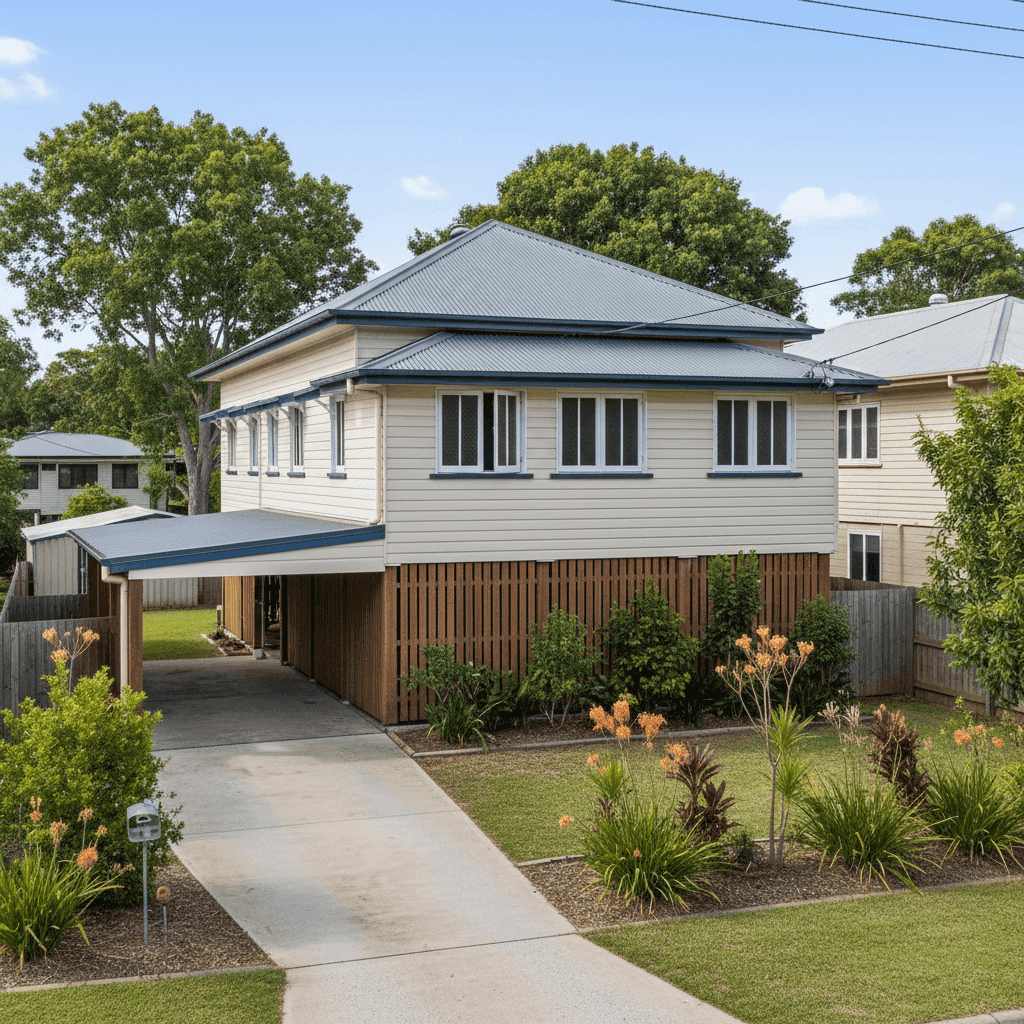
Home insurance in North Queensland is a serious financial consideration — and for good reason. If you own a free standing home in Aitkenvale, QLD 4814, you're likely already aware that premiums in the Townsville region can be eye-watering compared to the rest of the country. In this article, we break down a real home and contents insurance quote for a three-bedroom, one-bathroom weatherboard home in Aitkenvale, assess whether it represents fair value, and share practical tips to help you manage your costs.
---
Is This Quote Fair?
The quote in question comes in at $5,840 per year (or $553/month) for combined home and contents cover, with a building sum insured of $600,000 and contents valued at $50,000. The building excess is $2,000 and the contents excess is $500.
Our price rating for this quote is FAIR — around average for the area.
That rating holds up when you dig into the local data. Based on 51 quotes collected for Aitkenvale, the suburb average premium sits at $6,223/year, meaning this quote comes in roughly $383 below what many homeowners in the same postcode are paying. The suburb median is $5,343/year, so this quote is modestly above the midpoint — not a bargain, but certainly not the worst outcome either.
The wide spread of premiums in the suburb tells its own story. The 25th percentile sits at just $3,904/year, while the 75th percentile blows out to $9,608/year. That's a massive range, and it reflects how differently insurers price risk in cyclone-prone coastal areas. Where you land in that range depends heavily on your property's specific characteristics — more on that shortly.
---
How Aitkenvale Compares
To put this quote in broader context, it's worth stepping back and looking at the bigger picture.
| Benchmark | Average Premium | Median Premium |
|---|---|---|
| Aitkenvale (suburb) | $6,223/yr | $5,343/yr |
| Queensland (state) | $4,547/yr | $3,931/yr |
| Australia (national) | $2,965/yr | $2,716/yr |
| Townsville LGA | $6,615/yr | — |
The gap between Aitkenvale and the national average is stark. At $5,840/year, this quote is nearly double the national average of $2,965/year and significantly above the Queensland state average of $4,547/year. Compared to the national median of $2,716/year, the premium is more than twice as high.
This isn't unusual for the Townsville region. The Townsville LGA average of $6,615/year is among the highest in the country, driven primarily by cyclone risk, flooding exposure, and the elevated cost of rebuilding in regional Queensland. Viewed against the LGA average, this quote of $5,840 actually looks relatively competitive.
---
Property Features That Affect Your Premium
Several characteristics of this property directly influence what insurers charge. Understanding these factors can help you have more informed conversations with insurers and identify where savings might be possible.
Cyclone Risk Area This is the single biggest driver of elevated premiums in Aitkenvale. The suburb falls within a designated cyclone risk zone, and insurers apply significant loadings to reflect the potential for wind and storm damage. There's little you can do to change your location, but ensuring your home meets current cyclone construction standards — and that your sum insured reflects genuine rebuild costs — is critical.
Weatherboard Timber Walls Timber weatherboard construction is considered higher risk than brick or rendered masonry by most insurers. Timber is more susceptible to fire, pest damage, and wind uplift, all of which contribute to a higher base premium. Homes of this era (built in 1960) may also have older wiring and plumbing, which some insurers factor into their risk assessment.
Stumped Foundation The home sits on stumps, which is common for older Queensland homes and offers some practical advantages — good airflow, easier access for maintenance, and some resilience to minor flooding. However, stumped homes can also be more vulnerable to wind events, which may influence how certain insurers price the risk.
Steel/Colorbond Roof On the positive side, a Colorbond steel roof is generally viewed favourably by insurers in cyclone-prone areas. Modern steel roofing systems are designed to perform well in high-wind conditions, and this may help moderate what could otherwise be an even higher premium.
Building Size and Age At 139 sqm and built in 1960, this is a modest but older home. The age of construction can affect premiums, as older homes may have outdated electrical systems, plumbing, or structural elements that increase the likelihood of a claim. A building sum insured of $600,000 is substantial for a home this size — it's worth verifying this figure reflects a realistic rebuild cost, as over-insurance means you're paying more premium than necessary.
---
Tips for Homeowners in Aitkenvale
1. Review your sum insured carefully A $600,000 building sum insured is a significant figure for a 139 sqm home. Use a professional quantity surveyor or an online rebuild cost calculator to confirm this figure is accurate. Over-insuring pushes your premium up unnecessarily, while under-insuring leaves you exposed at claim time.
2. Consider a higher building excess The current building excess of $2,000 is already on the higher side, which typically helps reduce the premium. If you can comfortably absorb a higher out-of-pocket cost in the event of a claim, asking for quotes with a $5,000 excess could bring meaningful savings — particularly in a high-premium market like Townsville.
3. Shop the market every renewal Loyalty rarely pays in Australian home insurance. Insurers regularly adjust their pricing models, and the insurer who offered the best rate last year may not be competitive this year. Use a comparison service like CoverClub at each renewal to ensure you're not overpaying.
4. Ask about cyclone mitigation discounts Some insurers offer discounts for homes that have been assessed or upgraded to meet cyclone resilience standards. If your home has had roof tie-downs retrofitted, storm shutters installed, or has undergone a cyclone resilience assessment, make sure to mention this when getting quotes — it could make a real difference to your premium.
---
Ready to Compare?
Whether you're renewing your current policy or buying cover for the first time, it pays to see what's available in the market. CoverClub makes it easy to compare home insurance quotes for properties across Queensland and Australia. Start your free quote today and find out if you could be paying less for the same — or better — cover.