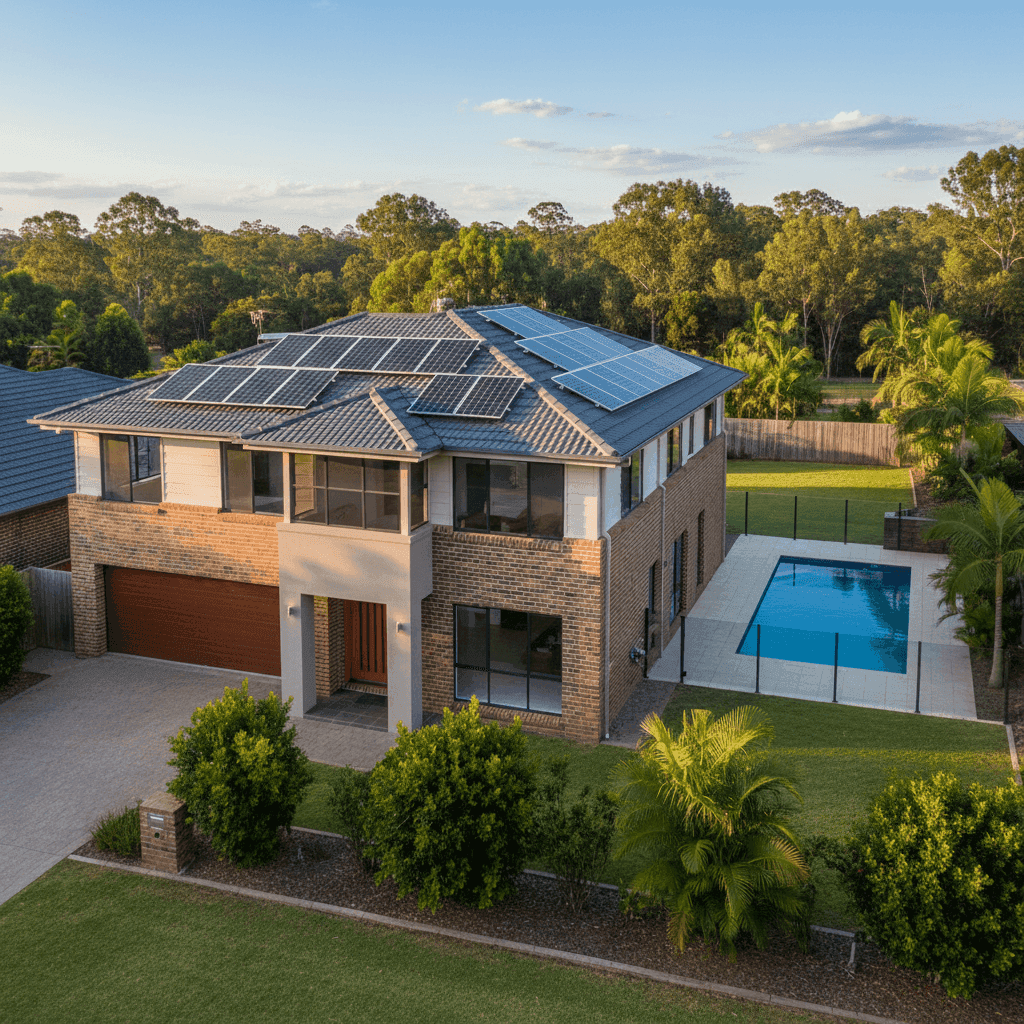
Albany Creek is a well-established residential suburb in Brisbane's northern corridor, popular with families drawn to its leafy streets, quality schools, and easy access to the city. For homeowners here, protecting a substantial property asset with the right insurance cover is a serious financial consideration. This article breaks down a real home and contents insurance quote for a four-bedroom, free-standing home in Albany Creek (QLD 4035), assessing whether the premium represents fair value and what factors are shaping the cost.
---
Is This Quote Fair?
The quoted annual premium for this property is $2,412 per year (or $236 per month), covering both building and contents under a combined Home and Contents policy. The building is insured for $1,201,000, with contents valued at $183,000 — a comprehensive level of cover for a well-appointed family home.
Our price rating for this quote is FAIR — Around Average, and the data backs that up. When benchmarked against the 42 quotes collected for the Albany Creek area, this premium sits almost exactly in line with the suburb average of $2,457/yr and comfortably below the suburb median of $2,602/yr. That means roughly half of comparable properties in the suburb are paying more than this quote.
Importantly, the quote also comes in well below both the Queensland state average of $4,547/yr and the national average of $2,965/yr. For a four-bedroom home with a pool, solar panels, and ducted climate control — all features that can push premiums higher — landing below the national average is a genuinely positive outcome.
The building excess is set at $2,000 and the contents excess at $1,000. These are moderate excess levels; choosing a higher excess can reduce your premium, while a lower excess increases it. It's worth considering your financial position when deciding what excess level suits you best.
---
How Albany Creek Compares
Understanding where your premium sits relative to broader benchmarks helps you assess whether you're getting a competitive deal. Here's how this quote stacks up:
| Benchmark | Premium |
|---|---|
| This Quote | $2,412/yr |
| Albany Creek Suburb Average | $2,457/yr |
| Albany Creek Suburb Median | $2,602/yr |
| Albany Creek 25th Percentile | $1,407/yr |
| Albany Creek 75th Percentile | $3,570/yr |
| Brisbane LGA Average | $4,485/yr |
| QLD State Average | $4,547/yr |
| National Average | $2,965/yr |
| National Median | $2,716/yr |
A few things stand out here. First, the gap between Albany Creek's suburb average ($2,457) and the broader Brisbane LGA average ($4,485) is striking — Albany Creek homeowners are paying roughly half what many other Brisbane properties attract. This reflects the suburb's relatively low-risk profile: no cyclone zone designation, established infrastructure, and predominantly solid construction.
Second, the spread within the suburb itself is wide — from $1,407 at the 25th percentile to $3,570 at the 75th. This tells us that individual property characteristics and insurer pricing methodologies vary considerably, even within the same postcode. You can explore the full Albany Creek suburb insurance data here.
---
Property Features That Affect Your Premium
Several characteristics of this property directly influence the insurance premium, both positively and negatively.
Construction: Double Brick Walls & Concrete Roof
Double brick construction is one of the most favourable building types from an insurer's perspective. It offers excellent resistance to fire, wind, and impact — all key risk factors in Queensland. Combined with a concrete tile roof (durable and long-lasting), this home presents a low structural risk profile, which typically translates to more competitive premiums.
Slab Foundation & Tiled Flooring
A concrete slab foundation is standard for homes of this era and construction type, offering stability and reduced risk of subsidence. Tiled flooring throughout is also a practical choice in Queensland's climate — it's durable, easy to maintain, and less susceptible to moisture damage than carpet or timber, which can help keep contents claims down.
Swimming Pool
A pool adds value to the property but also increases the insured asset's replacement cost. Insurers factor in pool infrastructure — fencing, pumps, filtration systems — when calculating building sums insured. It's important to ensure your sum insured accurately reflects the cost to rebuild, including all outdoor structures.
Solar Panels
Solar panels are increasingly common in Queensland and are generally covered under building insurance as a fixed structure. However, it's worth confirming with your insurer exactly what's covered — some policies include inverters and wiring, while others may have specific exclusions or sub-limits. Given the cost of a quality solar system, this is a detail worth checking.
Ducted Climate Control
Ducted air conditioning is a significant fixed asset and should be included in your building sum insured. At standard fittings quality, this system adds meaningful replacement value to the property — and at 244 sqm of living space, ensuring the sum insured of $1,201,000 is accurate for a full rebuild is essential.
Built in 1995
Homes built in the mid-1990s are generally well-regarded by insurers — they predate some of the less rigorous building periods of the 1970s–80s but also benefit from decades of proven structural performance. That said, at nearly 30 years old, some components (roofing, plumbing, electrical) may be approaching the end of their serviceable life, which is worth factoring into your maintenance planning.
---
Tips for Homeowners in Albany Creek
1. Verify your sum insured regularly With building costs rising across Queensland, the cost to rebuild a 244 sqm double brick home has increased substantially in recent years. Use a building cost calculator or speak with a quantity surveyor to confirm your $1,201,000 sum insured still reflects current rebuild costs — being underinsured can be a costly mistake at claim time.
2. Review your solar and pool cover Check your policy's product disclosure statement (PDS) for specific inclusions and exclusions around solar panels and pool infrastructure. Some insurers have sub-limits or conditions that apply to these features. If your policy is light on detail, it may be worth shopping around for one that provides clearer, more comprehensive cover.
3. Consider your excess strategy With a $2,000 building excess and $1,000 contents excess, you're in a mid-range position. If you have a solid emergency fund and rarely make small claims, increasing your excess could meaningfully reduce your annual premium. Conversely, if cash flow is a concern, a lower excess provides more immediate relief at claim time.
4. Compare at renewal — every year Insurance loyalty rarely pays off in Australia. Insurers often offer their best rates to new customers, meaning long-term policyholders can quietly drift into overpaying. With a wide premium spread in Albany Creek (from $1,407 to $3,570), there's clearly significant variation between insurers — making comparison a worthwhile annual habit.
---
Find a Better Deal with CoverClub
Whether you're reviewing your current policy or shopping for the first time, CoverClub makes it easy to compare home and contents insurance quotes across Australia. Our data-driven platform helps you understand what's fair for your suburb, your property type, and your level of cover — so you can make a confident, informed decision. Get a quote today and see how your premium stacks up.