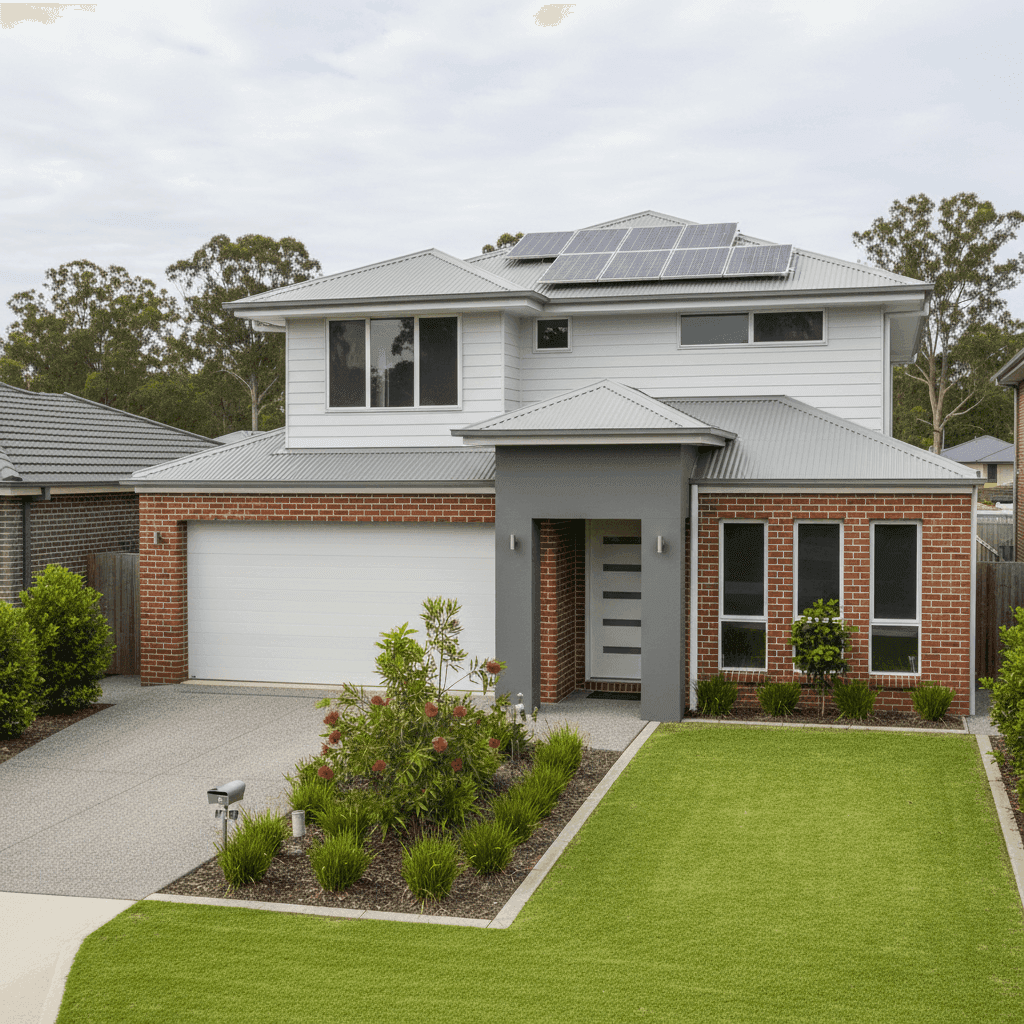
If you own a four-bedroom free standing home in Albany Creek, QLD 4035, you're probably curious whether the home insurance premium you've been quoted is genuinely competitive — or whether you're quietly paying more than you should be. Albany Creek is a well-established residential suburb in Brisbane's northern corridor, popular with families for its leafy streets, good schools, and relative proximity to the CBD. Like most of South East Queensland, it sits in a region where insurers weigh up a range of local risk factors when pricing cover.
This article breaks down a real home and contents insurance quote for a property in this suburb, compares it against local, state, and national benchmarks, and offers practical guidance for homeowners looking to get the best value on their cover.
---
Is This Quote Fair?
The quote in question comes to $1,818 per year (or $174/month) for combined home and contents insurance, covering a building sum insured of $598,000 and contents valued at $100,000. Both the building and contents excess sit at $1,000.
Based on data from 68 quotes collected for Albany Creek (postcode 4035), this premium earns a CHEAP price rating — meaning it sits well below the suburb average. Specifically:
- The suburb average premium is $3,788/yr
- The suburb median is $3,417/yr
- The 25th percentile (the cheapest quarter of quotes) sits at $2,627/yr
At $1,818/yr, this quote comfortably undercuts even the cheapest quartile of Albany Creek premiums — a strong result by any measure. For homeowners in this area, landing a quote at this level represents meaningful savings of over $800 compared to the next-cheapest tier, and more than $2,000 below the suburb average.
---
How Albany Creek Compares
To put this quote in broader context, it helps to look beyond the suburb and consider Queensland-wide and national insurance data.
| Benchmark | Average Premium | Median Premium |
|---|---|---|
| Albany Creek (4035) | $3,788/yr | $3,417/yr |
| Queensland (state) | $9,129/yr | $3,903/yr |
| National | $5,347/yr | $2,764/yr |
| Brisbane LGA | $16,277/yr | — |
A few things stand out here. Queensland's average premium of $9,129/yr is extraordinarily high compared to its median of $3,903/yr — a clear sign that the state average is being dragged upward by high-risk postcodes, particularly in cyclone-prone coastal and far north Queensland regions. Albany Creek, sitting in Brisbane's northern suburbs and outside designated cyclone risk zones, benefits from a more moderate risk profile.
The Brisbane LGA average of $16,277/yr looks alarming at first glance, but again reflects the diversity of properties across the LGA — from elevated flood-risk inner-city suburbs to premium waterfront homes. Albany Creek's suburb median of $3,417/yr is considerably more grounded.
Nationally, the median premium of $2,764/yr is actually slightly below Albany Creek's median, which reflects how competitive some interstate markets (particularly in lower-risk areas of Victoria and South Australia) can be. That said, a quote of $1,818/yr for a well-specified 4-bedroom Brisbane home with $598,000 building cover is a genuinely strong outcome by any national standard.
---
Property Features That Affect Your Premium
Several characteristics of this particular property are likely contributing to its favourable premium. Understanding these factors can help you anticipate how insurers assess your risk.
Brick Veneer Construction Brick veneer external walls are generally well-regarded by insurers. While not as robust as full double brick, brick veneer offers solid fire resistance and structural durability — qualities that typically attract more competitive premiums compared to weatherboard or fibre cement cladding.
Steel/Colorbond Roof Colorbond steel roofing is a popular and insurer-friendly choice in Queensland. It performs well in high-wind events, resists corrosion, and has a long serviceable life. Compared to older terracotta or concrete tiles, a well-maintained Colorbond roof can positively influence your premium.
Slab Foundation A concrete slab foundation is considered low-risk by most insurers. It eliminates the underfloor cavity that can be vulnerable to moisture, pests, and subsidence — all of which can drive up claims costs and, in turn, premiums.
2004 Construction Year Homes built in 2004 were constructed under modern Queensland building codes, which introduced stronger requirements for cyclone and wind resistance following the lessons of earlier natural disaster events. This vintage tends to strike a good balance — modern enough to meet robust standards, but established enough that any construction defects would likely have surfaced by now.
Solar Panels The presence of solar panels adds some complexity to a home insurance policy. Panels represent a meaningful asset (typically $5,000–$15,000+ in replacement value) and should be explicitly covered under your building sum insured. It's worth confirming with your insurer that rooftop solar is included in your policy's coverage, as some policies treat it as a separate item.
Ducted Climate Control Ducted air conditioning systems are a significant fixed asset and are generally included as part of the building sum insured. Ensuring your building cover adequately reflects the replacement cost of this system — alongside the rest of the home — is important to avoid being underinsured.
No Pool, No Cyclone Risk The absence of a swimming pool removes a source of liability and maintenance-related claims. Combined with the property's location outside a designated cyclone risk zone, this contributes to a cleaner risk profile overall.
---
Tips for Homeowners in Albany Creek
1. Check your building sum insured regularly Construction costs in South East Queensland have risen sharply over recent years. A building sum insured of $598,000 for a 214 sqm home built in 2004 may be appropriate today, but it's worth reviewing annually. Underinsurance is one of the most common — and costly — mistakes homeowners make. Use a building replacement cost calculator or speak with a quantity surveyor if you're unsure.
2. Confirm solar panels are covered As noted above, solar panels should be explicitly included in your building cover. Ask your insurer directly: are rooftop solar panels covered for storm damage, hail, and accidental breakage? Some policies require a specific endorsement.
3. Don't auto-renew without comparing Even if your current premium looks competitive, the home insurance market changes every year. Insurers reprice based on updated risk models, reinsurance costs, and claims experience. What's cheap today may not be cheap at renewal. Use a comparison tool like CoverClub to benchmark your renewal quote before you commit.
4. Review your contents sum insured A contents value of $100,000 is a reasonable starting point for a four-bedroom home, but it's easy to underestimate. Take stock of high-value items — electronics, appliances, furniture, clothing, jewellery, and tools — and make sure your total reflects genuine replacement cost at today's retail prices.
---
Compare Your Own Quote
Whether you're buying, refinancing, or simply coming up for renewal, it pays to know where your premium stands relative to the market. CoverClub aggregates real quote data from across Australia so you can see exactly how your home insurance stacks up — suburb by suburb, postcode by postcode.