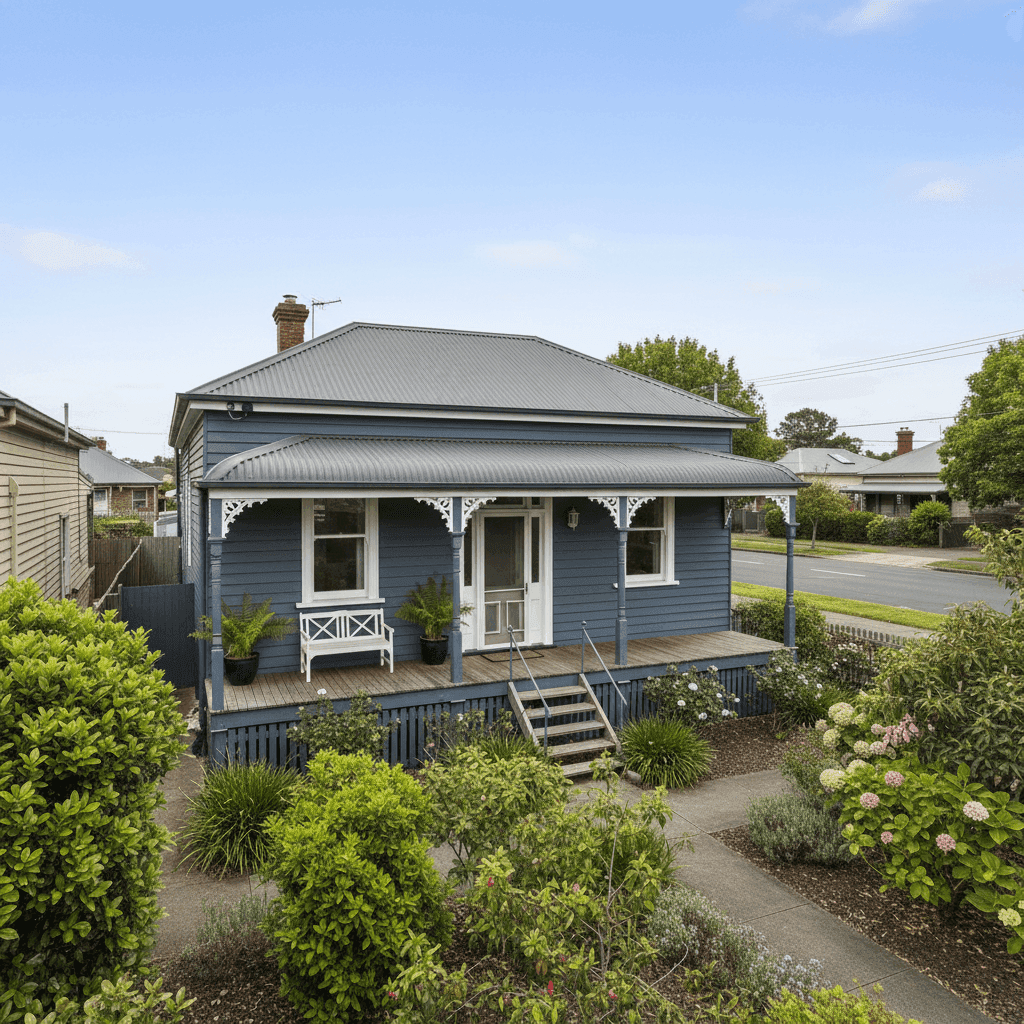
Albert Park is one of Melbourne's most charming inner-city suburbs — a leafy, heritage-rich pocket of Port Phillip known for its Victorian-era streetscapes, proximity to the bay, and the iconic Albert Park Lake. It's also a suburb where older homes are the norm, and that heritage character comes with its own set of insurance considerations. This article takes a close look at a real home and contents insurance quote for a two-bedroom, free-standing weatherboard home in Albert Park (VIC 3206), and breaks down exactly what's driving the price — and whether it represents good value.
---
Is This Quote Fair?
The short answer: yes — this is an exceptionally competitive quote.
At $1,010 per year (or around $101 per month) for combined home and contents cover, this policy sits well below the suburb average of $4,640/yr and even below the 25th percentile for Albert Park, which sits at $1,589/yr. That means this quote is cheaper than at least 75% of quotes we've seen in the area — placing it firmly in our "Cheap (Below Average)" price rating category.
To put it in perspective: the typical homeowner in Albert Park is paying more than four times what this policy costs. Even the suburb's median premium of $3,512/yr is more than three times higher. This is a meaningful saving — potentially $2,500 to $3,500 per year compared to what many neighbours are paying.
The cover itself is substantial: $500,000 in building cover and $73,000 in contents, with a building excess of $3,000 and a contents excess of $1,000. The higher building excess is likely one of the factors keeping the annual premium low — it's a common and legitimate strategy for homeowners who are comfortable self-insuring for smaller claims.
---
How Albert Park Compares
To understand just how competitive this quote is, it helps to zoom out and look at the broader market. Here's how Albert Park stacks up against state and national benchmarks:
| Benchmark | Average Premium | Median Premium |
|---|---|---|
| Albert Park (3206) | $4,640/yr | $3,512/yr |
| Victoria (VIC) | $2,921/yr | $2,694/yr |
| Australia (National) | $2,965/yr | $2,716/yr |
| Port Phillip LGA | $2,943/yr | — |
| This Quote | $1,010/yr | — |
Albert Park's average premium is notably higher than both the Victorian state average and the national average — which isn't surprising given the suburb's high property values, heritage building stock, and desirable inner-city location. Insurers factor in replacement costs, and rebuilding a period home in Albert Park to heritage standards is significantly more expensive than a comparable modern home in regional Victoria.
You can explore the full breakdown of premiums for Albert Park and surrounding postcodes on the Albert Park suburb stats page.
The wide spread between the 25th percentile ($1,589/yr) and the 75th percentile ($6,553/yr) tells an important story: premiums in Albert Park vary enormously depending on the insurer, the property, and the level of cover. This is exactly why comparing quotes matters so much in a suburb like this.
---
Property Features That Affect Your Premium
Several characteristics of this particular property play a meaningful role in how insurers price the risk — both positively and negatively.
Weatherboard Timber Construction
The external walls are weatherboard wood, which is typical for homes built in Melbourne's inner suburbs during the early-to-mid 20th century. Timber-framed homes are generally considered higher risk by insurers than brick veneer or double brick, primarily due to fire susceptibility. This can push premiums upward, so achieving a competitive rate on a weatherboard home is a noteworthy result.
Built in 1936
At nearly 90 years old, this home carries the charm — and the risk profile — of a heritage property. Older homes can have ageing plumbing, wiring, and structural elements that increase the likelihood of a claim. Insurers account for this in their pricing models.
Elevated on Stumps
The home sits on timber stumps, elevated by less than one metre. Stump foundations are common in older Melbourne homes and can be a double-edged sword: they allow for good airflow and are relatively easy to access for maintenance, but they can also be vulnerable to subsidence, termite damage, and movement over time. Insurers may factor this into their risk assessment.
Steel/Colorbond Roof
The Colorbond steel roof is actually a positive from an insurance perspective. It's durable, fire-resistant, and far less prone to storm damage than older terracotta or slate tiles. This likely helps offset some of the risk associated with the timber construction.
Timber and Laminate Flooring
The timber and laminate flooring is consistent with the home's era and character. While beautiful, timber floors can be costly to repair or replace following water damage — something worth keeping in mind when assessing contents and building cover levels.
No Pool, Solar, or Ducted Climate Control
The absence of a pool, solar panels, and ducted air conditioning simplifies the risk profile considerably. Each of these additions can increase both the replacement value of a property and the likelihood of certain types of claims. Their absence here keeps things straightforward for insurers.
---
Tips for Homeowners in Albert Park
Whether you're reviewing your current policy or shopping for the first time, here are four practical tips tailored to homeowners in Albert Park.
1. Don't underinsure your heritage home. The cost of rebuilding a weatherboard home to its original character — particularly in a heritage overlay area — can far exceed standard construction estimates. Make sure your sum insured reflects the true cost of reinstatement, not just the land value or market price. Consider getting a professional building valuation every few years.
2. Use your excess strategically. As this quote demonstrates, opting for a higher building excess (in this case, $3,000) can significantly reduce your annual premium. If you have the financial buffer to cover smaller claims yourself, this is a smart way to keep ongoing costs down without sacrificing protection for major events.
3. Compare quotes — every year. Albert Park's premium range is enormous, spanning from under $1,600 to over $6,500 at the 25th and 75th percentiles respectively. The insurer that was cheapest last year may not be this year. Make it a habit to compare quotes at CoverClub at renewal time.
4. Review your contents sum insured regularly. With $73,000 in contents cover, this policy accounts for a reasonable amount of household belongings. But it's easy to underestimate how quickly the value of furniture, electronics, clothing, and personal items adds up — especially in a well-appointed inner-city home. Do a quick audit annually to make sure you're not left short after a claim.
---
Compare Your Own Quote
If you own a home in Albert Park — or anywhere else in Australia — it pays to know whether you're getting a fair deal. CoverClub makes it easy to see how your premium stacks up against real data from your suburb, your state, and the national market. Get a quote today at CoverClub and find out if you could be paying less for the same level of protection.