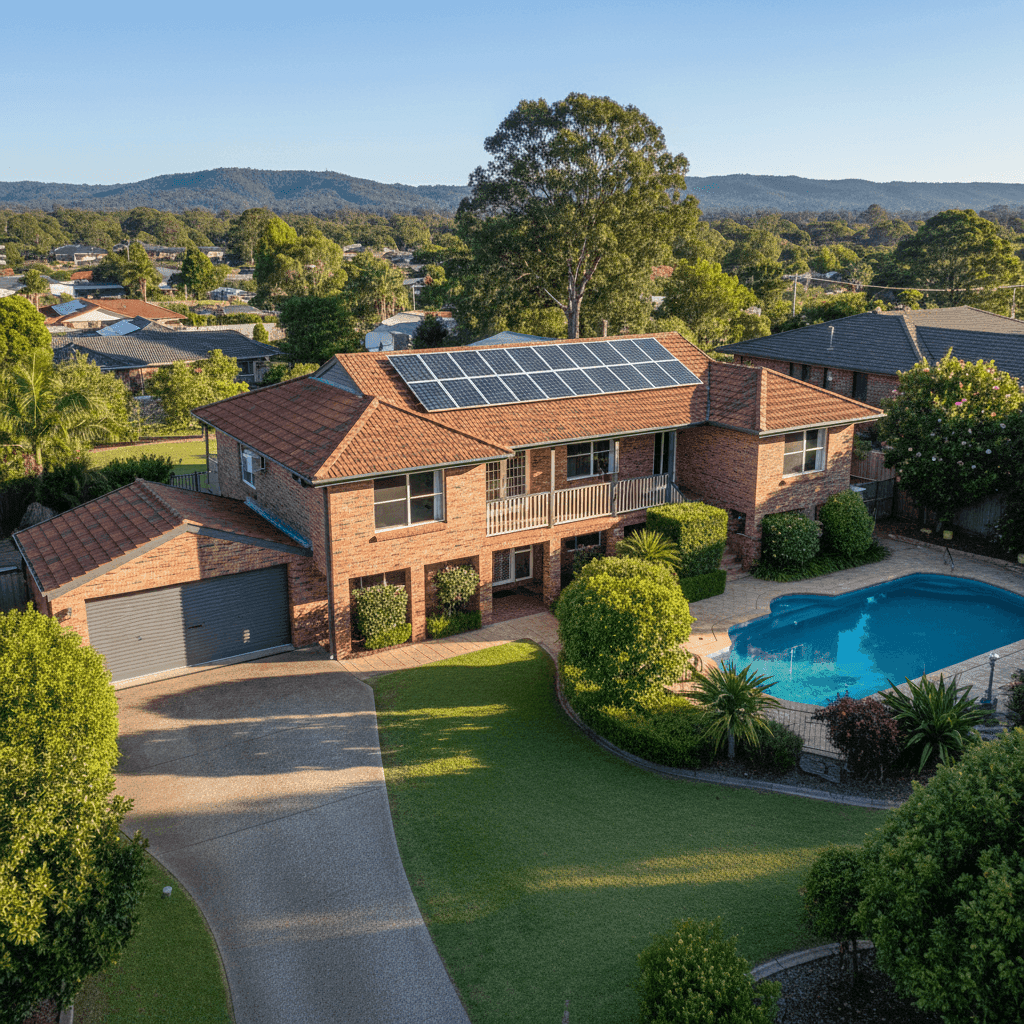
If you own a large free standing home in Albion Park Rail, NSW 2527, you already know that finding the right home insurance can feel like navigating a maze. Premiums vary wildly depending on your property's size, features, and location — and for a substantial six-bedroom home with a pool, solar panels, and ducted climate control, the numbers can climb quickly. This article breaks down a real home and contents insurance quote for exactly this type of property, putting it in context against what other homeowners in the suburb, across NSW, and nationally are paying.
---
Is This Quote Fair?
The quote in question comes in at $5,384 per year (or $509/month) for a combined home and contents policy. The building is insured for $1,136,000, with contents covered at $262,000 — figures that reflect a large, well-appointed property of 389 sqm. Both the building and contents excess are set at $500 each.
Our price rating for this quote is Expensive (Above Average). That verdict deserves some unpacking, because context is everything in insurance pricing.
At first glance, the annual premium sits notably above the suburb average of $2,290/yr and median of $1,752/yr recorded across 29 quotes in Albion Park Rail. However, it's important to remember that a six-bedroom, 389 sqm home with a pool and solar panels is not a typical property. The higher sum insured alone — over $1.1 million for the building — will naturally push the premium well beyond what a smaller, more modest home attracts.
When you compare this quote against NSW state figures, the picture shifts considerably. The NSW average premium is $9,528/yr, with a median of $3,770/yr. Against those benchmarks, $5,384/yr is actually sitting in a reasonable middle ground. And zooming out to national comparisons, the national average is $5,347/yr — meaning this quote is almost exactly in line with what Australians pay on average across the country.
So while the label "expensive" is accurate relative to the local suburb pool, it's worth noting that the suburb sample likely skews toward smaller or lower-value homes. For a property of this scale, the premium is arguably competitive.
---
How Albion Park Rail Compares
Here's a snapshot of how premiums stack up across different benchmarks:
| Benchmark | Average Premium | Median Premium |
|---|---|---|
| Albion Park Rail (suburb) | $2,290/yr | $1,752/yr |
| LGA (Kiama) | $3,332/yr | — |
| NSW (state) | $9,528/yr | $3,770/yr |
| National | $5,347/yr | $2,764/yr |
| This Quote | $5,384/yr | — |
The suburb's 75th percentile sits at $3,123/yr, meaning this quote exceeds what 75% of sampled properties in the area are paying. But again, those properties are unlikely to share the same footprint, sum insured, or feature set. The LGA average for Kiama of $3,332/yr also sits well below this quote, reinforcing that the local market skews toward more modestly valued homes.
Albion Park Rail is part of the Kiama LGA on the NSW Illawarra coast — a region that enjoys a relatively benign risk profile compared to many other parts of Australia. It is not classified as a cyclone risk area, and the suburb doesn't carry the extreme bushfire or flood loadings seen in other NSW postcodes. That said, coastal proximity and the general NSW risk environment still contribute to pricing.
---
Property Features That Affect Your Premium
Several characteristics of this property have a meaningful influence on the premium:
- Size and sum insured: At 389 sqm with six bedrooms and three bathrooms, this is a large home. A building sum insured of $1,136,000 is the single biggest driver of the premium — more coverage means more exposure for the insurer.
- Brick veneer construction with tiled roof: This is generally viewed favourably by insurers. Brick veneer walls and tile roofing are considered durable, fire-resistant materials that reduce the likelihood of a total loss, which can help moderate premiums compared to timber or metal alternatives.
- Stump foundation, slightly elevated: The home sits on stumps and is elevated by less than one metre. This foundation style is common in older NSW homes (built in 1990 in this case) and can assist with drainage and underfloor ventilation. It may carry a modest premium loading compared to slab foundations, as stumps require periodic maintenance and can be more vulnerable to certain types of damage.
- Timber and laminate flooring: Flooring type can influence contents and building claims. Timber flooring, while attractive, can be costly to replace if damaged by water or impact.
- Swimming pool: Pools add liability exposure and increase the replacement cost of the property, contributing to a higher building sum insured and premium.
- Solar panels: Solar systems add value to the building and represent a meaningful cost to repair or replace. Most insurers include them under building cover, but their presence increases the insured value.
- Ducted climate control: A ducted system is a significant fixed asset within the home. Like solar panels, it's factored into the building's replacement cost.
- Standard fittings quality: With standard (rather than high-end or premium) fittings, the property avoids some of the more significant loading that luxury fixtures can attract.
---
Tips for Homeowners in Albion Park Rail
1. Review your sum insured regularly Building costs have risen sharply in recent years. If your home was last assessed a few years ago, your sum insured may no longer reflect true rebuild costs — or it may have been set conservatively high. Use a building cost calculator or speak with a quantity surveyor to make sure your coverage is accurate, not just inflated.
2. Bundle your home and contents cover This quote already combines building and contents insurance, which is a smart move. Most insurers offer a discount for bundling, and it simplifies claims management. If you're currently holding separate policies, it's worth asking whether consolidating them saves money.
3. Increase your excess to reduce your premium Both excesses on this policy are set at $500. Opting for a higher excess — say $1,000 or $2,000 — can meaningfully reduce your annual premium. If you have the savings buffer to cover a larger out-of-pocket cost in the event of a claim, this is often a cost-effective trade-off.
4. Compare quotes at renewal time Insurers adjust their pricing models constantly, and loyalty doesn't always pay. Even if your current insurer has been reliable, running a fresh comparison at renewal can reveal better value options — particularly for a property with multiple features that different insurers price very differently.
---
Ready to Find a Better Deal?
Whether you think this quote is right on the money or you're convinced you can do better, the smartest move is to compare. CoverClub makes it easy to see how your home stacks up and get quotes tailored to your property's specific features. Start your comparison at CoverClub and find out what Albion Park Rail homeowners like you are actually paying — you might be surprised by what's available.