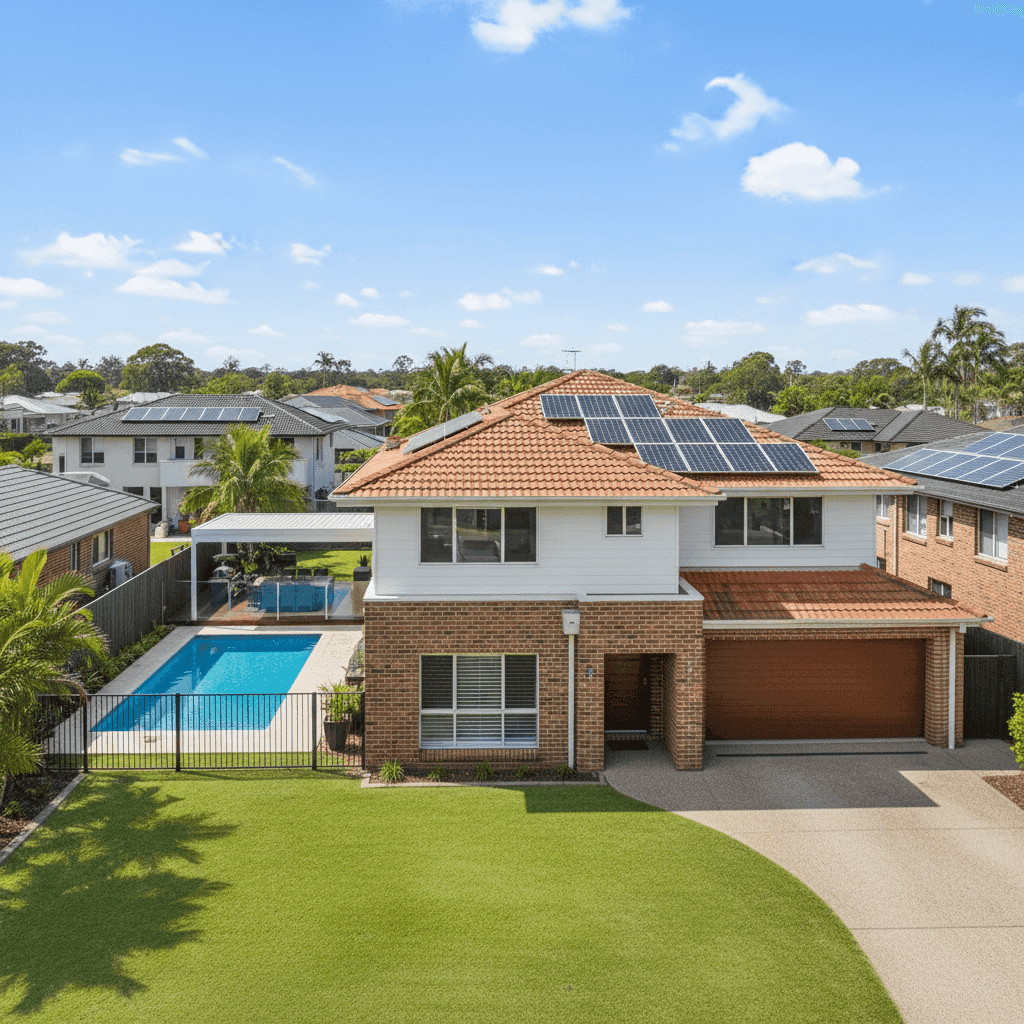
If you own a free standing home in Alexandra Headland, QLD 4572, you're living in one of the Sunshine Coast's most desirable beachside suburbs — but that lifestyle comes with its own set of insurance considerations. This article breaks down a real home and contents insurance quote for a 3-bedroom, 2-bathroom brick veneer property in the area, and puts the numbers into context so you can judge whether you're getting a fair deal.
---
Is This Quote Fair?
The quote in question sits at $4,180 per year (or $401/month) for combined home and contents cover, with a building sum insured of $1,214,000 and contents valued at $30,000. Both the building and contents excess are set at $1,000.
Our price rating for this quote is Expensive (Above Average).
To understand why, it helps to look at what other homeowners in the same suburb are paying. The suburb average premium for Alexandra Headland sits at $2,911/year, with a median of $2,581/year (based on 32 quotes in our dataset). This particular quote comes in significantly above both figures — and even clears the 75th percentile of $3,669/year, meaning it's pricier than at least three-quarters of comparable quotes in the area.
That said, "expensive" doesn't automatically mean "wrong." A high building sum insured of $1,214,000 on a 235 sqm home will naturally push the premium upward, and several property-specific features — discussed below — add further to the risk profile. The key question for any homeowner is whether the cover level and insurer offering it genuinely justify the cost, or whether a comparable policy could be found at a lower price point.
---
How Alexandra Headland Compares
Zooming out beyond the suburb gives a more complete picture. You can explore the full Alexandra Headland insurance stats on CoverClub, but here's a snapshot:
| Benchmark | Premium |
|---|---|
| This quote | $4,180/yr |
| Alexandra Headland suburb average | $2,911/yr |
| Alexandra Headland suburb median | $2,581/yr |
| Sunshine Coast LGA average | $7,249/yr |
| QLD state average | $9,129/yr |
| QLD state median | $3,903/yr |
| National average | $5,347/yr |
| National median | $2,764/yr |
A few things stand out here. First, the Queensland state average of $9,129/year is extraordinarily high — a figure heavily skewed by cyclone-prone and flood-affected regions in Far North Queensland and other at-risk areas. The QLD median of $3,903/year is a far more representative benchmark for most southeast Queensland homeowners, and this quote sits just below that mark.
Compared to the national average of $5,347/year, this quote is actually below average — though the national median of $2,764/year tells a different story, suggesting that a large proportion of Australian homeowners are paying considerably less. The Sunshine Coast LGA average of $7,249/year is notably higher than this individual quote, which may reflect the broader coastal and flood risk profile across the region.
In short: this quote is above average for the immediate suburb, broadly in line with the state median, and below the national and LGA averages. Whether that's acceptable depends heavily on the property's specific characteristics.
---
Property Features That Affect Your Premium
Several aspects of this property are worth examining through an insurance lens:
Brick veneer construction and tiled roof are generally viewed favourably by insurers. Brick veneer offers solid fire resistance and structural durability, while tiled roofs tend to be more resilient than metal or fibrous cement alternatives. These features typically help moderate premiums rather than inflate them.
Construction year: 1977. At nearly 50 years old, this home is approaching the age threshold where insurers begin to apply more scrutiny — particularly around plumbing, electrical systems, and roofing integrity. Older homes can attract higher premiums due to the increased likelihood of latent defects or the cost of like-for-like replacement with modern materials.
Slab foundation and timber/laminate flooring are common in Queensland homes of this era. Slab foundations are generally stable, though they can be more vulnerable to subsidence in certain soil types. Timber flooring, while aesthetically appealing, can increase reinstatement costs compared to concrete or tile.
Swimming pool. A pool adds liability risk and increases the overall replacement cost of the property, both of which contribute to a higher premium. Insurers typically factor in pool fencing compliance and the cost of pool reinstatement as part of the building sum insured.
Solar panels. Rooftop solar systems are now a standard feature on many Australian homes, but they do add to the insured value of the building. Panels can be damaged by hail, storms, or falling debris, and their replacement cost — including inverters and installation — can be significant.
High building sum insured ($1,214,000). This is the single biggest driver of the premium. At 235 sqm, this implies a replacement cost of roughly $5,166 per sqm, which is on the higher end but not unreasonable given the quality of fittings, the pool, solar system, and the elevated construction costs typical of coastal Queensland.
---
Tips for Homeowners in Alexandra Headland
1. Review your building sum insured carefully. The building sum insured should reflect the full cost of rebuilding your home from the ground up — not its market value. Use a quantity surveyor or an online calculator to verify that $1,214,000 is accurate for your property. Over-insuring unnecessarily inflates your premium; under-insuring can leave you exposed at claim time.
2. Shop around — especially at renewal. Given this quote is above the suburb average, it's well worth comparing it against other insurers before committing. Premiums can vary dramatically for the same property depending on the insurer's risk appetite and pricing models. Get a comparison quote at CoverClub to see what else is available in your area.
3. Consider your excess settings. Both the building and contents excess are set at $1,000. Opting for a higher voluntary excess — say, $2,000 or $2,500 — can meaningfully reduce your annual premium. This strategy works well if you have sufficient savings to cover a larger out-of-pocket expense in the event of a claim.
4. Keep your pool and solar documentation up to date. Insurers may request evidence that your pool fencing meets Queensland safety standards, and that your solar system was professionally installed. Keeping certificates of compliance and installation records on hand can smooth the claims process and may support more competitive quotes at renewal.
---
Compare Your Options with CoverClub
Whether this quote represents good value ultimately comes down to what's included in the policy — not just the price. Excess structures, flood cover, accidental damage inclusions, and claims handling reputation all matter. The best way to know if you're getting a fair deal is to compare.
Run your own quote comparison at CoverClub and see how your premium stacks up against the suburb, state, and national benchmarks. It takes just a few minutes and could save you hundreds of dollars a year.