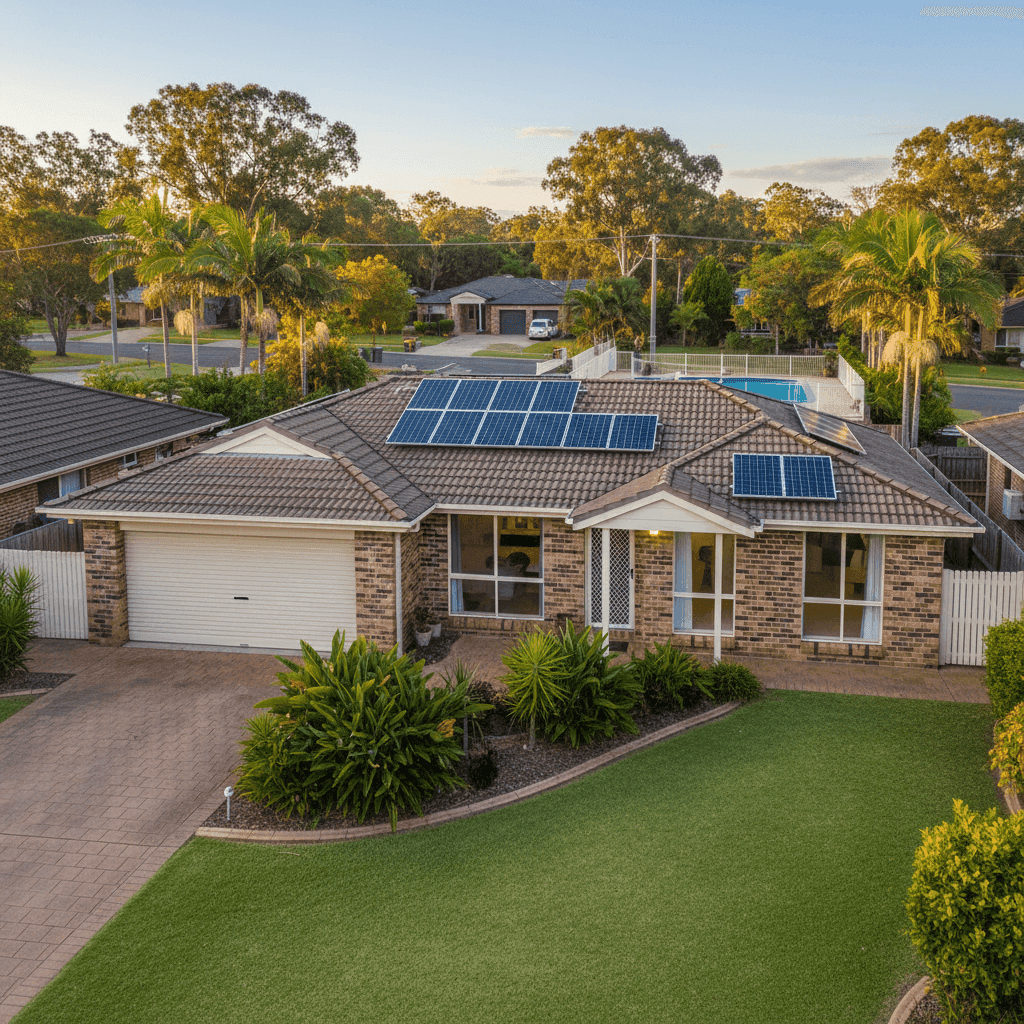
If you own a free standing home in Alexandra Hills, QLD 4161, you've probably wondered whether you're paying a fair price for home insurance — or leaving money on the table. This article breaks down a real insurance quote for a four-bedroom, two-bathroom brick veneer home in the suburb, and benchmarks it against local, state, and national data so you can make a more informed decision.
---
Is This Quote Fair?
The quote in question comes in at $1,759 per year (or $176/month) for combined Home and Contents cover, with a building sum insured of $714,000 and contents valued at $50,000. The building excess is $3,000 and the contents excess is $1,000.
Our price rating for this quote is FAIR — Around Average.
At first glance, that might sound underwhelming, but context matters enormously in home insurance. Compared to the suburb average for Alexandra Hills of $2,348/year, this quote sits $589 below the local average — that's a meaningful saving of roughly 25%. It also sits below the suburb median of $2,405/year, meaning more than half the quotes we've seen for this postcode come in higher.
So while "Fair" might not sound like a glowing endorsement, in practical terms this homeowner is doing better than most of their neighbours. The rating reflects that there is still room to potentially find a lower price — particularly given the suburb's 25th percentile sits at $1,194/year — but it's far from an overpriced policy.
---
How Alexandra Hills Compares
To really appreciate this quote, it helps to zoom out and look at the broader picture. You can explore the full data on our Alexandra Hills insurance stats page, but here's a quick summary:
| Benchmark | Premium |
|---|---|
| This Quote | $1,759/yr |
| Alexandra Hills suburb average | $2,348/yr |
| Alexandra Hills suburb median | $2,405/yr |
| Redland LGA average | $3,178/yr |
| QLD state average | $9,129/yr |
| QLD state median | $3,903/yr |
| National average | $5,347/yr |
| National median | $2,764/yr |
(Based on 61 quotes collected for the Alexandra Hills area.)
The numbers tell a striking story. Queensland's state average premium of $9,129/year is heavily skewed by high-risk areas — think Far North Queensland cyclone zones and flood-prone regions — which pulls the mean well above what most south-east Queensland homeowners actually pay. The state median of $3,903 is a more grounded figure, and even that is more than double this quote.
Compared to the national average of $5,347/year, this quote looks very competitive indeed. Alexandra Hills, sitting in the Redland City Council area on the eastern fringe of Brisbane, benefits from not being classified as a cyclone risk zone — a factor that keeps premiums considerably lower than many other Queensland postcodes.
---
Property Features That Affect Your Premium
Insurance underwriters don't just price a suburb — they price a specific property. Several features of this home work in the homeowner's favour, while others add complexity to the risk profile.
Brick Veneer Walls & Tiled Roof
Brick veneer construction with a tiled roof is generally viewed favourably by insurers. Brick is fire-resistant and durable, while tiles offer longevity compared to Colorbond or corrugated iron in some risk scenarios. This combination tends to attract more competitive premiums than, say, weatherboard or fibrous cement cladding.
Concrete Slab Foundation
A slab foundation is the standard for homes of this era and is considered a low-risk foundation type. It avoids the complications of sub-floor spaces that can be susceptible to moisture, termites, or storm damage — all relevant considerations in south-east Queensland's humid climate.
Swimming Pool
Pools add value to a property but also introduce liability risk. Most insurers factor a pool into the building sum insured and may also consider it from a public liability perspective. It's important to ensure the pool and its fencing comply with Queensland's pool safety legislation, as non-compliance could affect a claim.
Solar Panels
The home's solar panel system needs to be correctly included in the building sum insured. Solar panels can be expensive to replace — particularly if a storm or hail event damages them — and are often underinsured. At $714,000, the building sum insured appears robust for a 214 sqm home, but it's worth confirming with your insurer that panels are explicitly covered.
Ducted Climate Control
Ducted air conditioning systems are a significant asset and can be costly to repair or replace. These are typically covered under the building policy, but it's worth checking your Product Disclosure Statement (PDS) to confirm.
Construction Year (1995)
A home built in 1995 is well past the era of some of the most problematic building materials (such as Mr Fluffy-era insulation or early-era asbestos sheeting in walls), but it may also have ageing plumbing and electrical systems. Insurers sometimes view homes of this age as having slightly higher maintenance risk, though a well-maintained property in this bracket is generally straightforward to insure.
---
Tips for Homeowners in Alexandra Hills
Whether you're reviewing an existing policy or shopping around for the first time, here are some practical steps to make sure you're getting the best value.
- Review your sum insured annually. Building costs in Queensland have risen sharply in recent years. A sum insured that was adequate in 2022 may leave you underinsured today. Use a building cost calculator or speak to a quantity surveyor to validate your figure before renewal.
- Check your pool safety compliance. Queensland has strict pool fencing laws, and a non-compliant pool could complicate a liability claim. Ensure your pool fence and gate meet current standards under the Building Act 1975 and register your pool on the Queensland Pool Safety Register if you haven't already.
- Bundle your building and contents cover. As this quote demonstrates, combining Home and Contents insurance with a single insurer often results in a better overall price than purchasing two separate policies. It also simplifies the claims process if you ever need to make one.
- Increase your excess to reduce your premium. This quote carries a $3,000 building excess. If you're comfortable self-insuring smaller claims, opting for a higher excess is one of the most reliable levers for reducing your annual premium — particularly useful if you're sitting in the "Fair" range and want to push toward "Great Value" territory.
---
Compare Your Home Insurance Quote Today
Whether this quote is right for you depends on your individual circumstances, risk appetite, and the specific policy inclusions. The best way to know if you're getting a competitive deal is to compare. At CoverClub, we make it easy to benchmark your premium against real data from your suburb and beyond.
Get a home insurance quote now and see how your property stacks up — it only takes a few minutes, and the savings could be well worth it.