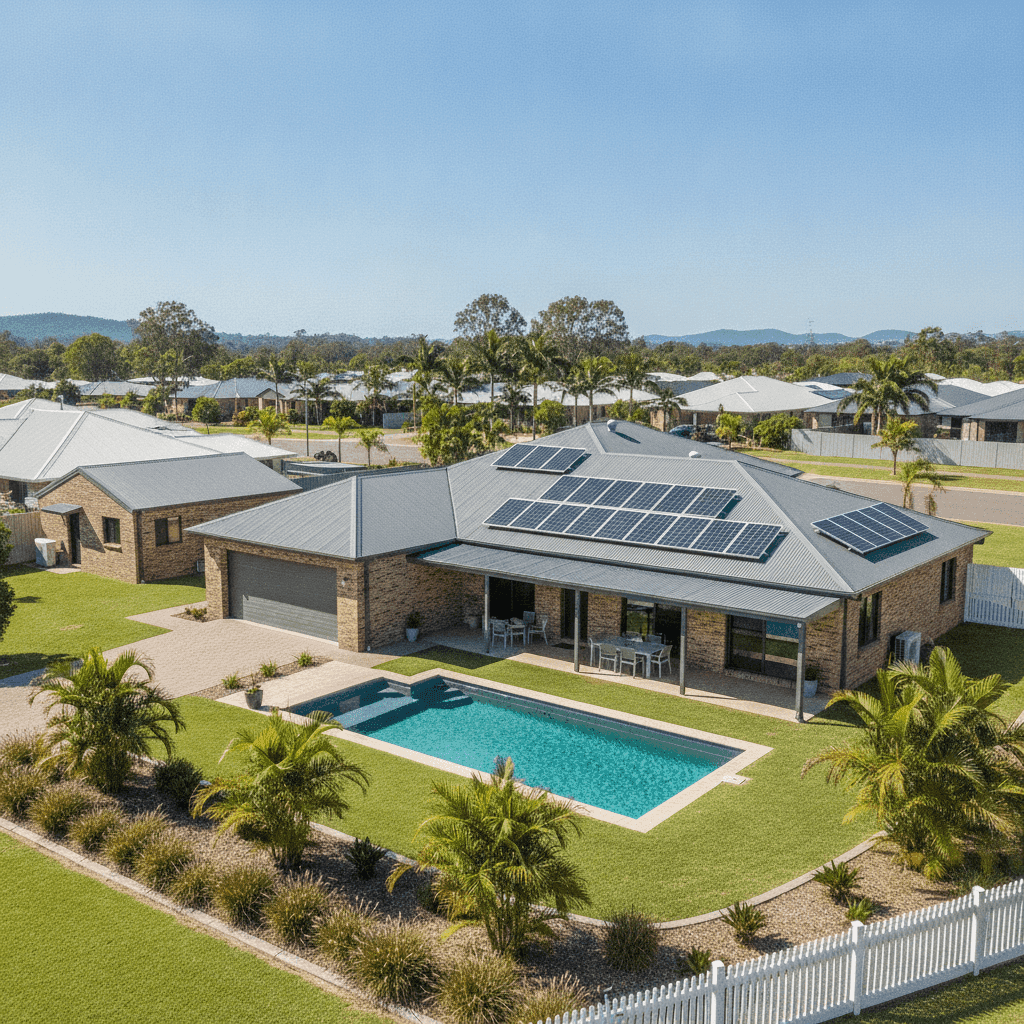
If you own a free standing home in Alice River, QLD 4817, you've probably noticed that home insurance doesn't come cheap in this part of Queensland. This article breaks down a real home and contents insurance quote for a four-bedroom property in the suburb, compares it against local, state, and national benchmarks, and offers practical tips to help you get the best value on your cover.
---
Is This Quote Fair?
The quote in question comes in at $4,915 per year (or $471 per month) for combined home and contents insurance, covering a building sum insured of $1,028,000 and contents valued at $99,000. The building excess is $2,000 and the contents excess is $1,000.
Our price rating for this quote is FAIR — Around Average.
Based on a sample of 13 quotes collected for Alice River (postcode 4817), the suburb median sits at $4,615 per year. At $4,915, this quote lands just above that midpoint — meaning roughly half of comparable properties in the area are paying less, and half are paying more. It's not a bargain, but it's far from the worst outcome either.
What's encouraging is how this quote stacks up against the suburb average of $11,332 per year. That figure is heavily skewed by high-end outliers, which is common in smaller sample sets, but it does illustrate just how wide the pricing spread can be in Alice River. Sitting well below that average is a meaningful result.
---
How Alice River Compares
Understanding where Alice River sits in the broader insurance landscape helps put this quote in perspective.
| Benchmark | Premium |
|---|---|
| This Quote | $4,915/yr |
| Alice River Suburb Median | $4,615/yr |
| Alice River Suburb Average | $11,332/yr |
| LGA Average (Charters Towers) | $4,457/yr |
| QLD State Median | $3,903/yr |
| QLD State Average | $9,129/yr |
| National Median | $2,764/yr |
| National Average | $5,347/yr |
A few things stand out here. First, Alice River premiums — even at the median — are noticeably higher than the national median of $2,764/yr. That's a gap of around $1,850 per year, which reflects the elevated risk profile of properties in Far North Queensland, particularly around cyclone exposure.
Second, the QLD state median of $3,903/yr is lower than the Alice River suburb median, suggesting that even within Queensland, this area carries above-average risk. That's consistent with its designation as a cyclone risk zone.
Interestingly, this quote is also slightly above the Charters Towers LGA average of $4,457/yr, though the difference is modest. You can explore more localised data on the Alice River suburb stats page.
The 25th–75th percentile range for the suburb spans $3,126 to $7,941 per year, which tells you there's genuine room to shop around. If you're currently paying above $7,941, it's almost certainly worth getting fresh quotes.
---
Property Features That Affect Your Premium
Several characteristics of this particular property have a direct bearing on what insurers charge — both positively and negatively.
Cyclone Risk Zone
This is arguably the single biggest premium driver for Alice River. Properties in Far North Queensland are assessed under cyclone risk ratings, and insurers price accordingly. Expect this to add a significant loading compared to properties in southern states.
Double Brick External Walls
Double brick construction is generally viewed favourably by insurers. It's more resistant to wind, fire, and impact than lighter cladding materials, which can help moderate premiums. For a cyclone-prone area, this is a meaningful structural advantage.
Steel / Colorbond Roof
Colorbond roofing is a popular and practical choice in Queensland. It performs well in high-wind events and is resistant to corrosion — both relevant considerations in this climate. Insurers typically regard it as a lower-risk roofing material compared to tiles, which can become projectiles in severe weather.
Slab Foundation
A concrete slab foundation provides good structural stability and is well-suited to Queensland's soil conditions. It's generally a neutral-to-positive factor from an underwriting perspective.
Swimming Pool
Pools add to the replacement cost of the property and introduce a liability element, both of which can nudge premiums upward. Ensuring your sum insured accurately accounts for the pool's value is important.
Solar Panels
Solar systems are now a standard inclusion on many Queensland homes, but they do add to the insured value of the building. Make sure your policy explicitly covers solar panels — not all standard policies do by default.
Granny Flat
The presence of a granny flat increases the overall building replacement cost and may also introduce additional liability considerations. It's essential that your sum insured reflects the full cost of rebuilding both the main dwelling and the ancillary structure.
Ducted Climate Control
Ducted air conditioning systems are expensive to replace and are typically included within the building sum insured. At $1,028,000, the sum insured for this property appears to account for the home's size (244 sqm), quality fittings, and these additional features.
---
Tips for Homeowners in Alice River
1. Review Your Sum Insured Annually
Building costs in Queensland have risen significantly in recent years. A sum insured set a few years ago may no longer reflect current construction costs, particularly for a 244 sqm double brick home with a pool, solar system, and granny flat. Underinsurance is a serious risk — make sure your figure is updated each year.
2. Shop Around Within the Cyclone Window
Insurers can restrict new policy applications during active cyclone seasons. Try to compare and switch policies during the off-season (typically May to October) to avoid being locked out of better deals when you need flexibility most.
3. Consider a Higher Excess to Reduce Your Premium
This quote carries a $2,000 building excess and $1,000 contents excess. If you have the financial buffer to absorb a larger out-of-pocket cost in the event of a claim, opting for a higher excess is one of the most straightforward ways to bring your annual premium down.
4. Confirm Your Policy Covers All Key Features
With solar panels, a pool, ducted air conditioning, and a granny flat, there are multiple features that some insurers treat as optional extras or exclude from standard cover. Read the Product Disclosure Statement (PDS) carefully and ask your insurer directly about each item before you commit.
---
Compare Quotes and Save
Whether this quote feels right for your situation or you're wondering if you could do better, the smartest move is to compare. Premiums for Alice River properties vary enormously — the gap between the 25th and 75th percentile is nearly $5,000 per year. That's real money.
Get a home and contents insurance quote at CoverClub to see how your property compares and find cover that fits both your needs and your budget.