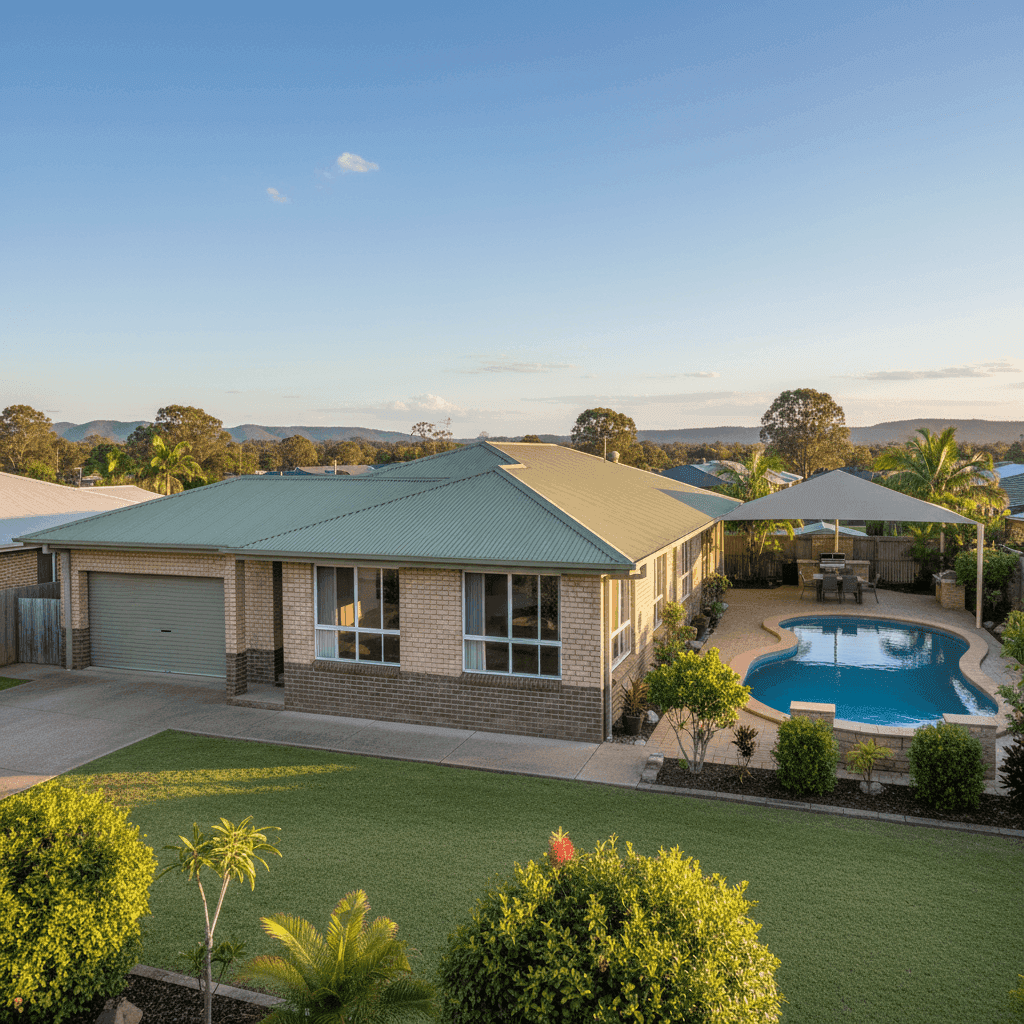
If you own a free standing home in Alice River, QLD 4817, you already know that insuring a property in this part of Queensland comes with its own set of considerations — not least of which is the area's cyclone risk rating. This article breaks down a real home and contents insurance quote for a three-bedroom, two-bathroom brick veneer home in Alice River, compares it against suburb, state, and national benchmarks, and offers practical advice for homeowners looking to get the best value from their cover.
---
Is This Quote Fair?
The quote in question comes in at $4,409 per year (or $441 per month) for combined home and contents insurance, covering a building sum insured of $898,000 and contents valued at $10,000. The building excess is $2,000 and the contents excess is $1,000.
Our price rating for this quote is FAIR — Around Average, and the data backs that up. The suburb average premium for Alice River sits at $4,518 per year, meaning this quote comes in roughly $109 below the local average. It also falls comfortably within the interquartile range for the suburb — between the 25th percentile of $3,879 and the 75th percentile of $4,620 — which tells us it's a genuinely competitive result for this postcode.
In short: this isn't a bargain-basement price, but it's not an outlier either. For a cyclone-prone suburb in regional Queensland, landing near the middle of the local range is a reasonable outcome — and one that many homeowners in the area won't always achieve without shopping around.
---
How Alice River Compares
To put this quote in proper context, it helps to zoom out and look at the broader pricing landscape. You can explore the full data on the Alice River suburb stats page, the Queensland state overview, or the national insurance stats.
| Benchmark | Average Premium |
|---|---|
| Alice River (suburb) | $4,518 / yr |
| Alice River (median) | $4,267 / yr |
| LGA – Charters Towers | $3,995 / yr |
| Queensland (state) | $4,547 / yr |
| Queensland (median) | $3,931 / yr |
| National average | $2,965 / yr |
| National median | $2,716 / yr |
A few things stand out here. First, Alice River premiums are broadly in line with the Queensland state average — both hover around the $4,500 mark. This reflects the elevated risk profile of much of regional Queensland, where cyclone exposure, storm surge potential, and distance from emergency services all push premiums higher than the national norm.
Second, the gap between Queensland and the national average is striking: Queensland homeowners pay, on average, 53% more than the national average. That's not a rounding error — it's a structural difference driven by natural hazard risk, and it's something every homeowner in this region needs to factor into their budgeting.
The LGA average for Charters Towers ($3,995/yr) sits somewhat below the Alice River suburb figure, which suggests that risk and pricing can vary meaningfully even within the same local government area. With only nine quotes in the suburb sample, it's worth treating these figures as indicative rather than definitive — but they paint a clear enough picture.
---
Property Features That Affect Your Premium
Several characteristics of this property have a direct bearing on what insurers charge — for better and for worse.
Cyclone Risk Area
This is the single biggest factor. Alice River falls within a designated cyclone risk zone, which means insurers apply significantly higher loadings to account for the potential for wind damage, flying debris, and storm-related losses. This alone can add hundreds of dollars to an annual premium compared with properties in lower-risk postcodes.
Brick Veneer Walls & Colorbond Roof
Brick veneer construction is generally viewed favourably by insurers — it's more resistant to fire and wind damage than timber-framed cladding. The steel Colorbond roof is similarly well-regarded: it's durable, lightweight, and performs well in high-wind events. Together, these construction materials likely help moderate the premium compared with what a weatherboard or fibrous cement home in the same suburb might attract.
Slab Foundation
A concrete slab foundation is standard for Queensland homes of this era and is considered low-risk from an insurance perspective. It reduces concerns around subsidence and pest-related structural damage.
Swimming Pool
The presence of a pool adds a modest amount to the insured risk — pools can be damaged in storms, and associated liability considerations may factor into some policies. Homeowners should confirm that their policy explicitly covers pool structures and check whether any liability cover extends to pool-related incidents.
Building Age (1987) & Size (214 sqm)
A home built in 1987 is approaching 40 years old, which can prompt questions about the condition of electrical wiring, plumbing, and roofing. Insurers may apply age-related loadings, though a well-maintained property of this era shouldn't face excessive penalties. At 214 sqm, this is a comfortably sized home, and the $898,000 sum insured reflects the cost of rebuilding at today's construction rates — a figure that should be reviewed regularly as building costs continue to rise.
Contents Cover ($10,000)
The contents sum insured of $10,000 is on the lower end for a three-bedroom, two-bathroom home. Homeowners should consider whether this accurately reflects the replacement value of furniture, appliances, clothing, and personal belongings. Underinsurance on contents is a common issue that only becomes apparent at claim time.
---
Tips for Homeowners in Alice River
1. Review your sum insured annually Construction costs in Queensland have risen sharply in recent years. A sum insured that was adequate three years ago may no longer cover a full rebuild today. Use a building calculator or speak with a quantity surveyor to confirm your figure is current — being underinsured can leave you significantly out of pocket after a major event.
2. Prepare your property for cyclone season Insurers look more favourably on homes with documented cyclone preparedness. Ensure your roof is well-secured, gutters are clear, and any loose outdoor items (including pool equipment) are stored safely before storm season. Some insurers offer discounts for cyclone-rated shutters or screens.
3. Consider your excess carefully This quote carries a $2,000 building excess and $1,000 contents excess. Opting for a higher excess is one lever you can pull to reduce your premium — but only if you're confident you could cover that amount out of pocket in the event of a claim. Conversely, if cash flow is tight, a lower excess might be worth the slightly higher annual cost.
4. Shop around — even if your current quote seems fair A "fair" rating means this quote is competitive, but it doesn't mean it's the best available. Insurers price risk differently, and the spread between the 25th and 75th percentile in Alice River — from $3,879 to $4,620 — shows there's meaningful variation in what you might pay for comparable cover. Getting two or three quotes takes minutes and could save you hundreds.
---
Compare Your Options at CoverClub
Whether you're renewing an existing policy or insuring a property for the first time, comparing quotes is the single most effective way to ensure you're not overpaying. CoverClub makes it easy to see how your premium stacks up against real data from your suburb, your state, and across Australia. Get a quote today and find out where you stand.