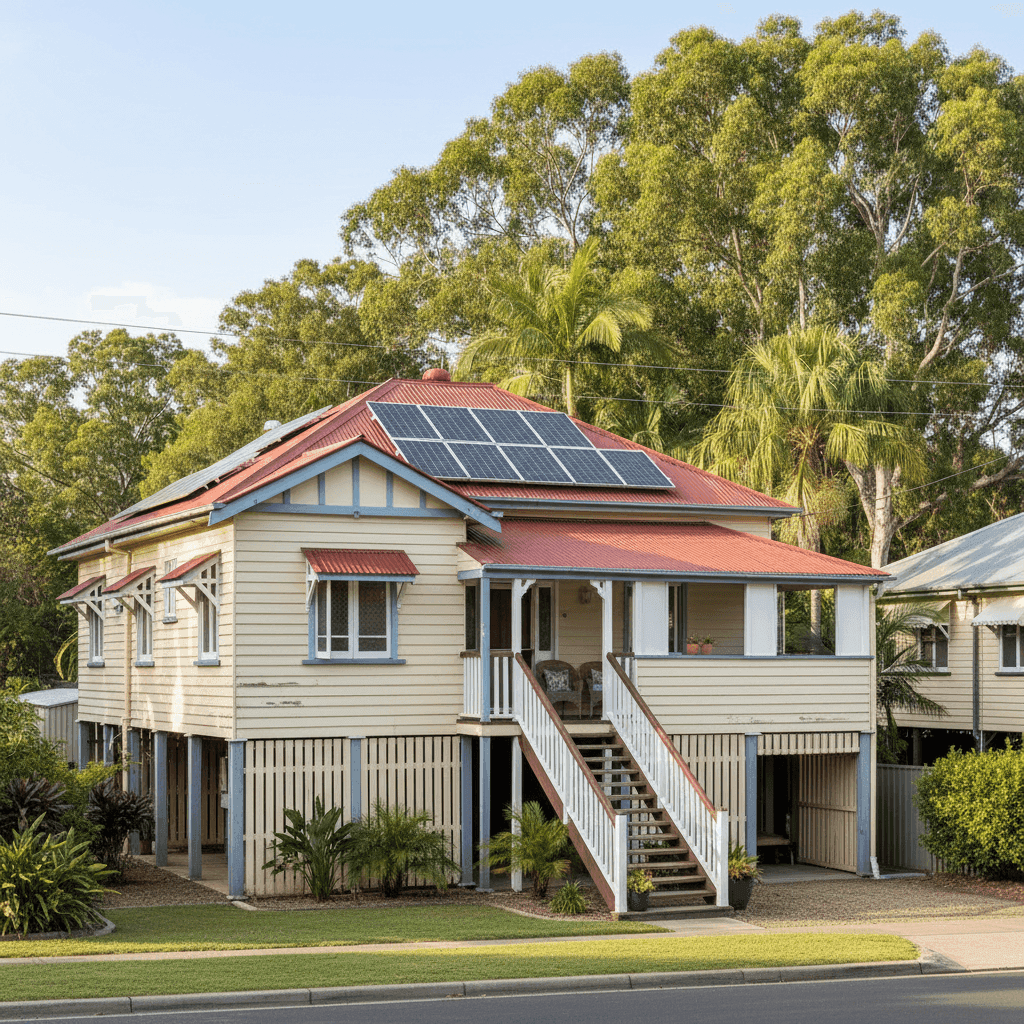
Allenstown is a well-established residential suburb sitting just south of Rockhampton's CBD in Central Queensland. Its housing stock is a mix of older character homes — many of them elevated timber Queenslanders — sitting in a region that brings both charm and genuine insurance complexity. This article takes a close look at a recent home and contents insurance quote for a three-bedroom free standing home in Allenstown, breaking down whether the price is reasonable, how it stacks up against local and national benchmarks, and what homeowners in the area can do to manage their premiums.
---
Is This Quote Fair?
The quote in question comes in at $9,622 per year (or $943 per month) for a combined home and contents policy. The building is insured for $523,000 and contents for $125,000, with a $3,000 building excess and a $1,000 contents excess.
Our price rating for this quote is Expensive — Above Average.
To put that in perspective: the suburb average for Allenstown sits at $4,465 per year, with a median of $4,123. This quote is more than double the local median — a significant gap that warrants a closer look at the property's risk profile.
It's worth noting that our Allenstown sample currently includes 17 quotes, so the averages are directionally useful but will sharpen further as more data comes in. Even so, the gap between this quote and the suburb benchmark is wide enough to suggest that specific property characteristics — rather than just location — are driving the price up considerably.
---
How Allenstown Compares
Putting this quote in a broader context helps illustrate just how much location and property type can influence what you pay.
| Benchmark | Average Premium | Median Premium |
|---|---|---|
| Allenstown (4700) | $4,465/yr | $4,123/yr |
| Livingstone LGA | $3,949/yr | — |
| Queensland | $4,547/yr | $3,931/yr |
| National | $2,965/yr | $2,716/yr |
You can explore the full Queensland insurance stats or dig into national home insurance benchmarks to see how your area compares more broadly.
A few things stand out here. First, Allenstown's average premium is already well above the national average — nearly 51% higher — which reflects the elevated risk environment of Central Queensland. Cyclone exposure, flooding history, and the age of local housing stock all contribute to this. Second, even within Queensland, Allenstown's average is roughly in line with the state figure, suggesting the suburb itself isn't an outlier — but this particular property clearly is.
The 75th percentile for Allenstown sits at $5,717 per year, meaning this quote exceeds even the most expensive quarter of local properties in our dataset. That's a strong signal that the specific features of this home are materially increasing the risk assessment.
---
Property Features That Affect Your Premium
Several characteristics of this property are likely contributing to the elevated premium. Understanding them is the first step to addressing them.
Cyclone Risk Area
Allenstown falls within a designated cyclone risk zone. This is arguably the single biggest driver of above-average premiums in Central Queensland. Insurers apply significant loadings for properties in cyclone-prone regions, and this alone can push premiums well above the national norm.
Weatherboard Construction on Stumps
The home features weatherboard timber external walls and sits elevated on stumps — a classic Queenslander configuration. While this style is beloved for good reason (airflow, flood resilience, character), insurers tend to view older timber construction as higher risk than brick or concrete alternatives. Weatherboard can be more susceptible to storm damage, and the elevated stump foundation introduces additional structural considerations.
Age of the Property
Built in 1958, this home is over 65 years old. Older properties often carry higher premiums due to the increased likelihood of ageing wiring, plumbing, and structural components needing repair or replacement after an insured event. Rebuilding or restoring heritage-style homes can also be more expensive per square metre than modern construction.
Steel / Colorbond Roof
On the positive side, a Colorbond steel roof is generally viewed favourably by insurers compared to older tile or fibrous cement options. It performs well in high-wind events and is resistant to corrosion — both relevant in a cyclone-risk coastal climate.
Solar Panels
The presence of solar panels adds modest replacement value to the building sum insured and may contribute a small loading to the premium, though this is typically minor compared to the other factors at play.
Sum Insured
At $523,000 for the building, the sum insured is on the higher end for a 130 sqm home. This may reflect the genuine cost of rebuilding an older character home with period-appropriate materials, or it may be worth revisiting with a quantity surveyor to ensure the figure is accurate — over-insuring unnecessarily inflates your premium.
---
Tips for Homeowners in Allenstown
1. Review Your Sum Insured
Given the building size and construction type, it's worth getting an independent building replacement cost assessment. Many homeowners in older homes either over- or under-insure without realising it. A professional valuation ensures you're covered adequately without paying for more than you need.
2. Consider Cyclone Mitigation Upgrades
Insurers may offer discounts for homes that have been upgraded to better withstand cyclone conditions — things like roof tie-downs, storm shutters, or reinforced connections between the roof and wall frames. Some Queensland government programs have historically supported these upgrades. Even modest improvements can make a difference at renewal.
3. Increase Your Excess Strategically
This policy carries a $3,000 building excess and a $1,000 contents excess. If you have the financial buffer to absorb a higher excess in the event of a claim, opting for a higher voluntary excess can meaningfully reduce your annual premium. Just make sure the excess level is genuinely manageable for your budget.
4. Shop Around at Every Renewal
Loyalty rarely pays in the insurance market. Insurers price risk differently, and the variation between quotes for the same property can be substantial — sometimes thousands of dollars. Using a comparison tool at renewal is one of the most effective ways to ensure you're not overpaying.
---
Compare Your Home Insurance Quote
If you're a homeowner in Allenstown or the broader Rockhampton region, it pays to know what the market looks like before you commit to a policy. CoverClub makes it easy to get a home insurance quote and see how your premium compares to your neighbours. Whether you're renewing an existing policy or insuring for the first time, a few minutes of comparison could save you a significant amount each year.