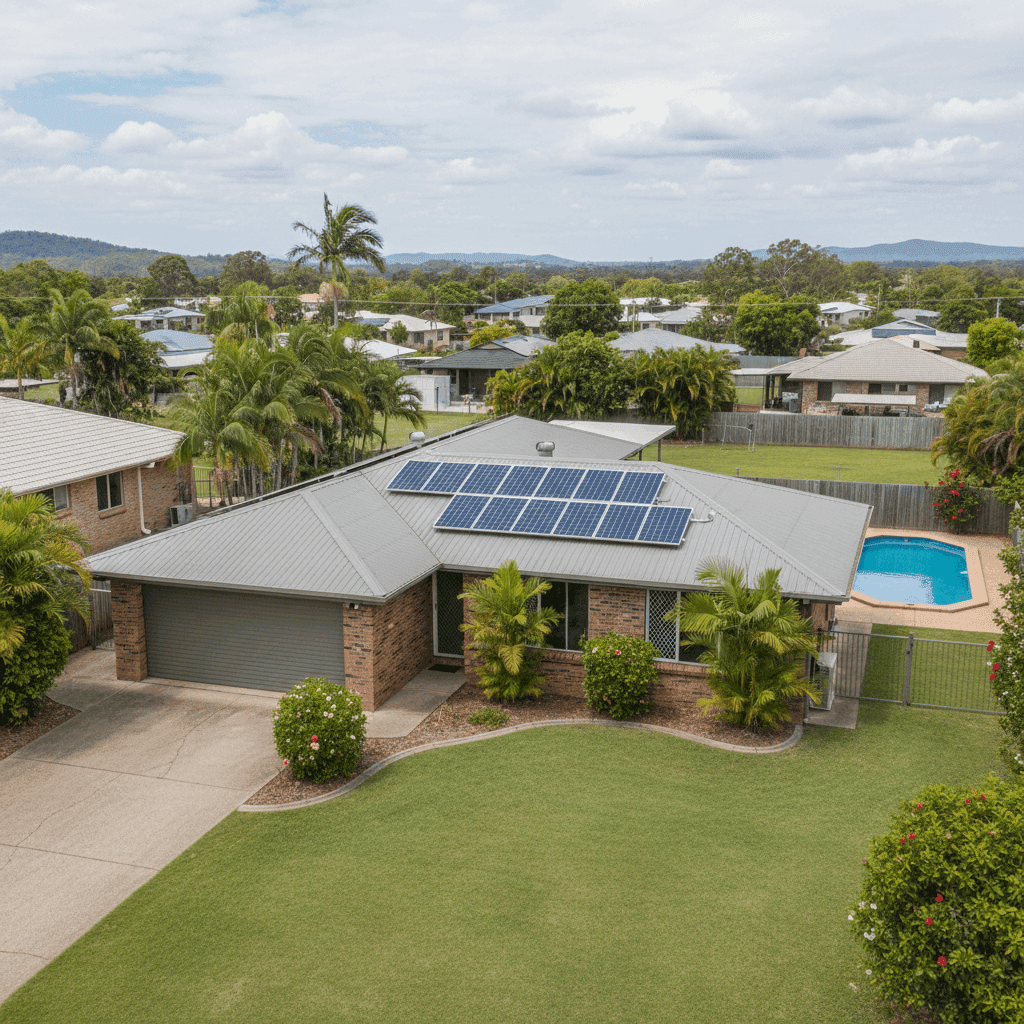
If you own a free standing home in Alligator Creek, QLD 4740, you already know that insuring a property in this part of Queensland comes with its own set of considerations. Located in the Mackay region, Alligator Creek sits in a cyclone-risk zone — a factor that weighs heavily on insurance premiums across the area. This article breaks down a real home and contents insurance quote for a 4-bedroom, 1-bathroom brick veneer home in the suburb, and puts it in context against local, state, and national benchmarks.
---
Is This Quote Fair?
The annual premium for this property comes in at $3,582 per year (or $343/month), covering a building sum insured of $495,000 and contents valued at $22,000. The building excess is $3,000 and the contents excess is $1,000.
Our price rating for this quote? Cheap — below average. That's genuinely good news for this homeowner.
To put it plainly: given the property's location in a declared cyclone risk area within the Mackay LGA, a sub-$3,600 annual premium is a solid result. Insurers price cyclone exposure heavily in North Queensland, and many homeowners in this region find themselves paying significantly more. The fact that this quote sits below both the Queensland state average and median is worth noting.
You can explore how this suburb's insurance costs stack up more broadly at the Alligator Creek insurance stats page.
---
How Alligator Creek Compares
Here's where things get interesting. Let's look at the numbers side by side:
| Benchmark | Annual Premium |
|---|---|
| This quote | $3,582 |
| QLD State Average | $4,547 |
| QLD State Median | $3,931 |
| National Average | $2,965 |
| National Median | $2,716 |
| Mackay LGA Average | $8,458 |
A few things stand out immediately.
First, this quote is $965 below the Queensland state average and nearly $350 below the state median — a meaningful saving for any household budget. For a full picture of what Queensland homeowners are paying, visit the QLD home insurance stats page.
Second, the Mackay LGA average of $8,458 is eye-opening. That figure is more than double this quote, reflecting just how expensive home insurance can be across the broader Mackay region. Properties closer to the coast or in higher-risk flood and cyclone corridors within the LGA are likely dragging that average up considerably. By comparison, this homeowner is getting a very competitive result.
Third, yes — this quote is above the national average of $2,965. That's expected for any North Queensland property. Cyclone risk, tropical weather events, and the cost of rebuilding in regional areas all push premiums higher than the national norm. Comparing a Mackay-region property to a suburban home in Melbourne or Adelaide isn't particularly useful — the risk profiles are worlds apart.
---
Property Features That Affect Your Premium
Several characteristics of this property influence how insurers calculate the premium. Here's what's at play:
Cyclone Risk Area This is the single biggest factor. Properties in cyclone-declared zones in Queensland attract significantly higher premiums than those in southern states. Insurers factor in the likelihood of wind, storm surge, and related damage when pricing cover.
Construction: Brick Veneer Walls & Colorbond Roof Brick veneer is generally viewed favourably by insurers — it's durable, fire-resistant, and performs reasonably well in high-wind events. A steel Colorbond roof is also a practical choice for tropical climates; it's lightweight, corrosion-resistant, and widely used across Queensland. Together, these materials can help moderate the premium compared to, say, weatherboard construction.
Slab Foundation & Tile Flooring A concrete slab foundation is standard and low-risk from an insurer's perspective. Tiled flooring is similarly straightforward — it's durable, easy to replace, and less susceptible to water damage than carpet or timber.
Swimming Pool A pool adds a modest amount to the premium, primarily due to liability considerations and the cost of repair or replacement if damaged in a storm or cyclone event.
Solar Panels Solar panels are an increasingly common feature in Queensland homes, and most insurers now include them under standard building cover — though it's always worth confirming this with your insurer. They do add to the overall replacement cost of the building, which is factored into the sum insured.
Age of Construction (1975) At around 50 years old, this home is considered older stock. Insurers may factor in the age of plumbing, electrical systems, and roofing materials when pricing the risk. That said, a well-maintained 1970s brick home is far from a liability — many are structurally sound and built to a solid standard.
Building Size: 205 sqm A four-bedroom home at 205 sqm is a reasonable size. The $495,000 sum insured translates to roughly $2,415 per sqm — within a plausible range for Queensland construction costs, though homeowners should periodically review this figure to ensure it keeps pace with rising build costs.
---
Tips for Homeowners in Alligator Creek
1. Review your sum insured annually Construction costs in Queensland have risen sharply over recent years. A sum insured set a few years ago may no longer be sufficient to fully rebuild your home. Check your figure each renewal and adjust if needed — underinsurance is one of the most common and costly mistakes homeowners make.
2. Confirm your solar panels are covered Not all policies automatically include solar panel systems under building cover. Ask your insurer explicitly whether your panels, inverter, and mounting hardware are included in your building sum insured, and whether storm or cyclone damage is covered.
3. Cyclone-proof your property where possible Some insurers offer discounts or more competitive pricing for homes with cyclone-rated roofing, shutters, or other resilience upgrades. Even if a discount isn't available, reducing the risk of damage protects both your property and your claims history.
4. Compare quotes at each renewal The insurance market shifts regularly, and loyalty doesn't always pay. Given the Mackay LGA average sits at $8,458, there's clearly a wide spread of pricing in this region. Shopping around at renewal — even if you're already on a good deal — ensures you're not leaving money on the table.
---
Compare Your Home Insurance Today
Whether you're a homeowner in Alligator Creek or anywhere else in Queensland, it pays to know what you should be paying. CoverClub makes it easy to compare home and contents insurance quotes side by side, so you can see exactly where your premium sits relative to the market.
Get a home insurance quote now and find out if you're getting a fair deal — or if there's a better option waiting for you.