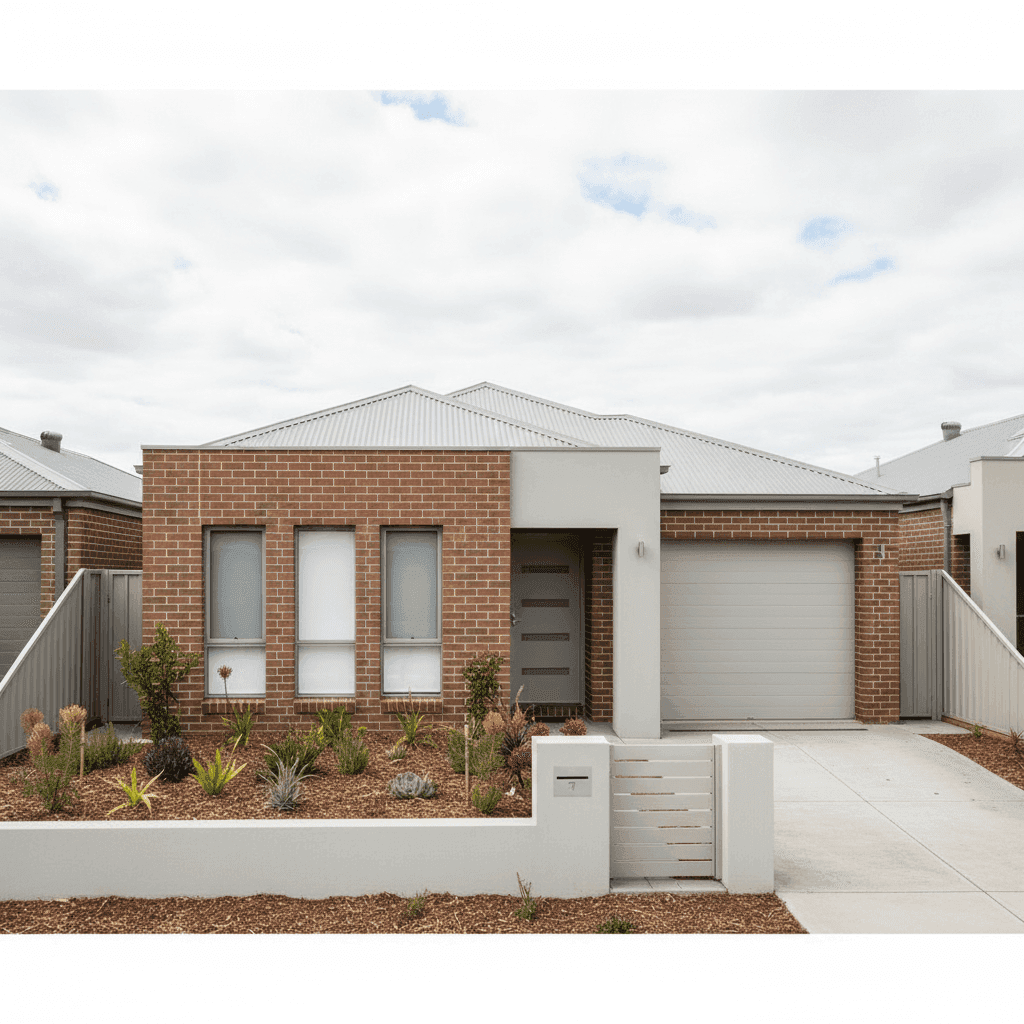
If you own a semi detached home in Altona North, VIC 3025, you've probably wondered whether you're paying a fair price for building insurance. This article breaks down a real building-only quote for a three-bedroom, two-bathroom semi detached property in the suburb — and puts it into context using local, state, and national data — so you can make a more informed decision at renewal time.
---
Is This Quote Fair?
The quote in question comes in at $1,211 per year (or $123/month) for building-only cover, with a $3,000 building excess. Our analysis rates this as FAIR — around average for the area.
That rating holds up when you look at the numbers. The suburb average for Altona North sits at $1,120 per year, with a median of $1,108. This quote lands about $91 above the suburb average — a modest premium that's well within what you'd expect given the property's features and size. It's certainly not a bargain, but it's also nowhere near the top of the range.
To put the spread in perspective: the cheapest quarter of quotes in Altona North come in at or below $767 per year (the 25th percentile), while the most expensive quarter exceed $1,477 per year (the 75th percentile). At $1,211, this quote sits comfortably in the middle band — slightly above median, but well below the upper quartile. For a 139 sqm brick veneer semi detached built in 2015, that's a reasonable outcome.
---
How Altona North Compares
One of the most striking takeaways from this analysis is just how affordable Altona North is relative to broader benchmarks. Check out the numbers:
| Benchmark | Average Premium | Median Premium |
|---|---|---|
| Altona North (suburb) | $1,120/yr | $1,108/yr |
| Hobsons Bay LGA | $1,721/yr | — |
| Victoria (state) | $3,000/yr | $2,718/yr |
| Australia (national) | $5,347/yr | $2,764/yr |
The suburb average of $1,120 is significantly lower than the Victorian state average of $3,000 — less than 40 cents in the dollar. That gap reflects the relatively low-risk profile of this part of Melbourne's inner west: no cyclone exposure, modest flood risk compared to some other Victorian postcodes, and a stable, established housing stock.
Compared to the broader Hobsons Bay LGA average of $1,721, Altona North punches well below its weight — suggesting that the suburb benefits from more favourable risk characteristics than some of its neighbours within the same council area.
The Victorian state average of $3,000 is heavily influenced by high-risk regional areas — think flood-prone towns along the Murray or bushfire-exposed communities in the ranges. Metropolitan Melbourne suburbs like Altona North tend to sit well below that figure. And when you look at the national average of $5,347, which is skewed by cyclone-prone Queensland and Northern Territory postcodes, the difference is even more dramatic.
For a deeper look at how Altona North stacks up against surrounding suburbs, visit the Altona North suburb stats page.
---
Property Features That Affect Your Premium
Every insurer weighs up a combination of property characteristics when calculating your premium. Here's how the features of this particular property likely influence the price:
Brick Veneer Walls Brick veneer is one of the most common — and insurer-friendly — external wall materials in suburban Melbourne. It offers solid fire resistance and structural durability without the premium loading you might see on timber-framed or clad homes. This is a positive factor for keeping premiums in check.
Steel/Colorbond Roof Colorbond roofing is widely regarded as low-maintenance and resilient, particularly against wind and hail. Insurers generally view it favourably compared to older tile roofs, which can crack or dislodge in storms. It's a modern choice that aligns well with the property's 2015 construction year.
Concrete Slab Foundation A slab foundation on a relatively new build (2015) is a strong indicator of structural soundness. Unlike older homes on stumps or piers, slab homes have fewer subsidence and pest-related vulnerabilities — both of which can push premiums up.
Ducted Climate Control The presence of ducted heating and cooling is worth noting. While it adds to the replacement cost of the building (and is factored into the $490,000 sum insured), it doesn't typically trigger a risk loading in the way that, say, a wood-burning fireplace might.
No Pool, No Solar Panels The absence of a pool removes a common liability concern for insurers. Similarly, no solar panels means no additional complexity around electrical systems or roof penetrations — both small but meaningful factors in premium calculations.
Sum Insured: $490,000 For a 139 sqm semi detached, a sum insured of $490,000 equates to roughly $3,525 per square metre — a figure that sits within a reasonable range for Melbourne construction costs in 2025/26. Getting this number right is critical: underinsurance is one of the most common and costly mistakes homeowners make.
---
Tips for Homeowners in Altona North
1. Review your sum insured annually Construction costs have risen sharply in recent years. A sum insured that was accurate three years ago may no longer reflect the true cost of rebuilding your home. Use an independent building cost calculator or speak with a quantity surveyor to validate your figure before each renewal.
2. Consider your excess carefully This quote carries a $3,000 building excess. A higher excess generally lowers your premium, but make sure it's an amount you could genuinely afford to pay out of pocket after a claim. If $3,000 would be a stretch, it may be worth comparing quotes with a lower excess — even if the annual premium is slightly higher.
3. Don't overlook contents cover This is a building-only policy, which means your furniture, appliances, clothing, and personal belongings aren't covered. If you own the home and live in it, adding contents cover is worth considering. If you're an investor with tenants, landlord insurance may be a more appropriate product altogether.
4. Shop around at renewal A "fair" rating means this quote is competitive — but not necessarily the best available. Insurers adjust their pricing models regularly, and the cheapest option for your neighbour may not be the best fit for your property. Compare quotes at CoverClub to see what else is on the market before you renew.
---
Compare Your Own Quote
Whether you're renewing soon or just want to know if you're getting a fair deal, CoverClub makes it easy to see how your current premium stacks up. Enter your address and get an instant comparison against real quotes from your suburb. Start comparing now at CoverClub — it takes less than two minutes and could save you hundreds.