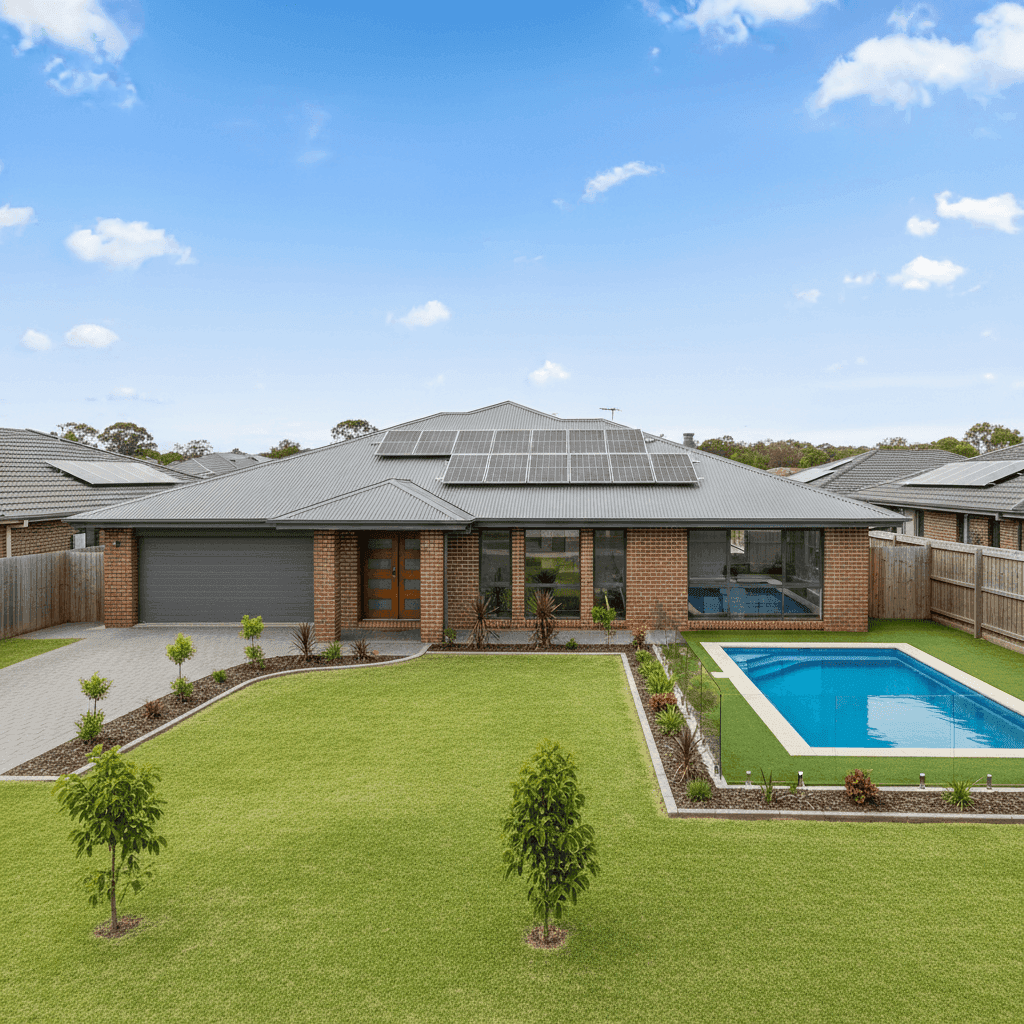
Andergrove is a well-established residential suburb in the Mackay region of Queensland, and like much of coastal and central QLD, it sits in a part of the country where home insurance premiums can vary dramatically. This article breaks down a real home and contents insurance quote for a three-bedroom, free-standing home in Andergrove (postcode 4740), examining whether the price is competitive and what factors are likely driving the cost.
---
Is This Quote Fair?
The short answer: yes — and then some. This quote came in at $3,030 per year (or $290/month), which earns a "Cheap" price rating from CoverClub, meaning it sits below the average for the area.
To put that in perspective, the suburb average for Andergrove is $5,089/year, and the median sits at $5,039/year. This quote lands well below even the 25th percentile for the suburb — meaning it's cheaper than at least 75% of comparable quotes collected in the area. That's a genuinely strong result for a property with a pool, solar panels, and ducted climate control in a cyclone-risk zone.
It's worth noting that the building is insured for $490,000 with $50,000 in contents cover, which is a reasonable sum for a 130 sqm home in this region. The building excess is set at $5,000 and the contents excess at $2,000 — higher excesses are one way premiums are kept lower, so that trade-off is worth keeping in mind when evaluating value.
---
How Andergrove Compares
Understanding where Andergrove sits in the broader insurance landscape helps put this quote in full context. Here's how the numbers stack up:
| Benchmark | Annual Premium |
|---|---|
| This Quote | $3,030 |
| Andergrove Suburb Average | $5,089 |
| Andergrove Suburb Median | $5,039 |
| Andergrove 25th Percentile | $3,704 |
| QLD State Average | $9,129 |
| QLD State Median | $3,903 |
| Mackay LGA Average | $8,458 |
| National Average | $5,347 |
| National Median | $2,764 |
A few things stand out here. Queensland's state average of $9,129/year is extraordinarily high — nearly double the national average of $5,347 — which reflects the state's elevated exposure to cyclones, flooding, and storm damage. However, the QLD median of $3,903 tells a more nuanced story: the average is being pulled upward by very expensive properties and high-risk locations, while many everyday Queensland homes are insured closer to that median figure.
The Mackay LGA average of $8,458/year is also notably high, reflecting the region's cyclone exposure. Against that backdrop, this quote at $3,030 looks even more impressive.
You can explore more local data on the Andergrove suburb stats page, compare it against Queensland-wide insurance trends, or see how it measures up against national benchmarks.
---
Property Features That Affect Your Premium
Several characteristics of this property will have influenced the final premium — both pushing it up and helping to keep it in check.
Cyclone Risk Area
This is the single biggest risk factor for properties in the Mackay region. Andergrove falls within a designated cyclone risk zone, which typically adds significant loading to home insurance premiums. Insurers price in the potential for wind damage, flying debris, and storm surge, all of which are very real risks in this part of Queensland.
Construction: Brick Veneer Walls & Steel/Colorbond Roof
Brick veneer is generally viewed favourably by insurers — it's more resistant to fire and wind damage than timber-framed cladding. A steel Colorbond roof is also a strong positive: it's durable, low-maintenance, and performs well in high-wind events. Together, these construction materials likely helped moderate the premium despite the cyclone risk.
Slab Foundation
A concrete slab foundation is standard for the region and doesn't carry the underfloor flooding risk associated with raised or stump foundations. This is a neutral-to-positive factor from an insurer's perspective.
Swimming Pool
Pools add a modest amount to premiums due to liability risk and the cost of repair or replacement. They also slightly increase the overall replacement value of the property.
Solar Panels
Solar panels are now a standard feature on many Australian homes, but they do add to the insured value of the building and can be damaged in hail or cyclone events. Most policies cover them as part of the building sum insured, so it's important the building sum is adequate.
Ducted Climate Control
Like solar panels, ducted air conditioning is a fixed installation that forms part of the building's insured value. It adds to replacement cost but is a common feature in Queensland homes given the climate.
Timber/Laminate Flooring
Flooring type can influence contents and building claims, particularly in water damage scenarios. Timber and laminate floors can be more costly to replace than tiles, which may have a minor influence on the premium.
1985 Construction Year
Homes built in the mid-1980s are generally well past their most problematic years but may have older plumbing, electrical systems, or roofing that could be flagged during a claim. Insurers sometimes apply age-related loadings, though this appears to have been well-managed in this quote.
---
Tips for Homeowners in Andergrove
Whether you're renewing your policy or shopping around for the first time, here are four practical tips tailored to homeowners in this part of Queensland.
1. Review your building sum insured regularly Construction costs have risen sharply in recent years. A 130 sqm home insured for $490,000 is a reasonable figure, but it's worth checking that your sum insured reflects current rebuild costs — not what you paid for the property or what it's worth on the market. Underinsurance is one of the most common and costly mistakes homeowners make.
2. Understand your cyclone excess Many insurers apply a separate, higher excess for cyclone-related claims — distinct from the standard building excess. Make sure you know what your policy says. A $5,000 building excess is already on the higher side, and some policies layer a cyclone excess on top of that.
3. Secure your property before storm season Insurers in cyclone-prone areas expect homeowners to take reasonable precautions. Trimming trees near the house, securing outdoor furniture, and maintaining your roof can all reduce your risk — and may support your claim if damage does occur.
4. Compare quotes at renewal time The fact that this quote came in well below the suburb average shows that significant savings are possible. Insurers price risk differently, and loyalty doesn't always pay. Use a comparison tool like CoverClub to check whether your renewal price is still competitive.
---
Ready to Compare?
If you own a home in Andergrove or anywhere in Queensland, it pays to know where your premium stands relative to the market. CoverClub makes it easy to compare home and contents insurance quotes in minutes. Get a quote today and see how much you could save.