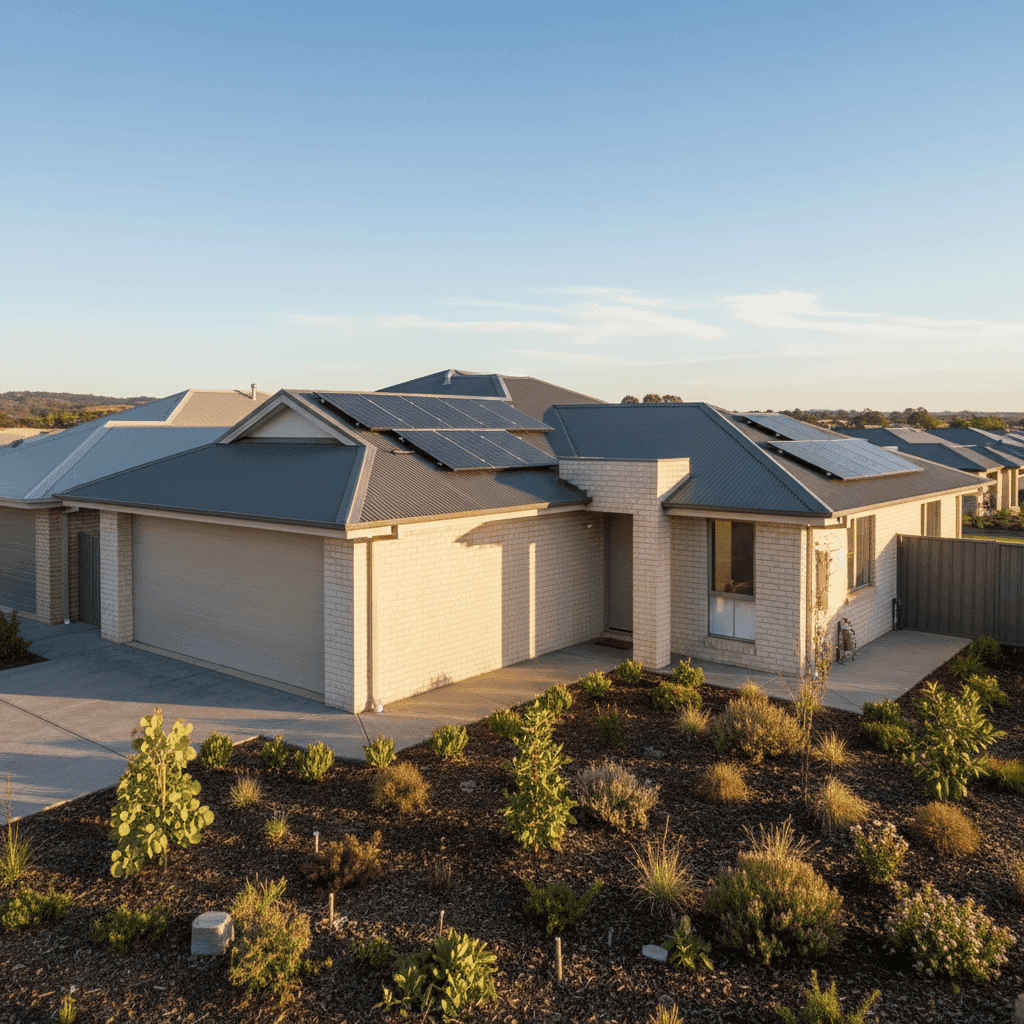
If you own a free standing home in Angle Vale, SA 5117, you've probably wondered whether you're paying a fair price for home insurance — or quietly overpaying while your insurer quietly profits. This article breaks down a real home and contents insurance quote for a four-bedroom, two-bathroom brick veneer home in Angle Vale, comparing it against local, state, and national benchmarks to help you make a more informed decision.
---
Is This Quote Fair?
The quote in question comes in at $2,061 per year (or $206/month) for combined home and contents cover, with a building sum insured of $1,030,000 and contents valued at $85,000. Both the building and contents excess are set at $1,000.
Our price rating for this quote is EXPENSIVE — above average for the Angle Vale area.
To put that in context: the suburb average for Angle Vale sits at $1,552/year, with a median of $1,469/year. This quote lands well above both figures — roughly 33% higher than the suburb average and 40% above the median. Even when you look at the 75th percentile for the suburb (meaning 75% of quotes are cheaper), that figure is $1,963/year — still below this quote.
That said, it's worth noting that the building sum insured of $1,030,000 is on the higher end, which will naturally push premiums upward. If that figure accurately reflects the cost to rebuild the home — including demolition, materials, and labour — then a higher premium may be justified. But if the sum insured has crept up through automatic indexing without a proper review, there may be room to recalibrate.
---
How Angle Vale Compares
Understanding where Angle Vale sits in the broader insurance landscape adds useful perspective.
| Benchmark | Average Premium | Median Premium |
|---|---|---|
| Angle Vale (SA 5117) | $1,552/yr | $1,469/yr |
| LGA (Playford) | $1,231/yr | — |
| South Australia | $2,433/yr | $1,679/yr |
| National | $5,347/yr | $2,764/yr |
Compared to the South Australian state average of $2,433/year, this quote is actually below the state average — which is worth noting. SA as a whole tends to carry higher premiums than many might expect, partly due to the prevalence of older housing stock, extreme heat events, and storm exposure in certain regions.
Zooming out further, the national average of $5,347/year reflects the significant premium burden carried by homeowners in high-risk areas such as Far North Queensland and parts of coastal NSW. By that measure, Angle Vale is a relatively affordable place to insure a home.
The LGA of Playford — which encompasses Angle Vale — has an average premium of just $1,231/year, making this quote appear even more expensive by local standards. With only 15 quotes in our suburb sample, the data set is relatively small, so individual results can vary — but the trend is clear: this quote is on the pricier side for the area.
---
Property Features That Affect Your Premium
Several characteristics of this property will influence how insurers price the risk.
Brick veneer construction is generally viewed favourably by insurers. It offers solid structural integrity and reasonable fire resistance compared to timber-framed homes with weatherboard cladding. Combined with a Colorbond steel roof — which is durable, low-maintenance, and performs well in high-wind and bushfire-prone conditions — the construction profile of this home is considered relatively low risk.
The slab foundation is standard for homes built in South Australia from this era and doesn't present any unusual risk factors. Tile flooring throughout similarly poses no particular concern from an underwriting perspective.
The home was built in 2015, which means it benefits from modern building codes, including improved structural standards and energy efficiency requirements. Newer homes typically attract more competitive premiums than older properties, all else being equal.
Solar panels are worth flagging. While they add value to the property, they also represent an additional insurable asset. Not all policies automatically cover rooftop solar systems under the building component — it's worth confirming with your insurer that your panels are explicitly included in your sum insured.
Ducted climate control is another feature that can influence premiums slightly, as it represents a significant mechanical system that may require repair or replacement following an insured event. At 214 sqm, this is a comfortably sized family home, and the combination of ducted air conditioning and solar adds to the overall replacement cost calculation.
---
Tips for Homeowners in Angle Vale
1. Review your building sum insured annually. With construction costs rising across South Australia, it's easy for your sum insured to fall out of step with actual rebuild costs — or conversely, to be over-inflated through automatic indexing. Use a quantity surveyor or your insurer's rebuild calculator to make sure your $1,030,000 figure is accurate for your specific home.
2. Confirm solar panel coverage explicitly. Ask your insurer in writing whether your rooftop solar system is covered under the building policy, and for how much. Some policies cap solar cover or require it to be listed separately. Given the cost of a quality solar installation, this is not a detail to leave ambiguous.
3. Compare at least three quotes before renewing. Loyalty rarely pays in insurance. The gap between the cheapest and most expensive quotes in Angle Vale spans from around $1,161/year (25th percentile) to $1,963/year (75th percentile) — a difference of over $800 annually for broadly similar cover. Shopping around is the single most effective way to reduce your premium.
4. Consider a higher excess to bring premiums down. Both the building and contents excess on this policy are set at $1,000. Increasing the excess — say, to $2,000 or $2,500 — can meaningfully reduce your annual premium. This works best if you have a financial buffer to cover that excess in the event of a claim.
---
Ready to See What You Could Pay?
Whether you're renewing your policy or insuring a home for the first time, comparing quotes is the fastest way to find better value. CoverClub makes it easy to benchmark your premium against real data from homeowners in your area.
Get a home insurance quote today and see how your premium stacks up against your neighbours — you might be surprised by what you find.