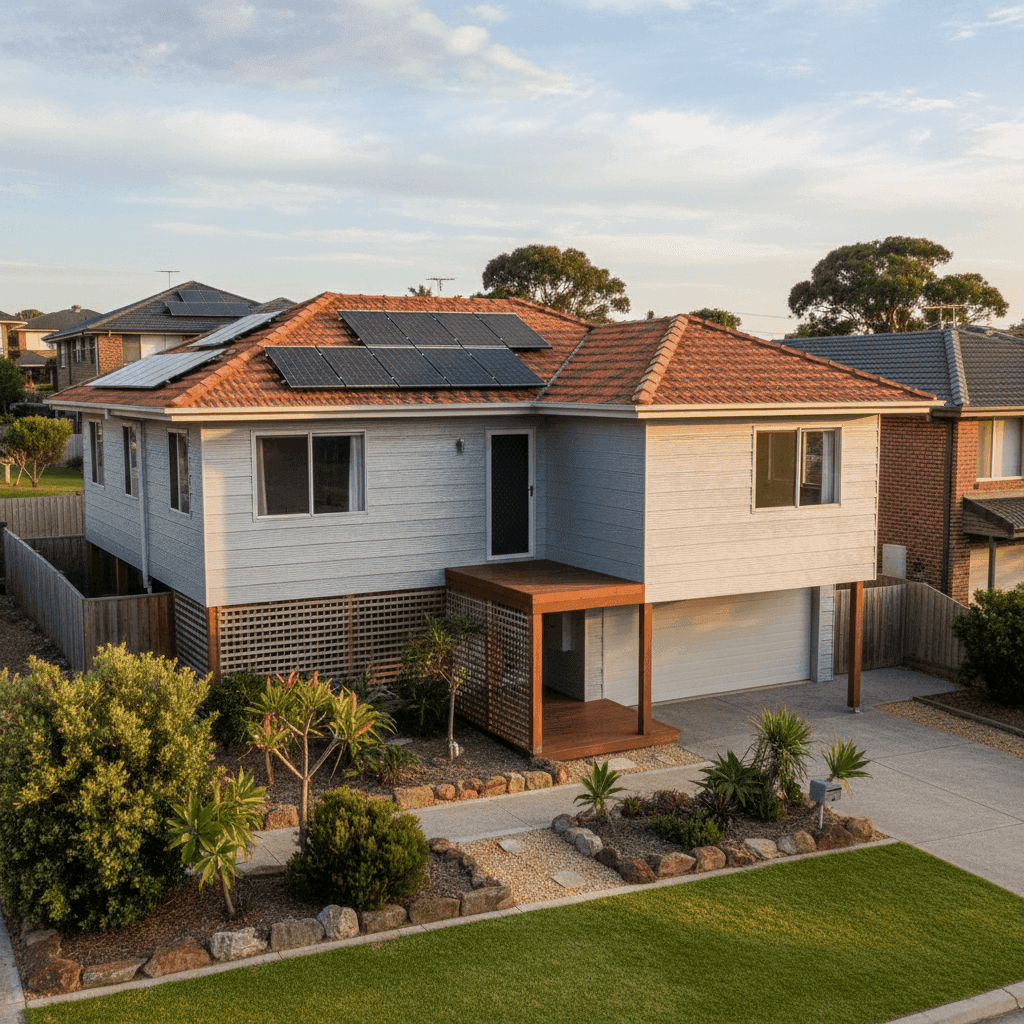
Anglesea is one of Victoria's most beloved coastal towns — a relaxed surf village nestled between the Great Ocean Road and the Angahook State Forest. It's a place where many Australians dream of owning a home, whether as a permanent residence or a cherished holiday retreat. But living close to the ocean and bushland comes with its own set of insurance considerations. This article breaks down a real home and contents insurance quote for a three-bedroom free standing home in Anglesea (VIC 3230), and helps you understand whether the premium stacks up.
---
Is This Quote Fair?
The annual premium for this property comes in at $2,539 per year (or roughly $250 per month), covering a building sum insured of $600,000 and contents valued at $50,000. The building excess is set at $3,000, with a separate $1,000 excess for contents claims.
Our pricing engine has rated this quote as Fair — Around Average, and the data backs that up. Based on 90 quotes collected for Anglesea (3230), the suburb average sits at $2,328 per year, with a median of $1,930. At $2,539, this quote lands above both of those benchmarks — but it's still comfortably below the suburb's 75th percentile of $2,691, meaning roughly three-quarters of comparable quotes in the area are cheaper.
That said, context matters. The higher building sum insured ($600,000) and the age and construction of the property are likely doing some of the heavy lifting here. For what's being covered, the premium isn't unreasonable.
---
How Anglesea Compares
To put this quote in perspective, it helps to zoom out and look at the broader pricing landscape.
| Benchmark | Average Premium | Median Premium |
|---|---|---|
| Anglesea (3230) | $2,328/yr | $1,930/yr |
| Surf Coast LGA | $2,520/yr | — |
| Victoria | $2,921/yr | $2,694/yr |
| National | $2,965/yr | $2,716/yr |
You can explore the full Victoria home insurance statistics or the national home insurance data for more context.
What stands out here is that Anglesea is actually priced below the Victorian and national averages — which might surprise some people given its coastal and bushfire-adjacent location. The Surf Coast LGA average of $2,520 is a useful mid-point, and this quote at $2,539 sits right in line with that figure.
The spread within the suburb is also worth noting. The gap between the 25th percentile ($1,472) and the 75th percentile ($2,691) is quite wide, which tells us that insurer pricing in Anglesea varies considerably depending on the specific property, cover levels, and insurer chosen. Shopping around here genuinely pays off.
---
Property Features That Affect Your Premium
Several characteristics of this property will be influencing the final premium — some pushing it higher, others keeping it in check.
Construction year (1967): Older homes are generally viewed as higher risk by insurers. A property built in the late 1960s may have ageing plumbing, wiring, or structural elements that increase the likelihood of a claim. Rebuilding costs can also be harder to estimate accurately, which is partly why a $600,000 sum insured is appropriate for a home of this era and size.
External walls — Aluminium: Aluminium cladding is relatively common in coastal areas due to its resistance to salt air and moisture. From an insurance perspective, it's generally treated neutrally to favourably compared to timber weatherboards, which carry higher bushfire risk.
Roof — Tiles: Tiled roofs are considered a standard and reasonably durable construction type. They perform well in moderate weather conditions, though they can be vulnerable to hail damage — something worth keeping in mind given Victoria's storm seasons.
Foundation — Stumps: A stump foundation (also known as pier and beam) is very common in older Victorian homes, particularly in coastal and bushland areas. While stumps can be susceptible to subsidence or deterioration over time, they also allow for better airflow and can be more resilient in flood-prone areas. Insurers will factor this in when assessing risk.
Flooring — Timber/Laminate: Timber floors add character but can be costly to replace or repair after water damage or fire. This is reflected in both the contents and building valuations.
Solar panels: The presence of solar panels adds modest value to insure but also introduces some risk considerations around storm damage and electrical faults. Most home insurance policies cover solar panels as part of the building, so it's worth confirming this is included in your policy wording.
No pool, no ducted climate control: The absence of a pool and ducted air conditioning simplifies the risk profile slightly and helps keep the premium from climbing further.
---
Tips for Homeowners in Anglesea
1. Review your sum insured regularly Building costs in regional Victoria have risen significantly in recent years. A $600,000 sum insured may be appropriate today, but it's worth getting a fresh estimate of your home's rebuild cost annually — not just the market value. Underinsurance is one of the most common and costly mistakes homeowners make.
2. Understand your bushfire exposure Anglesea is surrounded by state forest and is in a known bushfire-risk zone. Check whether your policy includes adequate cover for bushfire, and review the specific exclusions. Some policies have waiting periods for bushfire cover if you take out a new policy during a declared fire danger period.
3. Consider your excess carefully This quote carries a $3,000 building excess — on the higher side. A higher excess typically lowers your premium, but it means more out-of-pocket cost if you need to claim. Think about what you could comfortably afford to pay in the event of a claim, and adjust accordingly when comparing quotes.
4. Shop around — the spread is wide As the suburb data shows, there's a significant range of premiums being quoted in Anglesea. Insurers assess risk differently, and the difference between the cheapest and most expensive quotes can be over $1,200 per year for similar properties. Use a comparison platform to ensure you're not overpaying.
---
Compare Your Options with CoverClub
Whether you're a long-time Anglesea local or you've recently made the move to the Surf Coast, it pays to make sure your home insurance is working as hard as you are. CoverClub makes it easy to compare home and contents quotes from multiple insurers in one place — so you can find the right cover at the right price. Get a quote today and see how your current premium stacks up.