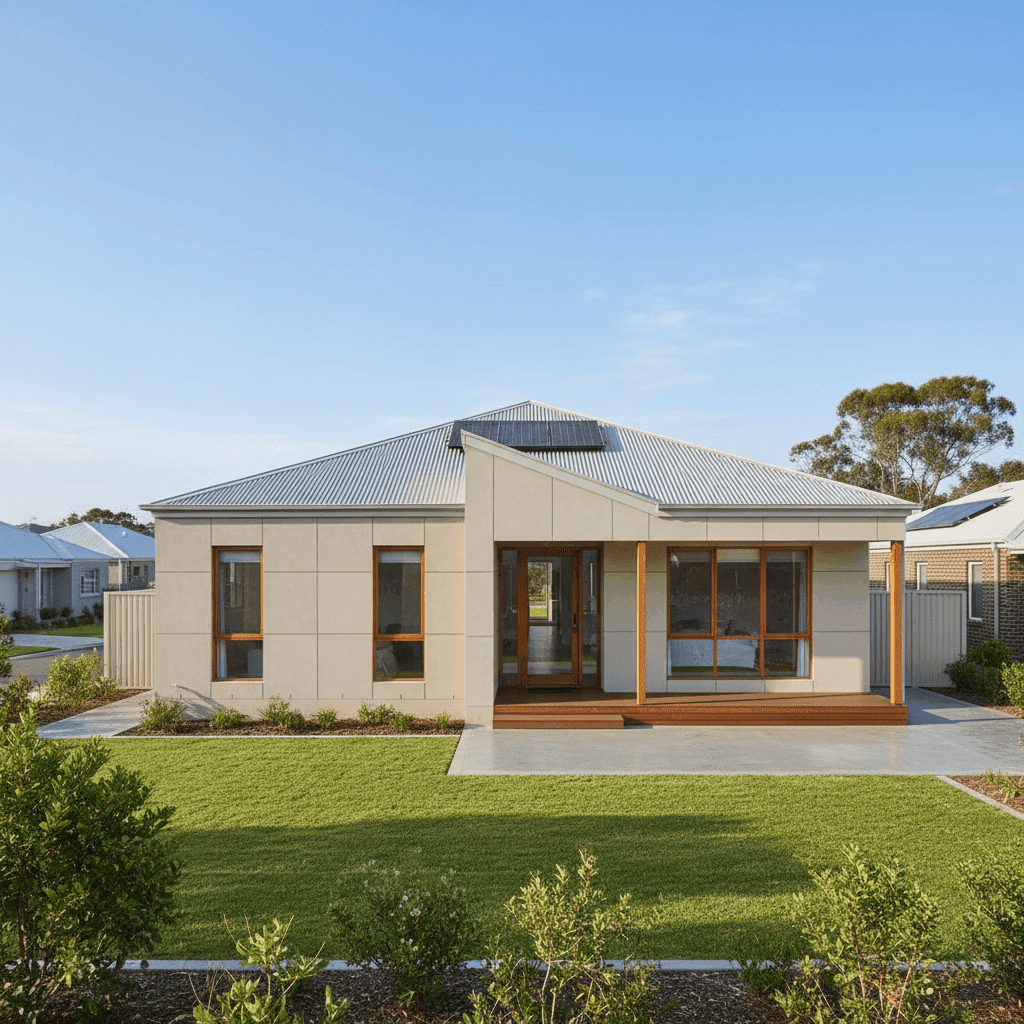
Anna Bay is a relaxed coastal community tucked within the Port Stephens local government area on the mid-north coast of New South Wales. Known for its stunning beaches, rolling sand dunes, and laid-back lifestyle, it's an increasingly popular destination for both owner-occupiers and holiday homeowners. But living near the coast comes with its own insurance considerations — and understanding whether your premium is competitive is an important part of protecting one of your biggest assets.
This article breaks down a recent home and contents insurance quote for a two-bedroom, two-bathroom free standing home in Anna Bay, comparing it against local, state, and national benchmarks to help you make a more informed decision.
---
Is This Quote Fair?
The annual premium for this property came in at $2,344 per year (or $229/month), covering a building sum insured of $460,000 and $50,000 in contents — with a $5,000 excess on both building and contents claims. CoverClub has rated this quote as Fair (Around Average).
That rating holds up under scrutiny. The quote sits comfortably below the Anna Bay suburb average of $2,945/yr and also comes in under the suburb median of $2,449/yr — meaning it's in the lower half of what Anna Bay homeowners are typically paying. For a relatively modern property with a solid construction profile, that's a reasonable outcome.
It's worth noting that the $5,000 excess on both building and contents is on the higher end of the spectrum. A higher excess generally reduces your premium, so part of what's making this quote look competitive is the trade-off in out-of-pocket costs should you need to make a claim. Homeowners should weigh up whether that excess level is comfortable given their financial position.
---
How Anna Bay Compares
To put this quote in proper context, here's how Anna Bay stacks up against broader benchmarks:
| Benchmark | Average Premium | Median Premium |
|---|---|---|
| Anna Bay (NSW 2316) | $2,945/yr | $2,449/yr |
| Port Stephens LGA | $3,116/yr | — |
| New South Wales | $3,801/yr | $3,410/yr |
| National (Australia) | $2,965/yr | $2,716/yr |
Data sourced from NSW state insurance statistics and national home insurance benchmarks, based on a sample of 48 quotes in the Anna Bay area.
A few things stand out here. First, Anna Bay premiums are notably lower than the NSW state average — homeowners in this suburb are paying roughly $856/yr less than the typical NSW policyholder. This likely reflects the fact that Anna Bay sits outside designated cyclone risk zones, has relatively modern housing stock, and doesn't face the same elevated bushfire or flood risk profiles seen in other parts of the state.
Second, the suburb average is also slightly below the national average of $2,965/yr, which is somewhat unusual for a coastal NSW location. Many coastal suburbs carry premium loading due to storm surge, wind, and flooding risks, so this is a positive sign for Anna Bay residents.
The 25th to 75th percentile spread for Anna Bay runs from $1,687/yr to $3,873/yr — a wide range that reflects meaningful differences in property size, construction type, sum insured, and insurer pricing strategies. This quote at $2,344/yr sits well within the lower-middle portion of that band.
---
Property Features That Affect Your Premium
Several characteristics of this particular property have a direct bearing on how insurers price the risk:
Hebel external walls: Hebel (autoclaved aerated concrete) is a modern, lightweight panel product that offers good fire resistance and thermal performance. Insurers generally view it favourably compared to older cladding materials, though some may apply specific conditions around water ingress or impact damage.
Steel/Colorbond roof: Colorbond roofing is one of the most common and well-regarded roofing materials in Australia. It performs well in high-wind events, resists corrosion, and is straightforward to repair or replace — all factors that can contribute to more competitive premiums.
Concrete slab foundation: Slab-on-ground construction is considered structurally sound and is standard for modern Australian homes. It eliminates the underfloor moisture and pest risks associated with older raised timber stumps.
Built in 2019: A relatively new home means up-to-date building standards, modern electrical and plumbing systems, and lower likelihood of pre-existing defects. Newer builds typically attract lower premiums than older properties.
Solar panels: Solar panels are increasingly common on Australian homes, but they do add replacement value to the building sum insured. It's worth confirming with your insurer that your solar system is explicitly covered under your policy, as some policies treat it as a standard building fixture while others may have separate conditions.
Ducted climate control: Ducted air conditioning systems are a meaningful fixture that adds to the replacement cost of the home. At a $460,000 building sum insured, it's important to ensure this is adequately captured in your coverage to avoid being underinsured.
Timber/laminate flooring: These flooring types can be costly to replace following water damage or fire. Contents and building policies may treat flooring differently, so it's worth reviewing your policy wording carefully.
---
Tips for Homeowners in Anna Bay
1. Review your sum insured regularly Building costs have risen significantly across Australia in recent years. A $460,000 sum insured may have been appropriate at the time of purchase or last renewal, but construction cost inflation means your home could cost considerably more to rebuild today. Use a building cost calculator or speak with a quantity surveyor to validate your coverage level.
2. Confirm solar panel coverage With solar panels installed, check your policy documents to confirm they are covered for damage from storm, hail, and electrical faults. Some insurers include them automatically; others require a specific endorsement. Don't assume — ask your insurer directly.
3. Consider whether your excess is right for you A $5,000 building and contents excess is a legitimate way to reduce premiums, but it means a significant out-of-pocket payment before your insurer contributes to any claim. If cash flow is a concern, it may be worth comparing quotes with a lower excess to see what the premium difference looks like.
4. Compare quotes at renewal Even a "Fair" rated quote can be beaten. Insurance markets shift constantly, and loyalty doesn't always pay. Running a fresh comparison at renewal — particularly through an aggregator like CoverClub — takes only a few minutes and could save you hundreds of dollars each year.
---
Compare Home Insurance Quotes in Anna Bay
Whether you're a first-time buyer or a long-time resident, it pays to make sure your home insurance is working as hard as you are. CoverClub makes it easy to compare home and contents quotes from multiple insurers in one place, so you can see exactly where your current premium sits — and whether there's a better deal available. Get a personalised quote today and take the guesswork out of home insurance.
For more localised data on insurance costs in your area, visit the Anna Bay suburb stats page or explore the broader NSW insurance statistics.