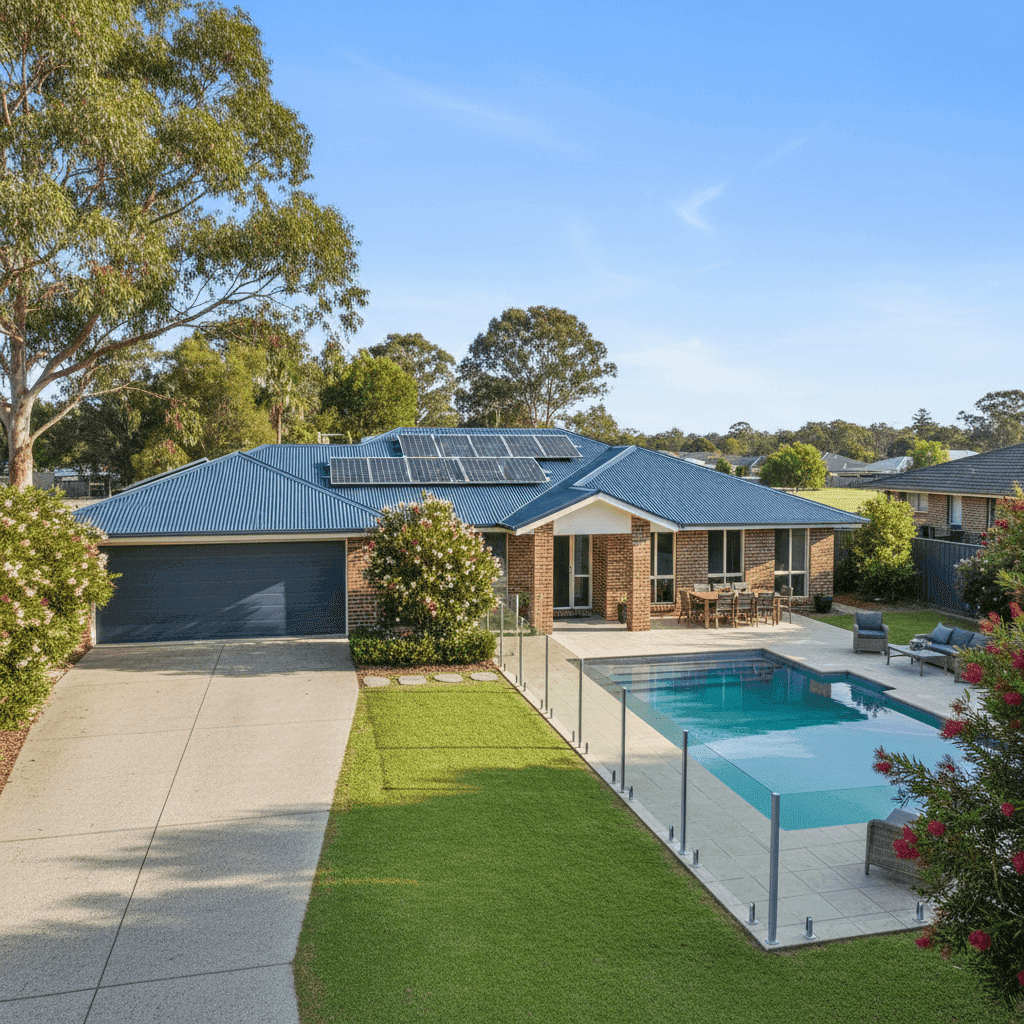
If you own a free standing home in Anstead, QLD 4070, you'll know this leafy suburb on Brisbane's western fringe offers a peaceful, semi-rural lifestyle — but that doesn't necessarily mean cheap home insurance. This article breaks down a real home and contents insurance quote for a four-bedroom property in Anstead, compares it against local, state, and national benchmarks, and offers practical tips to help you get better value on your cover.
---
Is This Quote Fair?
The quote in question comes in at $23,432 per year (or $2,246/month) for combined home and contents cover, with a building sum insured of $847,000 and contents valued at $200,000. Both the building and contents excess are set at $1,000.
Our price rating for this quote is EXPENSIVE — above average. To put that in perspective, the suburb average premium in Anstead sits at just $4,366 per year, meaning this quote is more than five times the local average. Even accounting for the significantly higher sum insured — $847,000 for the building alone is well above what many comparable homes are insured for — the premium is notably elevated.
A few factors likely explain this. The property is a sizeable 214 sqm home built in 2005 with brick veneer walls and a Colorbond steel roof on a slab foundation. It also features a swimming pool, solar panels, and ducted climate control — all of which add to the insurer's assessed risk and replacement cost. The contents cover of $200,000 is also on the higher end and will be contributing meaningfully to the total premium.
That said, even with these features factored in, homeowners in this position should absolutely be shopping around. A premium this far above the suburb median warrants scrutiny.
---
How Anstead Compares
Understanding where your premium sits relative to others is one of the most useful tools you have as a policyholder. Here's how the numbers stack up:
| Benchmark | Annual Premium |
|---|---|
| This Quote | $23,432 |
| Anstead Suburb Average | $4,366 |
| Anstead Suburb Median | $3,574 |
| Anstead 25th Percentile | $2,866 |
| Anstead 75th Percentile | $4,887 |
| QLD State Average | $4,547 |
| QLD State Median | $3,931 |
| National Average | $2,965 |
| National Median | $2,716 |
| Brisbane LGA Average | $4,485 |
The suburb-level data for Anstead is based on a sample of 34 quotes, which provides a reasonable baseline for comparison. The suburb's average of $4,366 sits slightly below the Queensland state average of $4,547, suggesting Anstead is broadly in line with the rest of the state — and considerably above the national average of $2,965, which reflects the higher insurance costs that are typical across much of Queensland.
It's worth noting that Queensland homeowners generally pay more than the national average due to elevated weather risks, including storm, flood, and hail events. Even so, the quote analysed here stands well above all of these reference points.
---
Property Features That Affect Your Premium
Several characteristics of this property have a direct bearing on the premium an insurer will calculate. Here's what's at play:
Brick Veneer Walls & Colorbond Roof Brick veneer is a widely used construction type in Australian suburbs and is generally viewed favourably by insurers for its durability and fire resistance. A Colorbond steel roof is similarly regarded as a solid, low-maintenance choice. Together, these materials suggest the home is well-built and relatively resilient — which should, in theory, work in the homeowner's favour.
Slab Foundation & Tile Flooring A concrete slab foundation is standard for homes built in this era and region. Tiled flooring is durable and straightforward to replace, which typically doesn't attract premium loading. These are neutral factors from an insurance perspective.
Swimming Pool A pool adds liability risk and increases the overall replacement cost of the property, both of which push premiums upward. Insurers factor in the cost of pool fencing compliance, equipment, and associated structures when calculating the building sum insured.
Solar Panels Rooftop solar adds value — and complexity — to a home. Panels can be damaged in hailstorms or high winds, and their replacement cost is significant. Many insurers now explicitly include or exclude solar panels in their policies, so it's essential to confirm your cover explicitly addresses them.
Ducted Climate Control Ducted air conditioning is a meaningful addition to the replacement cost of a home. Systems of this type can cost tens of thousands of dollars to replace, and insurers will factor this into the building sum insured assessment.
High Sum Insured At $847,000 for the building and $200,000 for contents, the total sum insured of $1,047,000 is the single biggest driver of this premium. It's worth periodically reviewing whether your sum insured accurately reflects the current rebuild cost — not the market value — of your home. Overinsuring can be just as costly as underinsuring.
---
Tips for Homeowners in Anstead
1. Review Your Sum Insured Carefully The building sum insured should reflect the cost to rebuild your home from scratch — not what you paid for it or what it's worth on the market. Consider engaging a quantity surveyor or using an online building calculator to ensure your figure is accurate. If it's set too high, you may be paying a premium you don't need to.
2. Compare Quotes Across Multiple Insurers With a premium this far above the suburb average, comparing quotes is not just advisable — it's essential. Different insurers price risk very differently, and the gap between the cheapest and most expensive quote for the same property can be substantial. Use CoverClub to get a quote and see how your current insurer stacks up.
3. Ask About Discounts and Bundling Many insurers offer discounts for bundling home and contents cover (which this policy already does), as well as for security features like monitored alarms, deadbolts, and security screens. If your home has these features, make sure your insurer knows about them.
4. Check Your Pool and Solar Panel Cover Given the presence of both a pool and solar panels, it's worth reading the fine print of any policy carefully. Confirm that solar panels are explicitly covered for storm and hail damage, and that your pool and associated equipment are included in the building sum insured. Some policies treat these as optional extras.
---
Ready to Find a Better Deal?
Whether you're renewing your policy or shopping around for the first time, CoverClub makes it easy to compare home and contents insurance quotes for properties across Anstead and the wider Brisbane region. Don't pay more than you need to — get a quote today at CoverClub and see what you could save.