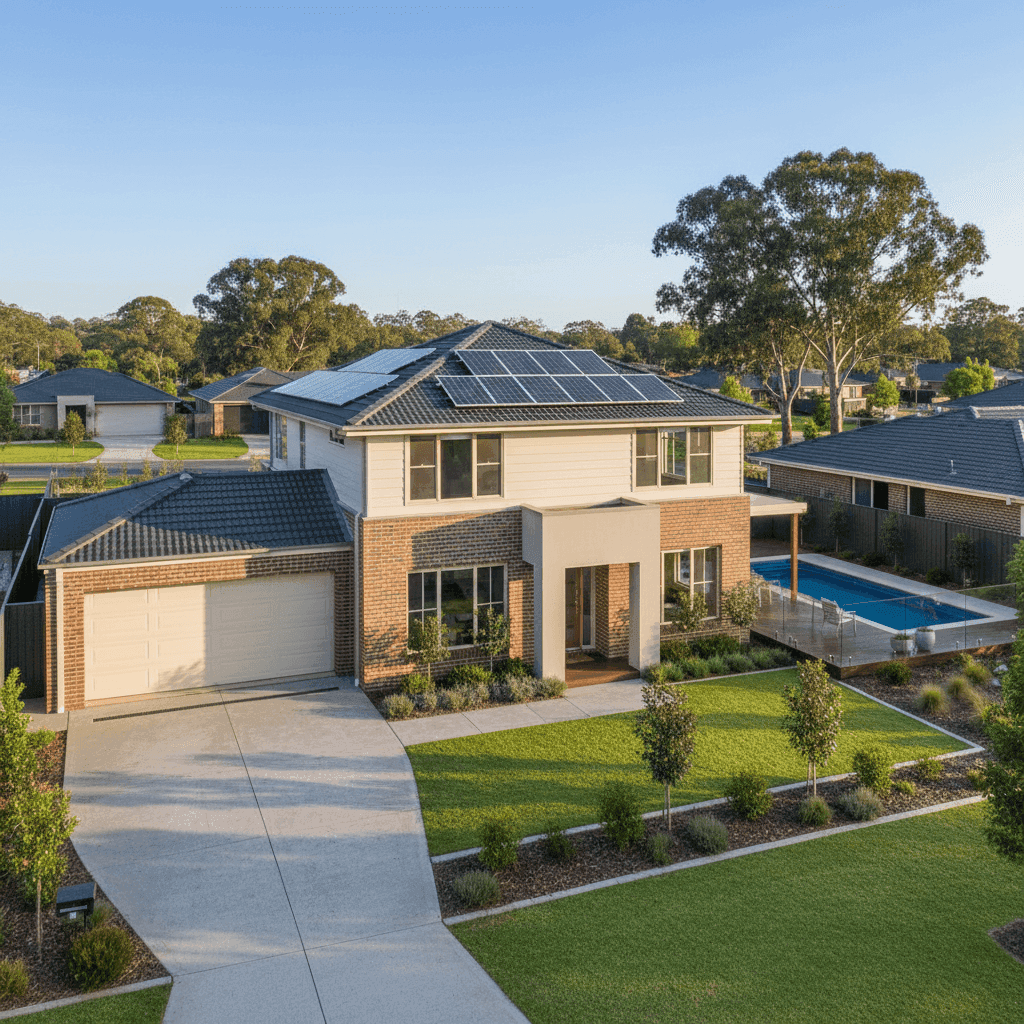
If you own a free standing home in Appin, NSW 2560, you've probably noticed that home insurance premiums can vary wildly depending on who you ask. This article breaks down a real home and contents insurance quote for a four-bedroom brick veneer property in Appin — and puts the numbers in context so you can judge whether you're getting a fair deal.
---
Is This Quote Fair?
The quote in question comes in at $5,291 per year (or roughly $507 per month), covering both building and contents for a well-appointed family home. Our price rating for this quote is Expensive — Above Average.
To understand why, it helps to look at what's being insured. The building is covered for $1,460,600 and contents for $207,100, with a $1,000 excess applying to both. Those are substantial sums, and the sum insured for the building in particular is notably high — which directly drives premium costs upward.
That said, "expensive" is relative. Compared to the NSW state average of $9,528 per year, this quote is actually well below what many NSW homeowners are paying. The state median sits at $3,770/yr, so this quote does sit above the midpoint — but much of that gap is explained by the higher-than-average sum insured and the premium features of this property.
---
How Appin Compares
Here's where the numbers get interesting. According to Appin suburb insurance data, the local picture looks like this:
| Benchmark | Premium |
|---|---|
| Appin suburb average | $2,664/yr |
| Appin suburb median | $2,344/yr |
| Appin 25th percentile | $1,556/yr |
| Appin 75th percentile | $3,564/yr |
| Wollongong LGA average | $2,751/yr |
| NSW state average | $9,528/yr |
| NSW state median | $3,770/yr |
| National average | $5,347/yr |
| National median | $2,764/yr |
At $5,291/yr, this quote sits above the Appin suburb average and median, and above the 75th percentile for the area ($3,564). However, it's remarkably close to the national average of $5,347/yr — suggesting that when you account for the size, quality, and features of this particular property, the pricing is more in line with what you'd expect nationally than it might first appear.
It's also worth noting that the Appin suburb sample size is relatively small (9 quotes), so the local averages should be treated as a guide rather than a definitive benchmark. Properties in this area can vary significantly in size, age, and construction quality, all of which influence premiums.
---
Property Features That Affect Your Premium
This isn't a standard entry-level home, and the premium reflects that. Several features of this property push the cost of cover higher than the typical Appin dwelling:
High Building Sum Insured
At $1,460,600, the building sum insured is the single biggest driver of this premium. This figure represents the estimated cost to fully rebuild the home — not its market value. For a 214 sqm home with above-average fittings, built in 2013, this rebuild cost is not unreasonable, but it's substantially higher than what many smaller or older local homes would require.
Above-Average Fittings Quality
The property is rated as having above-average fittings, which means higher-quality fixtures, finishes, and appliances throughout. Insurers factor this in because replacing premium materials costs more in a claim scenario.
Swimming Pool
A pool adds liability exposure and increases the overall replacement value of the property. Most insurers will factor pool infrastructure — including pumps, filtration, and surrounds — into their assessment.
Solar Panels
Solar panels are increasingly common, but they do add to the insurable value of a home and can be a source of claims (storm damage, hail, electrical faults). Ensuring your policy explicitly covers solar panels — and for their full replacement value — is important.
Ducted Climate Control
Ducted air conditioning systems are expensive to replace and repair. This system contributes to both the building sum insured and the overall risk profile of the property.
Brick Veneer Construction & Tiled Roof
On the positive side, brick veneer walls and a tiled roof are generally viewed favourably by insurers. These materials are durable, fire-resistant, and less susceptible to storm damage than some alternatives — which can help moderate premiums compared to properties with timber or metal cladding.
Slab Foundation
A concrete slab foundation is standard for homes of this era and is generally considered low-risk from an insurer's perspective, particularly in areas not prone to significant subsidence.
---
Tips for Homeowners in Appin
Whether you're reviewing an existing policy or shopping around for the first time, here are a few practical steps worth taking:
1. Verify your building sum insured regularly Rebuild costs have risen significantly over the past few years due to labour shortages and material price increases. If your sum insured hasn't been reviewed recently, you may be either underinsured (a serious risk) or overinsured (paying more than necessary). Use an independent building cost calculator or speak with a quantity surveyor to get an accurate figure.
2. Check that your pool and solar panels are explicitly covered Not all standard home insurance policies automatically cover pools, solar systems, or associated equipment. Read your Product Disclosure Statement carefully and confirm these items are included — and insured for their current replacement value.
3. Compare quotes before renewing Loyalty doesn't always pay in insurance. Premiums can vary enormously between providers for the same property and cover level. Use a comparison tool like CoverClub to see what multiple insurers would charge before accepting your renewal offer.
4. Consider your excess strategically This policy carries a $1,000 excess on both building and contents. Opting for a higher excess (say, $2,000 or $2,500) can meaningfully reduce your annual premium — provided you're comfortable covering that amount out of pocket in the event of a claim. For a property of this value, a small increase in excess can translate to a noticeable saving each year.
---
Ready to Find a Better Deal?
Home insurance doesn't have to be a "set and forget" expense. If your premium feels high — or you simply want to know whether you're getting value for money — it pays to compare. At CoverClub, you can benchmark your current cover against real quotes from across Australia and find a policy that suits your home and your budget.
Get a home insurance quote for your Appin property →
You can also explore more local data on the Appin insurance stats page or browse NSW-wide premium trends to see how your suburb stacks up.