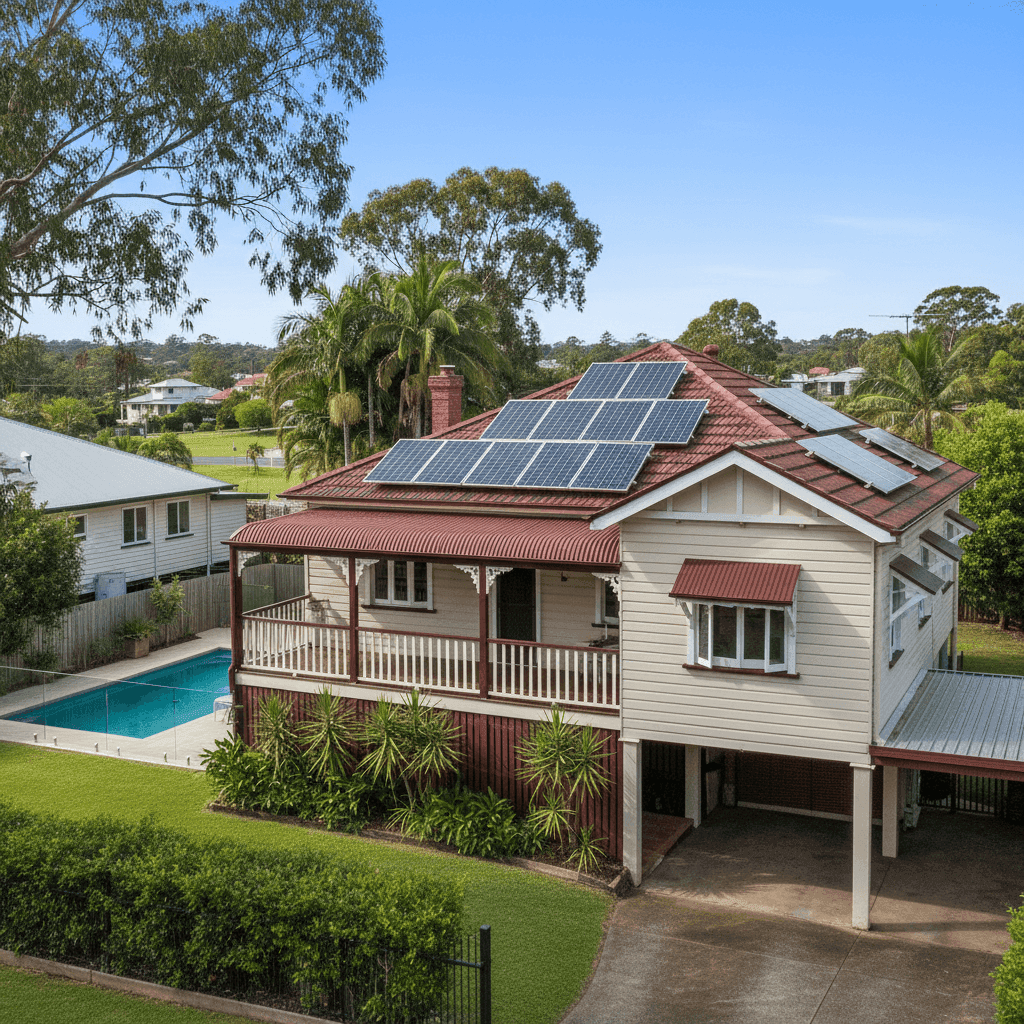
If you own a free standing home in Archerfield, QLD 4108, you're probably well aware that home insurance can be a significant household expense — particularly in Queensland, where natural weather events and ageing housing stock can push premiums higher than the national norm. This article takes a close look at a real home and contents insurance quote for a three-bedroom, one-bathroom free standing home in Archerfield, breaking down whether the price stacks up, how local and state figures compare, and what property-specific features are likely influencing the cost.
---
Is This Quote Fair?
The quote in question comes in at $1,516 per year (or roughly $150 per month) for combined home and contents cover, with a building sum insured of $909,000 and contents valued at $50,000. The building excess sits at $3,000 and the contents excess at $1,000.
Our price rating for this quote? Cheap — well below average.
To put that in perspective: the Queensland state average premium sits at $4,547 per year, with a median of $3,931. Nationally, the average home insurance premium is $2,965, with a median of $2,716. This quote comes in at less than half the Queensland average — a genuinely strong result for a homeowner in this part of Brisbane.
That said, "cheap" doesn't automatically mean "right for you." It's worth understanding why the premium is low and whether the cover terms — particularly the higher building excess of $3,000 — suit your financial situation. A lower premium paired with a higher excess is a common trade-off, and it works well if you can comfortably absorb that out-of-pocket cost in the event of a claim.
---
How Archerfield Compares
While there isn't enough suburb-level data to produce a precise Archerfield average, we can draw meaningful comparisons using broader benchmarks. The Brisbane LGA average sits at $4,485 per year — remarkably close to the Queensland state average, which tells us that Brisbane homeowners are not insulated from the premium pressures affecting the rest of the state.
Here's a quick snapshot:
| Benchmark | Annual Premium |
|---|---|
| This Quote | $1,516 |
| QLD State Average | $4,547 |
| QLD State Median | $3,931 |
| Brisbane LGA Average | $4,485 |
| National Average | $2,965 |
| National Median | $2,716 |
At $1,516, this quote is 67% below the Queensland state average and 49% below the national average — a remarkable gap. For Archerfield homeowners curious about how local premiums are trending, you can explore the latest data on the Archerfield suburb stats page.
It's worth noting that Queensland premiums are elevated in part due to the state's exposure to severe weather — storms, flooding, and cyclones all factor into insurer risk modelling. Archerfield itself is not classified as a cyclone risk area, which is one likely contributor to the more competitive pricing seen here.
---
Property Features That Affect Your Premium
Every home is unique, and insurers assess a wide range of property characteristics when calculating your premium. Here's how the features of this particular property are likely influencing the cost:
Weatherboard Timber Walls
Weatherboard construction is common in older Queensland homes and is generally considered a higher-risk material than brick veneer or full brick. Timber can be more susceptible to fire, termite damage, and general wear over time. Insurers typically price this in — though the impact varies between providers.
Tiled Roof
Terracotta or concrete tiles are viewed favourably by most insurers. They're durable, fire-resistant, and perform well in storm conditions compared to corrugated iron or older fibrous cement roofing. This likely has a moderating effect on the premium.
Stump Foundation
Built in 1968, this home sits on stumps — a hallmark of traditional Queensland residential architecture. Stumped homes offer good ventilation and can be more resilient in flood-prone areas, but they may also require periodic maintenance (restumping). Some insurers factor foundation type into their risk assessment.
Timber and Laminate Flooring
Interior flooring affects contents and building cover calculations. Timber and laminate floors are valued assets but can be vulnerable to moisture damage. This is worth keeping in mind when reviewing what your policy covers in the event of a water-related incident.
Swimming Pool
The presence of a pool adds replacement value to the property and may modestly increase the building sum insured required. It can also introduce liability considerations — something worth confirming is covered under your policy.
Solar Panels
Solar panels are increasingly common across Queensland, and most modern home insurance policies include them under building cover — but it's important to verify this explicitly. Panels can be damaged by hail, storms, or falling debris, and replacement costs are not insignificant.
Building Size: 205 sqm
At 205 square metres, this is a comfortably sized home for a three-bedroom property. The building sum insured of $909,000 reflects the cost to fully rebuild — not the market value — and should account for demolition, materials, and labour in today's construction environment.
---
Tips for Homeowners in Archerfield
1. Review Your Rebuild Cost Annually
Construction costs have risen significantly in recent years. If your building sum insured hasn't been updated lately, you may be underinsured without realising it. Use a professional building calculator or ask your insurer to reassess the replacement value annually.
2. Confirm Solar Panel and Pool Coverage
Both solar panels and swimming pools can be excluded or limited under some policies. Before renewing, read your Product Disclosure Statement (PDS) carefully to confirm these features are explicitly covered — and to what extent.
3. Consider the Excess Trade-Off
The $3,000 building excess on this policy is on the higher side. If a major weather event or structural issue arises, you'll need to cover that amount before the insurer steps in. If that's a stretch, it may be worth comparing quotes with a lower excess — even if the annual premium is slightly higher.
4. Don't Auto-Renew Without Comparing
Even if you're on a great rate now, insurers adjust their pricing every year. What was competitive last year may not be the best deal available today. Shopping around at renewal time — even just to benchmark your current premium — is one of the simplest ways to keep your insurance costs in check.
---
Ready to Compare Home Insurance in Archerfield?
Whether you're a long-time Archerfield resident or you've recently purchased in the area, it pays to know what the market looks like. CoverClub makes it easy to see how your current premium stacks up and find competitive quotes tailored to your property. Get a home insurance quote today and see how much you could save.