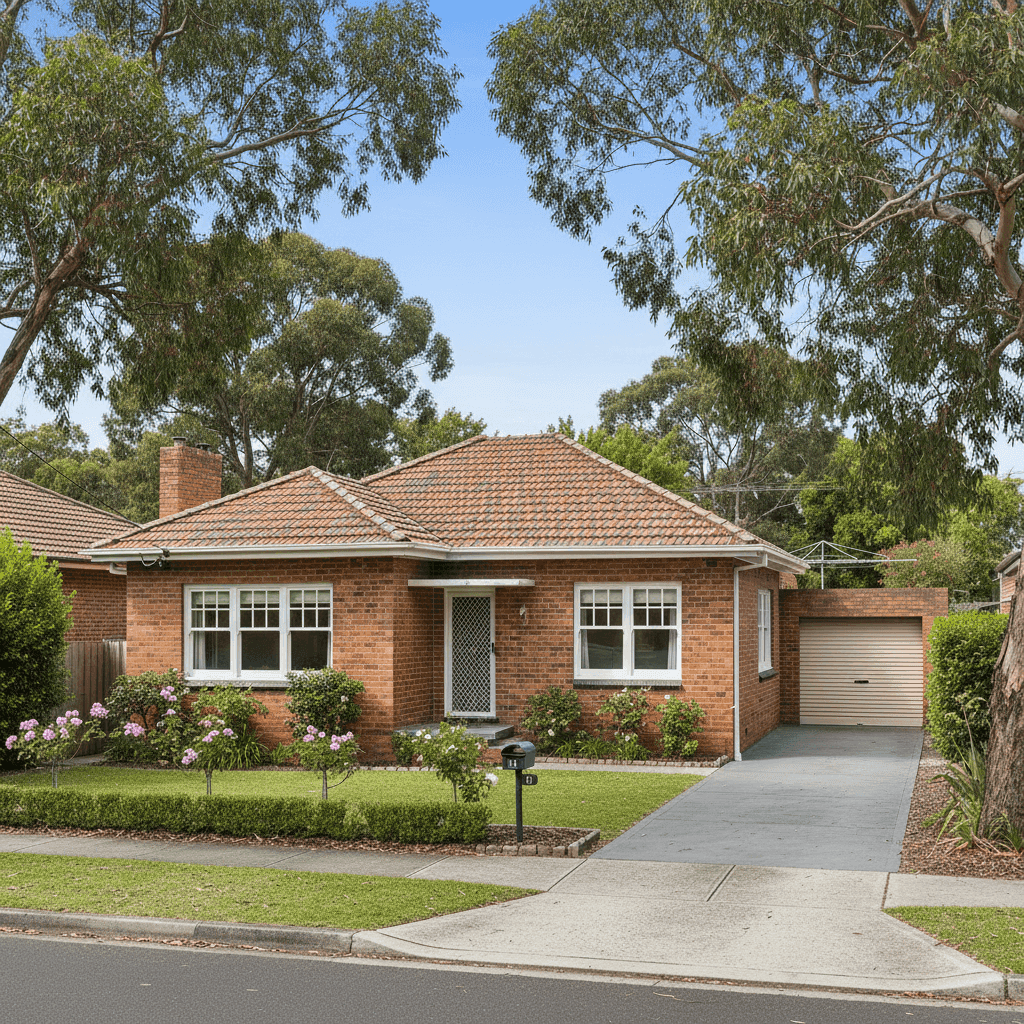
Arncliffe is a well-established suburb in Sydney's inner-south, sitting within the Bayside local government area and just a short train ride from the CBD. It's a neighbourhood defined by solid, mid-century homes on generous blocks — and the property we're examining here is a textbook example: a three-bedroom, one-bathroom free-standing brick home built in 1972. If you own or are considering purchasing a similar property in the area, understanding what a fair insurance premium looks like can save you hundreds of dollars a year.
This article breaks down a real building-only insurance quote of $1,686 per year (or $162/month) for a home like this, with a sum insured of $447,600 and a standard $1,000 excess. We'll explore how it compares to local, state, and national benchmarks — and what you can do to make sure you're getting value for money.
---
Is This Quote Fair?
The short answer: yes, broadly speaking — but there's nuance worth unpacking.
This quote has been rated Fair (Around Average), which means it sits in a reasonable range relative to what other Arncliffe homeowners are paying, without being a standout bargain. At $1,686 per year, it comes in below both the suburb average ($2,224/yr) and the suburb median ($1,865/yr), which is encouraging. It also sits comfortably above the 25th percentile ($1,589/yr), meaning roughly three-quarters of comparable quotes in the area cost more.
In practical terms, this homeowner is paying less than most of their neighbours for equivalent cover — which is a solid outcome. That said, "fair" doesn't mean "the best available." There may be room to do better, particularly if the homeowner shops around or adjusts their coverage structure.
---
How Arncliffe Compares to the Rest of NSW and Australia
To put this quote in proper context, it helps to zoom out and look at the broader insurance landscape. You can explore the full data on the Arncliffe suburb stats page, the NSW state overview, and national insurance statistics.
| Benchmark | Average Premium | Median Premium |
|---|---|---|
| Arncliffe (suburb) | $2,224/yr | $1,865/yr |
| Bayside LGA | $2,954/yr | — |
| NSW (state) | $9,528/yr | $3,770/yr |
| National | $5,347/yr | $2,764/yr |
A few things stand out here. First, the NSW state average of $9,528 is dramatically higher than the median of $3,770 — a sign that high-risk properties (think flood-prone or bushfire-exposed areas elsewhere in the state) are pulling the average up significantly. Arncliffe, by comparison, is a relatively low-risk inner-suburban location, which explains why premiums here are far more modest.
Nationally, the median sits at $2,764 — still higher than what this Arncliffe homeowner is paying. The Bayside LGA average of $2,954 is also notably above this quote, suggesting that some parts of the LGA carry greater risk or include higher-value properties that push the average up.
All told, a premium of $1,686 for a well-built brick home in Arncliffe looks competitive when viewed against these wider benchmarks.
---
Property Features That Affect Your Premium
Insurers don't price policies in a vacuum — every detail of a property feeds into the final number. Here's how the key features of this home are likely influencing the quote:
Brick Veneer Walls Brick veneer is generally viewed favourably by insurers. It's durable, fire-resistant, and less susceptible to storm damage than timber or weatherboard construction. This is likely contributing to a more competitive premium.
Tiled Roof Terracotta or concrete tiles are a standard roofing material in Sydney's inner suburbs. They perform well in most weather conditions and are considered a low-to-moderate risk by most insurers — though older tiles (this home was built in 1972) may require more maintenance to remain watertight.
Stump Foundation Homes on stumps can be more vulnerable to movement and moisture-related issues than slab foundations. Some insurers factor this into their pricing, particularly for older homes. It's worth ensuring your policy covers any gradual movement or subsidence risks.
Ducted Climate Control The presence of ducted air conditioning adds to the replacement value of the home, which is reflected in the sum insured. It's a meaningful asset to protect, and its inclusion is appropriate given the $447,600 building sum insured.
1972 Construction Older homes carry a different risk profile than new builds. Electrical wiring, plumbing, and roofing materials from the early 1970s may not meet current standards and can be more costly to repair or replace. Insurers typically account for this, though well-maintained older homes often fare better than their age alone might suggest.
130 sqm Building Size At 130 square metres, this is a modest but practical footprint for a three-bedroom home. The sum insured of $447,600 translates to roughly $3,443 per square metre — broadly in line with current rebuild costs in metropolitan Sydney.
---
Tips for Homeowners in Arncliffe
1. Review your sum insured annually Construction costs in Sydney have risen sharply in recent years. If your sum insured hasn't been updated to reflect current rebuild costs, you could be underinsured — meaning a major claim might not fully cover the cost of rebuilding. Use an independent building cost calculator or speak with a quantity surveyor to verify your figure.
2. Consider a higher excess to reduce your premium This policy carries a $1,000 excess. If you have the financial buffer to absorb a larger out-of-pocket cost in the event of a claim, opting for a higher excess (say, $2,000) can meaningfully reduce your annual premium.
3. Maintain your roof and gutters Given the age of this home, keeping the tiled roof and gutters in good condition is both a practical necessity and an insurance consideration. Many policies include clauses that can limit payouts for damage resulting from poor maintenance. An annual inspection is a worthwhile investment.
4. Shop around at renewal time Loyalty doesn't always pay in the insurance market. Insurers frequently offer better rates to new customers than they extend to existing ones. Use a comparison platform like CoverClub to benchmark your renewal quote against the market each year — it takes minutes and could save you hundreds.
---
Compare Your Own Quote
Whether you're renewing an existing policy or insuring a new purchase, it pays to know where you stand. CoverClub makes it easy to see how your premium compares to real data from your suburb, your LGA, and across Australia. Get a quote today and find out if you're paying a fair price — or if there's a better deal waiting for you.