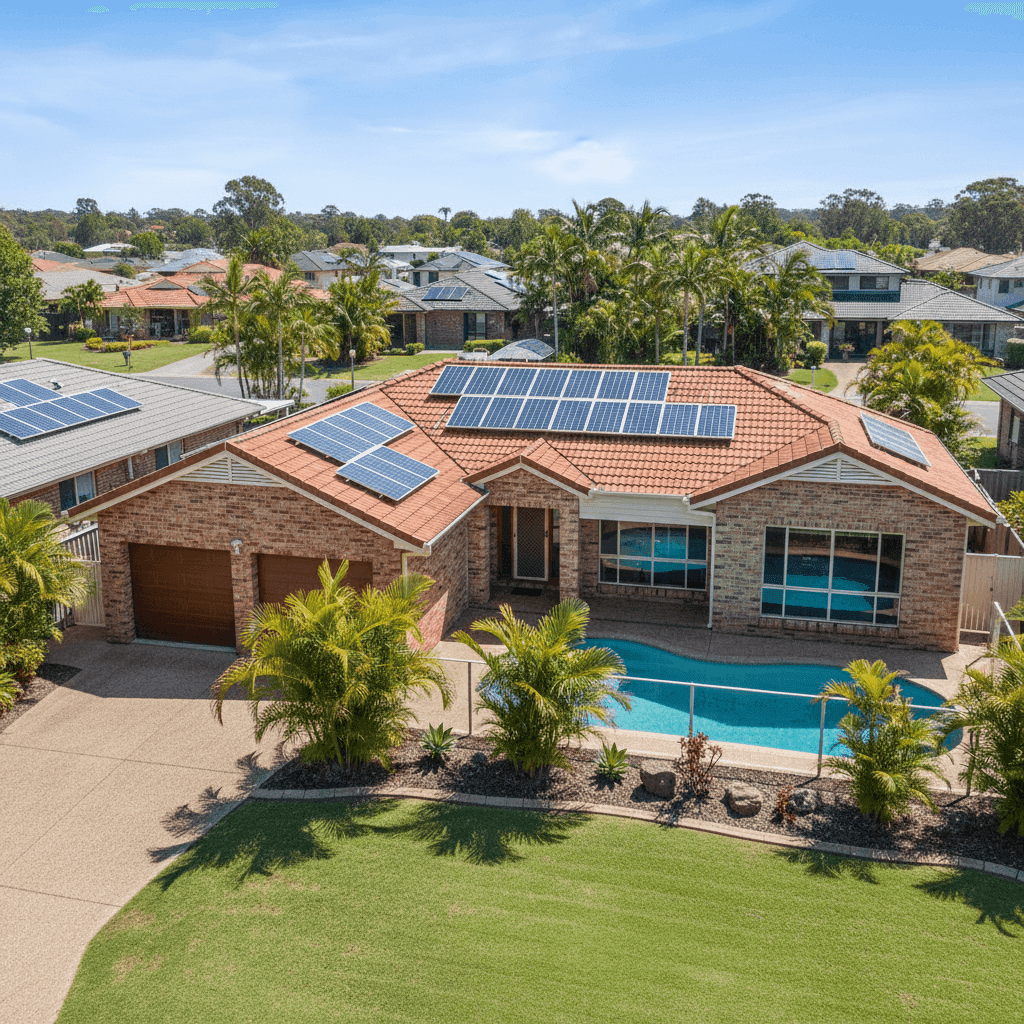
Arundel is a well-established suburb on Queensland's Gold Coast, known for its family-friendly streets, proximity to Griffith University, and a strong mix of brick homes built throughout the 1990s. If you own a free standing home in this area and you're trying to make sense of your home insurance premium, you're in the right place. This article breaks down a real home and contents insurance quote for a five-bedroom property in Arundel (postcode 4214) — and puts it in context against what others in the suburb, across Queensland, and nationally are paying.
---
Is This Quote Fair?
The quote in question comes in at $4,754 per year (or $471 per month) for combined home and contents cover, with a building sum insured of $1,415,000 and contents valued at $240,000. Both the building and contents excess are set at $1,000.
Our price rating for this quote is Expensive — above average for the Arundel area.
To understand why, it helps to look at what other homeowners in the same suburb are paying. Based on 82 quotes collected for Arundel QLD 4214, the suburb average sits at $2,597 per year, with a median of $2,359. This quote is nearly 83% above the suburb average — a significant gap that warrants closer inspection.
That said, context matters. The building sum insured of $1,415,000 is likely well above the suburb norm for a standard home, which will naturally push the premium higher. A larger, more valuable home costs more to rebuild — and insurers price accordingly.
---
How Arundel Compares
Here's how this quote stacks up across different benchmarks:
| Benchmark | Premium |
|---|---|
| This Quote | $4,754/yr |
| Arundel suburb average | $2,597/yr |
| Arundel suburb median | $2,359/yr |
| Arundel 25th percentile | $1,723/yr |
| Arundel 75th percentile | $3,368/yr |
| Gold Coast LGA average | $8,161/yr |
| QLD state average | $9,129/yr |
| QLD state median | $3,903/yr |
| National average | $5,347/yr |
| National median | $2,764/yr |
While this premium sits above the Arundel suburb average, it's actually below both the Gold Coast LGA average ($8,161) and the Queensland state average ($9,129). You can explore the full Queensland insurance data here or check out national home insurance statistics for a broader picture.
The Gold Coast LGA average being so much higher than the Arundel suburb average suggests that other pockets of the Gold Coast — particularly those in flood-prone or coastal zones — are dragging the regional figure up considerably. Arundel, sitting further inland, appears to benefit from a more moderate risk profile, which is reflected in its lower suburb-level benchmarks.
On a national basis, this quote is slightly below the national average of $5,347 — meaning that by Australian standards, it's not an outlier. Queensland as a whole carries elevated insurance costs due to weather-related risks, so Arundel homeowners are in a relatively favourable position compared to many parts of the state.
---
Property Features That Affect Your Premium
Several characteristics of this property will be influencing the premium — some pushing it up, others keeping it in check.
Features That May Increase the Premium
- Large building size (315 sqm) and high sum insured ($1,415,000): The single biggest driver of this premium is almost certainly the rebuild value. At 315 square metres with five bedrooms and three bathrooms, this is a substantial home. Insurers calculate risk based on how much it would cost to rebuild from scratch, and a $1.415 million sum insured reflects that scale.
- Swimming pool: Pools add to the replacement cost of a property and can introduce liability considerations, both of which can nudge premiums upward.
- Ducted climate control: A full ducted air conditioning system is a significant fixed asset. If damaged in a storm or fire, it's expensive to replace — and insurers factor this into building cover.
- Contents value ($240,000): This is a meaningful contents sum, likely reflecting quality furnishings, appliances, and personal belongings across a large family home.
Features That May Help Keep the Premium Down
- Brick veneer construction: Brick veneer walls are considered a lower fire risk than timber or lightweight cladding, which can work in your favour at premium time.
- Tiled roof: Tile roofs are generally regarded as durable and weather-resistant, making them a preferred construction type for insurers.
- Slab foundation: Concrete slab foundations are stable and less susceptible to subsidence or pest damage compared to raised timber stumps.
- No cyclone risk area: Arundel falls outside designated cyclone risk zones, which removes a major premium loading that affects many other parts of Queensland.
- Solar panels: While solar panels do add some replacement value to a property, many insurers now include them under standard building cover, and their presence on a modern home can signal a well-maintained property.
- 1995 construction: A home built in the mid-1990s is old enough to have proven structural integrity but modern enough to meet relatively contemporary building codes.
---
Tips for Homeowners in Arundel
If you're looking to get better value from your home insurance, here are four practical steps worth considering:
- Review your sum insured regularly. Building costs have risen sharply in recent years, but that doesn't mean your sum insured should be set-and-forget. Use a building cost calculator to ensure your coverage reflects actual rebuild costs — not just market value. Overinsuring is a common and costly mistake.
- Shop around at renewal time. Loyalty rarely pays in the insurance market. Insurers often reserve their sharpest pricing for new customers, so comparing quotes annually — especially through a platform like CoverClub — can reveal meaningful savings.
- Consider your excess settings. This quote carries a $1,000 excess on both building and contents. Opting for a higher excess (say, $2,000 or $2,500) can reduce your annual premium noticeably. If you have a healthy emergency fund, this trade-off can make good financial sense.
- Check what's included for your pool and solar panels. Not all policies automatically cover pool equipment or solar panel systems to the same extent. Read the Product Disclosure Statement carefully to confirm these assets are covered for their full replacement value under your building policy.
---
Compare Your Home Insurance Today
Whether this quote is the right fit depends on your full coverage needs — but one thing is clear: it pays to compare. CoverClub makes it easy for Australian homeowners to benchmark their premium against real data from their suburb, LGA, and state. Get a home insurance quote now and see how your current policy stacks up. You might be surprised at what's available.