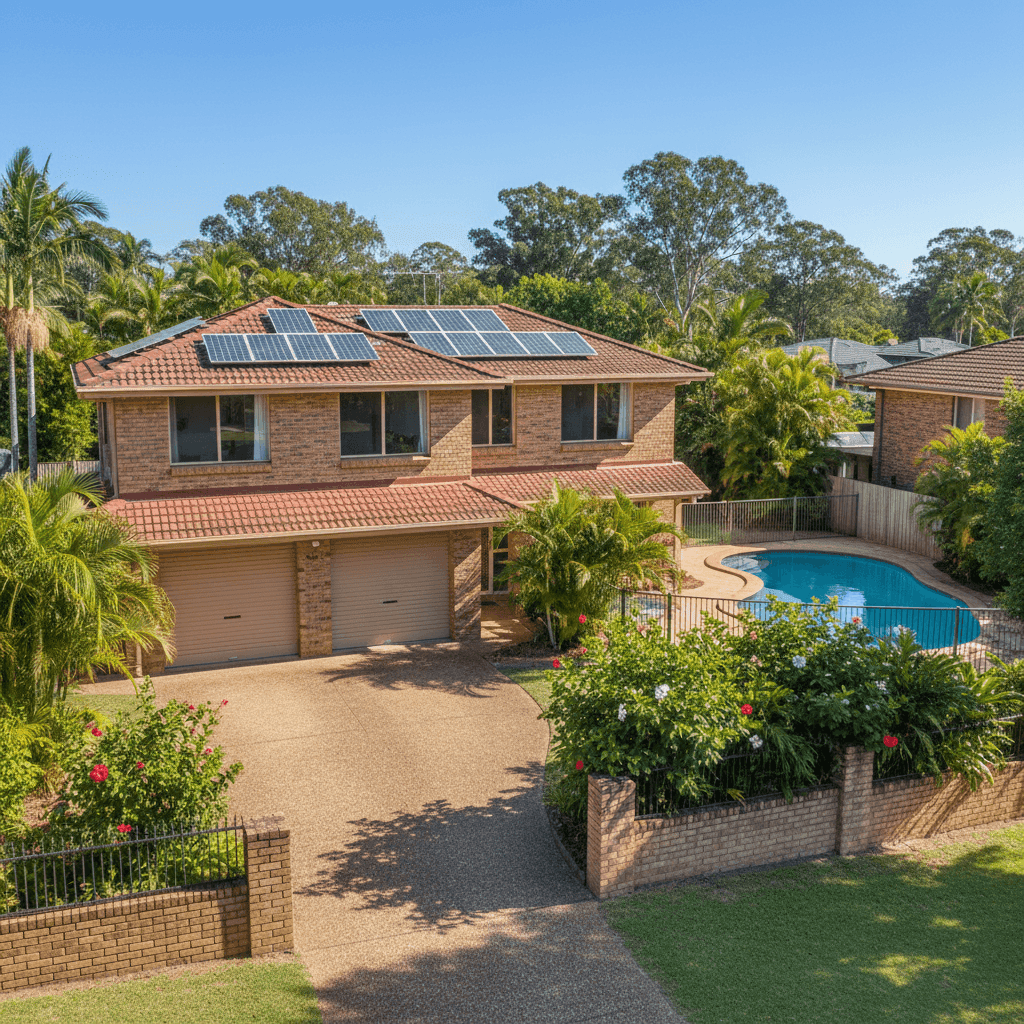
Arundel is a well-established residential suburb on Queensland's Gold Coast, known for its leafy streets, family-friendly atmosphere, and proximity to major amenities. If you own a free-standing home here, understanding what you should be paying for building insurance — and why — can save you thousands of dollars every year. This article breaks down a recent building-only insurance quote for a four-bedroom, double brick home in Arundel (postcode 4214) and puts it in context against local, state, and national benchmarks.
---
Is This Quote Fair?
The quote in question comes in at $1,251 per year (or roughly $122 per month) for building-only cover on a 214 sqm free-standing home with a sum insured of $527,000. Our rating for this quote is CHEAP — below average — and the numbers back that up convincingly.
To put it bluntly, this is an exceptional result. The suburb average for Arundel sits at $4,272 per year, meaning this quote is roughly 70% cheaper than what most homeowners in the same postcode are paying. Even against the suburb's 25th percentile — the cheapest quarter of quotes — this premium of $1,251 still comes in well below the $2,421 mark. That's a genuinely standout outcome.
It's worth noting the building excess is set at $3,000, which is on the higher side. A higher excess typically lowers your premium, so part of the savings here may reflect the policyholder's willingness to absorb more out-of-pocket cost in the event of a claim. That's a legitimate trade-off for many homeowners, particularly those who are financially comfortable and want to reduce ongoing costs.
---
How Arundel Compares
The Gold Coast LGA is one of the more expensive insurance markets in Australia, driven by its coastal exposure, storm risk, and high property values. The LGA average for the Gold Coast sits at a hefty $5,494 per year — making this $1,251 quote look even more impressive by comparison.
Zooming out to the state level, Queensland's average home insurance premium is $4,547 per year, with a median of $3,931. Queensland consistently ranks as one of the most expensive states for home insurance in the country, largely due to cyclone risk in northern regions, widespread flood exposure, and severe storm seasons. Even though Arundel is not classified as a cyclone risk area, it sits within a state where insurers price risk conservatively.
At the national level, the average premium is $2,965 per year and the median is $2,716. This quote sits well below both figures, which is notable given that Queensland properties typically attract above-average premiums. Here's a quick summary of how this quote stacks up:
| Benchmark | Annual Premium |
|---|---|
| This Quote | $1,251 |
| Arundel Suburb Average | $4,272 |
| Arundel Suburb Median | $4,189 |
| Arundel 25th Percentile | $2,421 |
| QLD State Average | $4,547 |
| QLD State Median | $3,931 |
| National Average | $2,965 |
| National Median | $2,716 |
| Gold Coast LGA Average | $5,494 |
The data is drawn from a sample of 60 quotes in the Arundel area, giving a solid statistical basis for these comparisons.
---
Property Features That Affect Your Premium
Several characteristics of this particular property work in the homeowner's favour from an insurance pricing perspective.
Double brick construction is generally viewed favourably by insurers. It offers strong resistance to fire, wind, and impact damage compared to lighter cladding materials, and tends to result in lower premiums. Combined with a tiled roof — another durable and fire-resistant material — this home presents a relatively low structural risk profile.
The slab foundation is standard for Queensland homes built in the 1990s and is considered stable and low-risk in most suburban settings. Similarly, tile flooring throughout is a practical and durable choice that's easy to repair and replace, which can reduce the cost of claims related to water damage or flooding.
The property was built in 1994, placing it in a generation of homes that benefited from improved building codes but predate some of the more stringent cyclone-proofing standards introduced in Queensland after the 1990s. At 30 years old, it's worth ensuring the building sum insured of $527,000 accurately reflects current rebuild costs, particularly given the significant rise in construction labour and materials since 2020.
The home also features solar panels and a swimming pool — both of which can add complexity to insurance policies. Solar panels may require specific coverage for accidental damage or inverter failure, so it's worth checking whether the policy explicitly includes them under the building definition. Pools, meanwhile, can affect liability exposure and may influence premiums slightly, though their impact varies by insurer.
There is no ducted climate control system, which removes one potential source of mechanical breakdown claims. And the absence of a cyclone risk classification is a meaningful factor — many Gold Coast properties closer to the coastline or in northern Queensland face significant premium loadings for cyclone cover that simply don't apply here.
---
Tips for Homeowners in Arundel
1. Review your sum insured regularly. Construction costs have risen sharply in recent years. A sum insured of $527,000 for a 214 sqm double brick home may be appropriate today, but it's worth reassessing annually. Underinsurance is one of the most common and costly mistakes homeowners make — if your rebuild cost exceeds your cover, you'll bear the shortfall yourself.
2. Clarify solar panel coverage. Check whether your policy explicitly covers your solar panel system — including the panels themselves, the inverter, and associated wiring. Some building policies include solar as part of the structure; others treat it as an exclusion or optional add-on. Don't assume.
3. Consider whether building-only cover is sufficient. This quote covers the building structure only. If you have valuable contents — furniture, appliances, clothing, electronics — a separate contents policy is worth considering. A combined building and contents policy can sometimes be more cost-effective than two separate covers.
4. Shop around at renewal time. Even if you're already on a competitive premium like this one, insurers adjust their pricing models regularly. What's cheap today may not be cheap in 12 months. Using a comparison tool at renewal ensures you're not paying more than you need to.
---
Compare Your Own Quote
Whether you're a new homeowner in Arundel or simply wondering if your current insurer is still giving you a fair deal, comparing quotes is the fastest way to find out. Get a home insurance quote at CoverClub and see how your premium stacks up against your neighbours — you might be surprised by how much room there is to save.