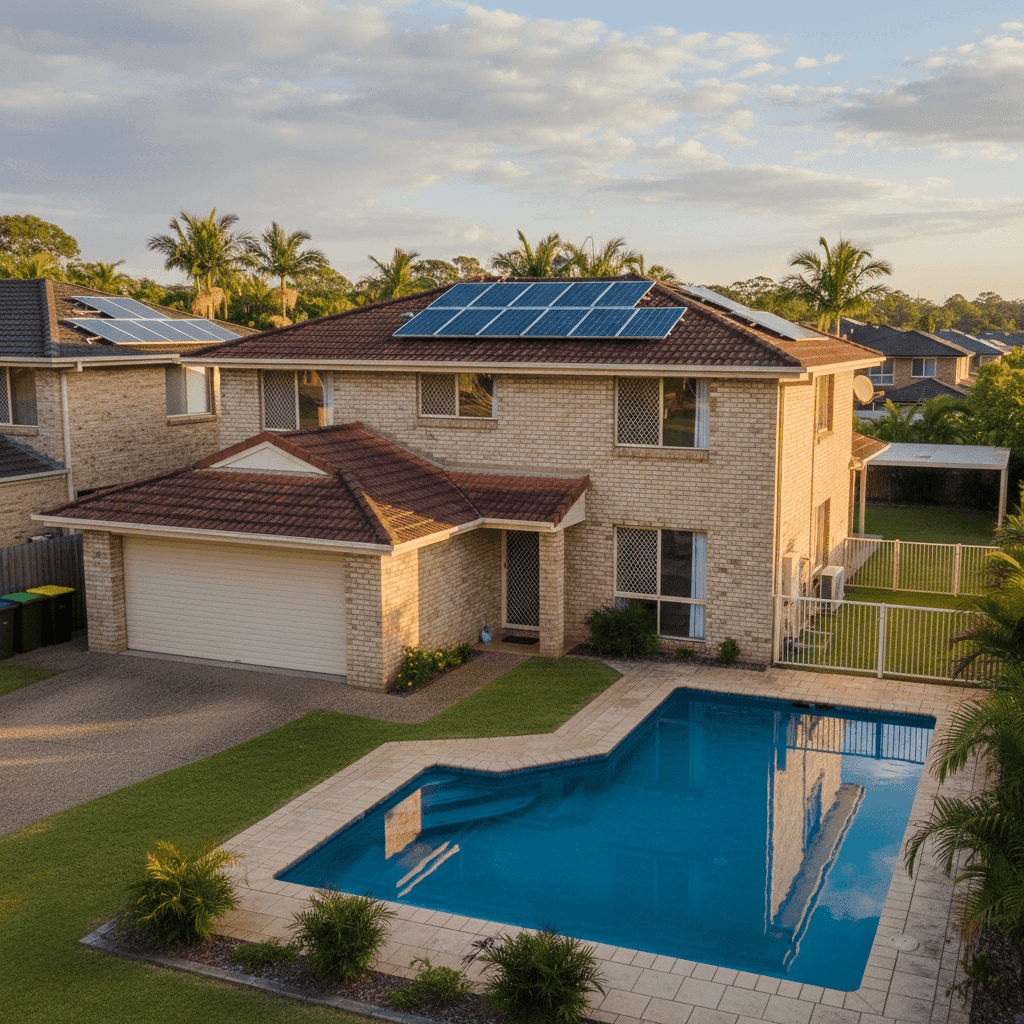
If you own a free standing home in Arundel, QLD 4214, you already know the Gold Coast lifestyle comes with its perks — and its costs. Home insurance is one of those costs that can vary enormously depending on your property, your insurer, and where exactly you live. In this article, we analyse a recent building-only insurance quote for a four-bedroom, double brick home in Arundel to help you understand what's driving the price — and whether it's a good deal.
---
Is This Quote Fair?
The short answer? Yes — it's exceptionally competitive.
This quote came in at $1,299 per year (or about $127 per month) for building-only cover on a four-bedroom free standing home with a sum insured of $527,000. Our pricing algorithm rates this as CHEAP — meaning it sits well below the average for the area.
To put that in perspective: the average building insurance premium in Arundel currently sits at $4,272 per year, with a median of $4,189. That means this quote is roughly 70% below the suburb average — a remarkable result for any homeowner.
Even compared to the 25th percentile of quotes in the suburb (i.e., the cheapest quarter of quotes), which sits at $2,421/yr, this premium is still nearly half the price. That's an extraordinary outcome and suggests the insurer has assessed this particular property very favourably.
It's worth noting the building excess on this policy is $3,000, which is on the higher side. A higher excess typically lowers your premium, so this is likely one of the factors contributing to the low annual cost. Make sure you're comfortable covering that out-of-pocket amount in the event of a claim before locking in.
---
How Arundel Compares
Arundel sits within the City of Gold Coast LGA, which is one of the more expensive regions in Australia for home insurance. The Gold Coast LGA average premium is a hefty $5,494 per year — significantly above both the Queensland and national averages.
Here's how the numbers stack up across different benchmarks:
| Benchmark | Average Premium |
|---|---|
| Arundel (suburb) | $4,272/yr |
| Queensland (state) | $4,547/yr |
| Gold Coast LGA | $5,494/yr |
| National average | $2,965/yr |
| This quote | $1,299/yr |
Queensland as a whole is one of Australia's most expensive states for home insurance, largely due to the elevated risk of severe weather events including storms, flooding, and hail. You can explore Queensland home insurance statistics and national benchmarks to see how your area compares across the board.
Interestingly, the national average of $2,965/yr is considerably lower than what Arundel homeowners typically pay — a reminder that Queensland's climate and geography push premiums well above what you'd expect in, say, Melbourne or Adelaide. For detailed suburb-level data, check out the Arundel insurance statistics page, which is based on a sample of 60 quotes.
---
Property Features That Affect Your Premium
Several characteristics of this property are likely working in the homeowner's favour when it comes to pricing.
Double Brick Construction
Double brick external walls are among the most insurer-friendly building materials available. They're highly resistant to fire, wind, and general wear — all factors that reduce the likelihood of a major claim. Insurers typically reward this with lower premiums compared to timber-framed or clad homes.
Tiled Roof
A tiled roof is another tick in the right column. Tiles are durable, relatively low-maintenance, and perform well in storm conditions. They're a preferred roofing material from an underwriting perspective, especially compared to older corrugated iron or asbestos-based roofing.
Slab Foundation
A concrete slab foundation is standard for homes of this era and construction type. It offers good structural stability and is less susceptible to subsidence or pest damage compared to raised timber stumped foundations.
Built in 1994
At around 30 years old, this home is mature but not old enough to trigger concerns about ageing infrastructure. Many insurers view homes from the 1990s favourably — they were built to modern standards but have had time to prove their structural integrity.
Swimming Pool
Pools add value to a property but also introduce some liability risk. Most building policies will include the pool structure itself, but it's worth confirming with your insurer exactly what's covered — particularly for pool equipment, fencing, and any associated structures.
Solar Panels
Solar panels are an increasingly common feature on Queensland homes, and most building policies do cover them as a fixed attachment to the roof. However, coverage limits and exclusions vary by insurer, so it's worth reading the Product Disclosure Statement (PDS) carefully to confirm your panels are adequately covered under the $527,000 sum insured.
Standard Fittings
With standard-quality fittings throughout, the rebuild cost estimate is more predictable and less likely to be underestimated — which helps keep the sum insured accurate and the premium reasonable.
---
Tips for Homeowners in Arundel
Whether you're reviewing your existing policy or shopping around for the first time, here are some practical steps to make sure you're getting the best value.
1. Check your sum insured annually Building costs in South East Queensland have risen significantly in recent years. A sum insured that was accurate two years ago may no longer reflect the true cost to rebuild your home. Use a building cost calculator or speak with a quantity surveyor to make sure $527,000 still covers you adequately.
2. Understand your excess before you commit This policy carries a $3,000 building excess. While that's contributed to the low premium, it means you'll need to cover the first $3,000 of any claim yourself. If you'd prefer a lower out-of-pocket cost at claim time, compare quotes with a reduced excess — just be aware the annual premium will likely increase.
3. Confirm your pool and solar panels are covered Both features add complexity to your policy. Ask your insurer specifically whether your solar panel system (including inverters and mounting hardware) and pool structure are included in the building sum insured, and whether there are any sub-limits that apply.
4. Don't assume loyalty pays off The Gold Coast insurance market is competitive, and premiums can vary dramatically between insurers for the same property. As this quote demonstrates, it's entirely possible to pay significantly less than the suburb average. Make it a habit to compare quotes at renewal time rather than simply accepting your existing insurer's renewal offer.
---
Compare Your Own Quote
Curious how your home insurance stacks up? CoverClub makes it easy to compare building and contents insurance quotes from a range of Australian insurers — all in one place. Whether you're in Arundel or anywhere else across the country, you can get a personalised quote in minutes and see exactly where your premium sits relative to your suburb, state, and national benchmarks.
Don't pay more than you need to. Start comparing today.