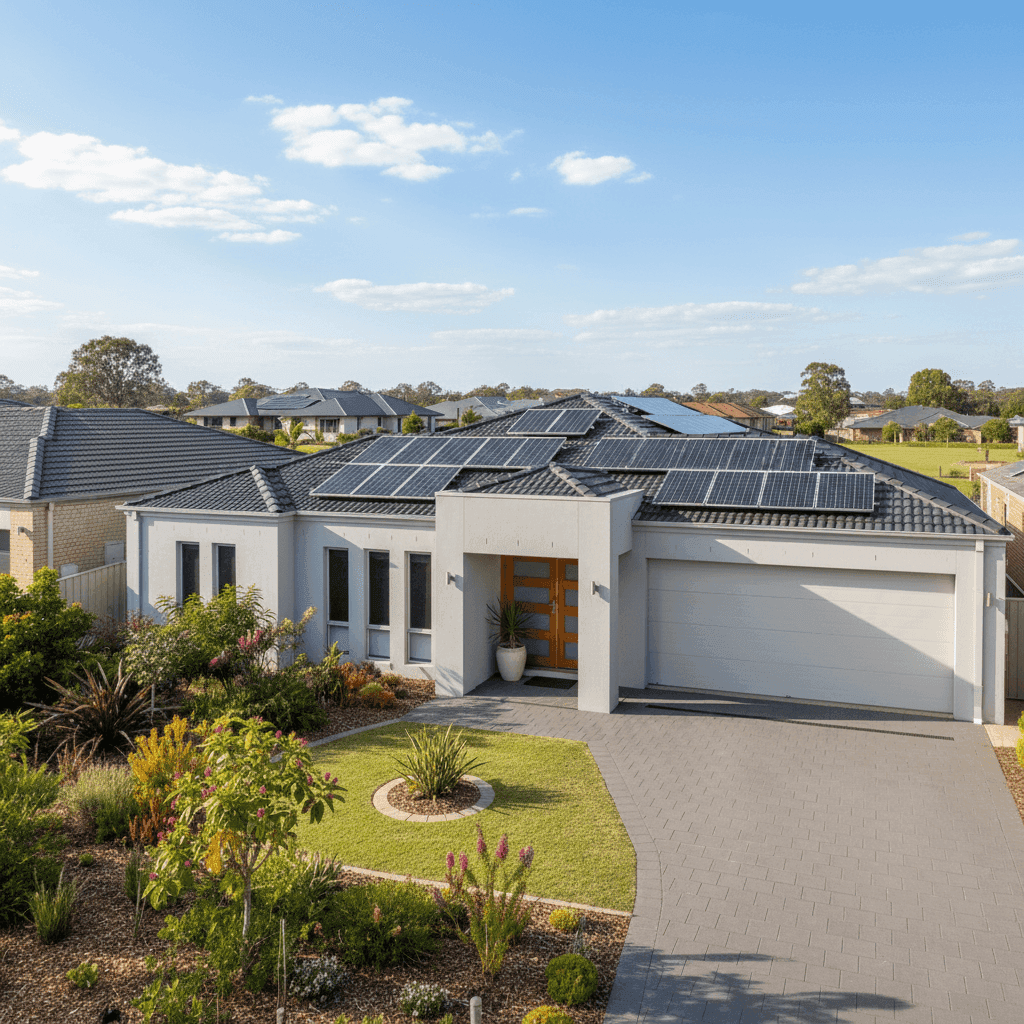
Arundel is a well-established residential suburb on Queensland's Gold Coast, known for its family-friendly streets, proximity to Griffith University, and a mix of modern and established housing stock. This article takes a close look at a building insurance quote for a four-bedroom, free-standing home in Arundel (postcode 4214) — breaking down whether the price stacks up, how it compares to broader benchmarks, and what homeowners in the area can do to make sure they're getting the best value for their cover.
---
Is This Quote Fair?
The quote in question comes in at $2,413 per year (or $231/month) for building-only cover, with a $1,000 building excess and a sum insured of $708,000. CoverClub's pricing analysis rates this quote as FAIR — around average.
That's a reasonable outcome. It's not the sharpest price on the market, but it's also nowhere near the top of the range. For a modern, well-built home in a non-cyclone-rated suburb, landing close to the local median is a solid position to be in. Homeowners who've received this kind of quote shouldn't feel alarmed — but there's still merit in shopping around to see whether a more competitive premium is available for the same level of cover.
---
How Arundel Compares
To put this quote in proper context, it helps to look at the numbers across different geographic levels.
Suburb Level — Arundel QLD 4214
Based on 82 quotes collected for Arundel:
| Metric | Premium |
|---|---|
| 25th Percentile | $1,723/yr |
| Median | $2,359/yr |
| Average | $2,597/yr |
| 75th Percentile | $3,368/yr |
At $2,413/yr, this quote sits just above the suburb median of $2,359 and well below the suburb average of $2,597. That places it comfortably in the middle of the pack — better than roughly half of quotes seen in the area, and significantly cheaper than the top quarter, which starts at $3,368/yr.
State Level — Queensland
The picture looks quite different when you zoom out to the Queensland state level. The QLD average premium is a striking $9,129/yr, with a median of $3,903/yr. Arundel's figures are dramatically lower than both of these figures — a reflection of the suburb's relatively benign risk profile compared to far north Queensland and cyclone-prone coastal areas that pull the state average upward significantly.
National Level
Nationally, the average home insurance premium sits at $5,347/yr, with a median of $2,764/yr. This quote of $2,413/yr comes in below the national median, which is a positive sign. It's also worth noting that the Gold Coast LGA average is $8,161/yr — again, much higher than what's been quoted here, largely driven by higher-risk properties elsewhere on the Coast.
The takeaway: Arundel homeowners are in a relatively favourable position compared to much of Queensland and the broader Gold Coast region. The quote analysed here reflects that well.
---
Property Features That Affect Your Premium
Several characteristics of this property influence how insurers price the risk. Here's what's most relevant:
Construction Year (2018)
A home built in 2018 benefits from modern building codes, which require improved structural integrity, better materials, and stronger engineering standards. Newer homes generally attract lower premiums because they're less likely to suffer major structural damage and are cheaper to repair to current standards.
Hebel External Walls
Hebel (autoclaved aerated concrete) is a popular modern cladding choice that offers excellent fire resistance and durability. Insurers generally view Hebel favourably — it's non-combustible and performs well in extreme weather, which can contribute to a more competitive premium compared to some alternative cladding materials.
Tiled Roof
Terracotta or concrete tiles are among the more durable roofing options available and are well-regarded by insurers for their longevity and resistance to fire. A tiled roof on a slab-foundation home is a low-risk combination from an underwriting perspective.
Solar Panels
This property has solar panels, which are worth noting from an insurance standpoint. Solar panels are typically covered under building insurance, but it's important to confirm that the sum insured ($708,000 in this case) accounts for their replacement value. Some insurers include panels automatically; others may require them to be specifically listed.
Ducted Climate Control
Ducted air conditioning systems are a valuable fixed inclusion in a home and should be factored into the building sum insured. At $708,000 for a 214 sqm home built in 2018 with quality inclusions, the sum insured appears appropriately calibrated — though homeowners should periodically review this figure as construction costs change.
No Pool, No Cyclone Risk
The absence of a pool removes a common liability concern, and the property's location outside a cyclone risk zone is a meaningful factor in keeping premiums lower than many other Queensland postcodes.
---
Tips for Homeowners in Arundel
1. Review Your Sum Insured Regularly
Construction costs in South East Queensland have risen considerably in recent years. A sum insured set even two or three years ago may no longer be sufficient to fully rebuild your home. Use a building cost calculator or speak with a quantity surveyor to ensure your $708,000 figure still reflects current rebuild costs — including solar panels, ducted air conditioning, and any renovations or improvements made since the policy was first set up.
2. Compare Quotes Before Renewal
Loyalty doesn't always pay in insurance. Even if your current quote is rated "fair," there's a real chance another insurer could offer equivalent cover at a lower price. CoverClub makes it easy to compare home insurance quotes across multiple providers in minutes — it's worth doing at least once a year before your renewal date.
3. Consider Your Excess Strategically
This policy carries a $1,000 building excess. Opting for a higher excess (say, $2,000 or $2,500) can meaningfully reduce your annual premium. If you have the financial buffer to cover a larger out-of-pocket cost in the event of a claim, increasing your excess is one of the most straightforward ways to bring your premium down.
4. Confirm Solar Panel Coverage
Given the solar installation on this property, it's worth calling your insurer to confirm exactly how the panels are covered — whether they're included in the building sum insured, whether storm and accidental damage are included, and whether there are any exclusions around inverter or battery storage systems. A quick phone call can prevent a nasty surprise at claim time.
---
Compare Your Home Insurance Today
Whether you're renewing soon or just curious about what the market looks like, CoverClub gives you a clear, data-driven view of home insurance pricing across Australia. Get a quote for your Arundel property and see how your premium stacks up against the suburb, state, and national benchmarks — all in one place.