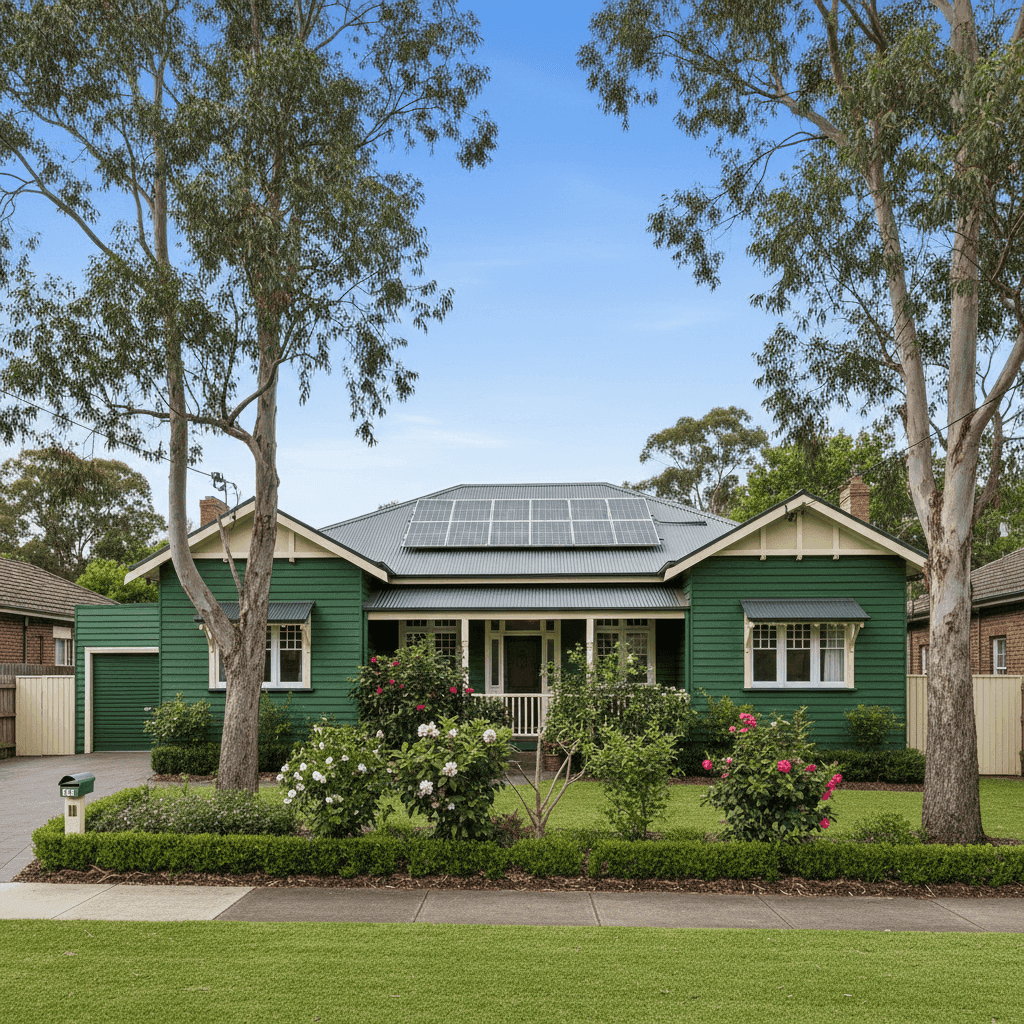
If you own a free standing home in Ascot, QLD 4007, you already know this riverside suburb commands premium real estate — and, as it turns out, premium insurance costs to match. This article breaks down a real home and contents insurance quote for a four-bedroom, three-bathroom weatherboard property in Ascot, compares it against local, state, and national benchmarks, and offers practical tips to help you get the best value on your cover.
---
Is This Quote Fair?
The quote in question comes in at $4,277 per year (or $418/month) for combined home and contents insurance, covering a building sum insured of $1,402,000 and contents valued at $140,000, each with a $1,000 excess.
Our price rating for this quote is FAIR — Around Average, and the data backs that up. Based on 65 quotes collected for Ascot (4007), the suburb average sits at $4,259/yr and the median at $3,938/yr. At $4,277, this quote lands just above both of those figures — essentially right in the middle of the pack for the area.
To put it another way: half of all Ascot homeowners in our dataset are paying less than $3,938/yr, but a quarter are paying more than $4,933/yr. This quote falls comfortably within the interquartile range (between the 25th percentile of $3,119/yr and the 75th percentile of $4,933/yr), which confirms it's neither a bargain nor an outlier — it's a reasonable, market-rate premium for a property of this type and value in Ascot.
---
How Ascot Compares
Context is everything when evaluating an insurance quote. Here's how Ascot stacks up against broader benchmarks:
| Benchmark | Average Premium | Median Premium |
|---|---|---|
| Ascot (4007) | $4,259/yr | $3,938/yr |
| Queensland | $4,547/yr | $3,931/yr |
| National | $2,965/yr | $2,716/yr |
A few things stand out from this comparison:
- Ascot vs Queensland: Ascot's average premium is actually slightly below the Queensland state average of $4,547/yr, which may surprise some homeowners. Despite being an affluent suburb with high property values, Ascot's flood and storm risk profile appears to keep it broadly in line with — or marginally below — the broader QLD average.
- Ascot vs National: Both Ascot and Queensland premiums are significantly higher than the national average of $2,965/yr. This gap reflects the well-documented reality that Queensland homeowners face elevated weather-related risks — particularly severe storms, hail, and flooding — which push premiums well above what most Australians in lower-risk states pay.
- The high-value factor: It's also worth noting that a building sum insured of $1,402,000 is substantial. Higher insured values naturally attract higher premiums, so some of the cost difference versus the national average is simply a reflection of the property's replacement value, not just its location.
---
Property Features That Affect Your Premium
Several characteristics of this particular property have a meaningful influence on the final premium. Understanding these can help you assess whether your quote is appropriate — and where there might be room to move.
Weatherboard Timber Walls
Weatherboard wood construction is one of the most significant premium drivers for this property. Timber-framed and clad homes are considered higher risk by insurers due to their susceptibility to fire, rot, and storm damage compared to brick or rendered masonry. For a home built in 1930, this risk is amplified — older weatherboard homes may have ageing structural elements, original wiring, or plumbing that increases the likelihood of a claim.
Steel / Colorbond Roof
On the positive side, a Colorbond steel roof is generally viewed favourably by insurers. It's durable, resistant to corrosion, and performs well in high-wind events — a relevant consideration in South East Queensland's storm season. This likely offsets some of the premium loading associated with the timber wall construction.
Slab Foundation
A concrete slab foundation is a neutral-to-positive factor. Slabs are structurally sound and less prone to subsidence issues than older pier-and-beam foundations common in heritage homes of this era.
Timber / Laminate Flooring
The combination of timber and laminate flooring throughout the home contributes to the overall reinstatement cost. Timber floors — particularly original hardwood in a 1930s home — are expensive to replace, which supports the high building sum insured.
Top-of-the-Range Fittings
With top-of-the-range fittings throughout, the cost to rebuild or repair this home to its original standard is considerably higher than a comparable home with standard finishes. This is directly reflected in the $1,402,000 building sum insured and is entirely appropriate — underinsuring a premium-finish home is a costly mistake.
Solar Panels
Solar panels add modest complexity to an insurance policy. They increase the reinstatement cost and can be a source of claims (hail damage, for instance). Most standard home policies cover rooftop solar as part of the building, but it's worth confirming the extent of cover with your insurer.
Ducted Climate Control
Ducted air conditioning systems are expensive to repair or replace and contribute to the overall contents or building value depending on how they're installed. Ensuring your sum insured accounts for this system is important.
---
Tips for Homeowners in Ascot
1. Review Your Sum Insured Regularly
With construction costs rising steadily across South East Queensland, the cost to rebuild a high-specification 1930s weatherboard home can increase significantly year on year. Review your building sum insured annually — ideally with the help of a quantity surveyor or an online replacement cost calculator — to avoid being underinsured when it matters most.
2. Ask About Weatherboard-Specific Policies
Not all insurers price weatherboard homes the same way. Some specialise in heritage or older homes and may offer more competitive rates or broader cover for period properties. Shopping around — particularly through a comparison service — can surface options that a single insurer won't show you.
3. Consider Your Excess Strategically
Both the building and contents excesses on this policy are set at $1,000. Increasing your excess (for example, to $2,000 or $2,500) can meaningfully reduce your annual premium. If you have sufficient savings to cover a higher out-of-pocket cost in the event of a claim, this is often a smart trade-off.
4. Don't Overlook Contents Cover
At $140,000, the contents sum insured is relatively modest for a four-bedroom, three-bathroom home with top-of-the-range fittings. Take the time to itemise your high-value possessions — furniture, appliances, artwork, jewellery, and electronics — to make sure your contents cover truly reflects what's inside your home.
---
Compare Your Quote at CoverClub
Whether you're renewing your existing policy or shopping for the first time, comparing quotes is the single most effective way to ensure you're not overpaying. At CoverClub, we make it easy to see how your premium stacks up against real data from homeowners in your suburb. Get a quote today and find out if you could be paying less — without sacrificing the cover you need.