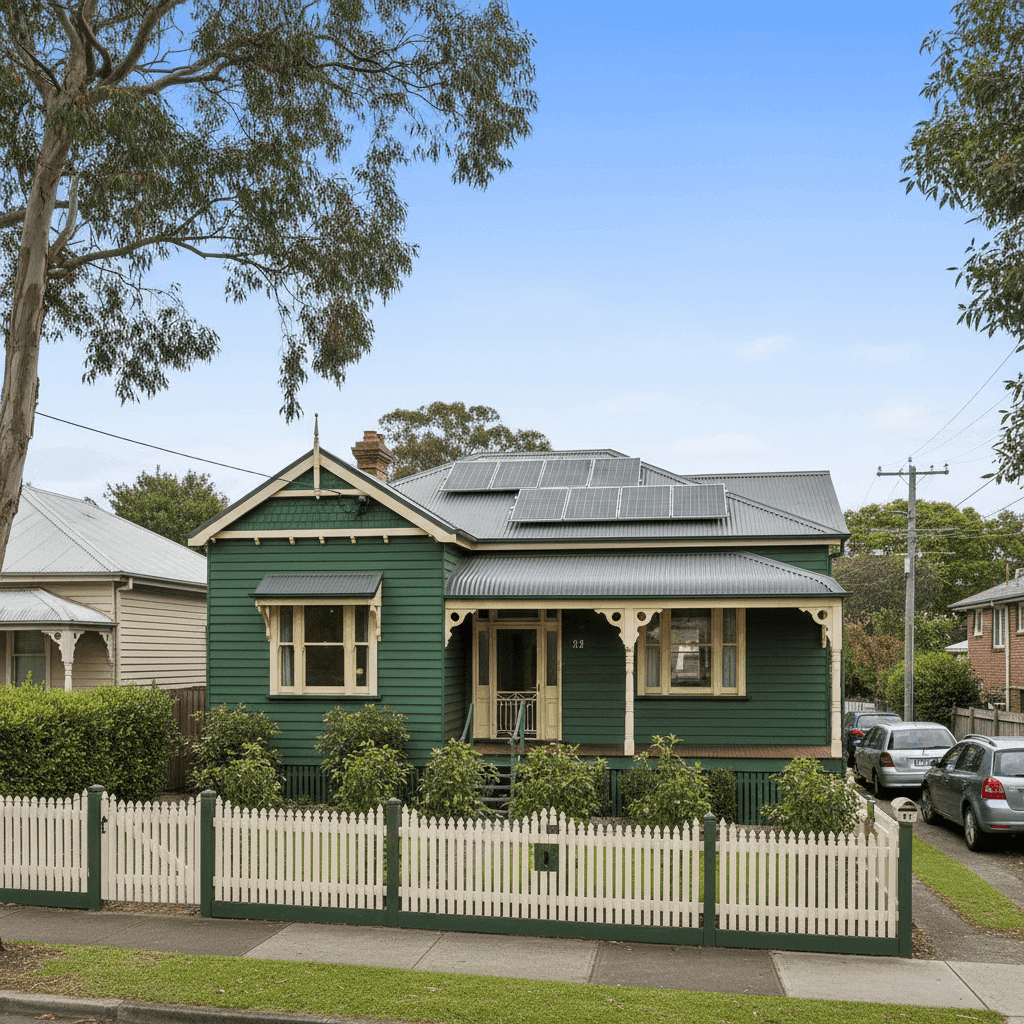
If you own a free standing home in Ascot Vale, VIC 3032, you're likely well aware that insurance costs can vary enormously depending on your property's age, construction, and location. This article breaks down a real home and contents insurance quote for a four-bedroom, two-bathroom weatherboard home in Ascot Vale — built in 1930 and sitting on stumps — to help you understand whether the premium on offer represents good value, and what factors are driving the price.
---
Is This Quote Fair?
The quote in question comes in at $1,782 per year (or $185 per month) for combined home and contents cover, with a building sum insured of $1,000,000 and contents valued at $200,000. The building excess is set at $3,000, and the contents excess at $1,000.
CoverClub's pricing engine has rated this quote as FAIR — Around Average, which is a reasonable outcome for a property of this type and age. It's not the cheapest available, but it's comfortably below both the suburb average and the Victorian state average, which suggests the insurer has priced this risk sensibly without applying a heavy loading.
For homeowners weighing up whether to accept or shop around further, a "Fair" rating means you're unlikely to be overpaying significantly — though there's always merit in comparing a few options before committing.
---
How Ascot Vale Compares
To put this quote in proper context, here's how it sits against broader market data drawn from Ascot Vale suburb insurance statistics, Victorian state averages, and national benchmarks:
| Benchmark | Premium |
|---|---|
| This Quote | $1,782/yr |
| Ascot Vale 25th Percentile | $1,591/yr |
| Ascot Vale Median | $2,031/yr |
| Ascot Vale Average | $2,524/yr |
| Ascot Vale 75th Percentile | $3,567/yr |
| LGA (Maribyrnong) Average | $1,816/yr |
| VIC State Average | $3,000/yr |
| VIC State Median | $2,718/yr |
| National Average | $5,347/yr |
| National Median | $2,764/yr |
(Based on 39 quotes collected in the Ascot Vale suburb sample.)
At $1,782, this quote sits between the 25th percentile and the median for the suburb — meaning roughly a quarter of similar properties in Ascot Vale are quoted less, while the majority are quoted more. It's also meaningfully below the Maribyrnong LGA average of $1,816, the Victorian state average of $3,000, and well under the national average of $5,347.
The national average is heavily skewed by high-risk regions — particularly cyclone-prone areas in Queensland and Western Australia — so the more relevant comparison for a Melbourne homeowner is the Victorian median of $2,718. Against that figure, this quote represents a saving of nearly $1,000 per year, which is substantial.
---
Property Features That Affect Your Premium
Several characteristics of this property have a meaningful influence on the insurance premium, both positively and negatively.
Age and Construction (1930 Weatherboard)
This is one of the most significant factors. Homes built in the 1930s are common throughout inner Melbourne suburbs like Ascot Vale, but their age introduces risk. Weatherboard timber external walls, while charming and period-appropriate, are more susceptible to fire spread and general wear than brick veneer or double-brick construction. Insurers typically apply a loading to weatherboard homes, particularly older ones, to account for higher rebuild complexity and material costs.
Stump Foundation
The home sits on stumps, which is very typical of pre-war Melbourne homes. Stump foundations can be a flag for insurers if the stumps are original timber (which may be deteriorating), though concrete or steel restumping reduces this concern. Elevated foundations also mean the underfloor space needs to be factored into assessments of flood or moisture risk.
Steel / Colorbond Roof
The good news here is the Colorbond roof. Steel roofing is durable, fire-resistant, and generally viewed favourably by insurers compared to older terracotta or asbestos cement sheeting that might still be found on homes of this era. It's a genuine positive for this property's risk profile.
Solar Panels
Solar panels add value to the property and are typically covered under building insurance, but they do slightly increase the insured replacement cost. It's worth confirming with your insurer that your solar system is explicitly included in the building sum insured.
Ducted Climate Control
Ducted heating and cooling systems are a meaningful contents or building item depending on how they're installed. Fixed ducted systems are generally treated as part of the building. Ensure your sum insured accounts for replacement costs, particularly given the age of the home and the complexity of retrofitting modern systems into period properties.
No Pool, No Cyclone Risk
The absence of a swimming pool removes a common liability exposure, and Ascot Vale's location in metropolitan Melbourne means cyclone risk is not a factor — unlike properties in northern Australia where premiums can be dramatically higher.
---
Tips for Homeowners in Ascot Vale
1. Review Your Building Sum Insured Carefully
A $1,000,000 building sum insured is generous for most properties in this area, but with a 1930s weatherboard home, rebuild costs can be surprisingly high due to heritage-style materials, labour, and the complexity of working with period construction. Make sure your sum insured reflects actual rebuild cost — not market value — and consider getting a professional building valuation if you haven't done so recently.
2. Consider Your Excess Strategy
This quote carries a $3,000 building excess, which is on the higher end. A higher excess generally reduces your premium, but it means you'll need to cover more out of pocket in the event of a claim. If you have a financial buffer to absorb that cost, it can be a smart trade-off. If not, it may be worth requesting a lower excess option and comparing the premium difference.
3. Check Your Weatherboard Maintenance
Insurers can reduce or deny claims if damage is attributable to a lack of maintenance. For weatherboard homes, this means keeping paint in good condition (to prevent moisture ingress and rot), ensuring gutters are clear, and checking for any signs of termite activity. Regular upkeep isn't just good practice — it protects your ability to claim.
4. Compare Quotes Annually
The home insurance market in Victoria is competitive, and premiums can shift significantly year to year. Given that this quote is already below the suburb median, you're in a reasonable position — but it's still worth comparing at renewal time. Even a modest saving of $200–$300 per year compounds meaningfully over time.
---
Ready to Compare?
Whether you're renewing your existing policy or shopping for the first time, CoverClub makes it easy to see how your quote stacks up against real market data. Get a home insurance quote today and find out if you're paying a fair price — or if there's a better deal waiting for you.