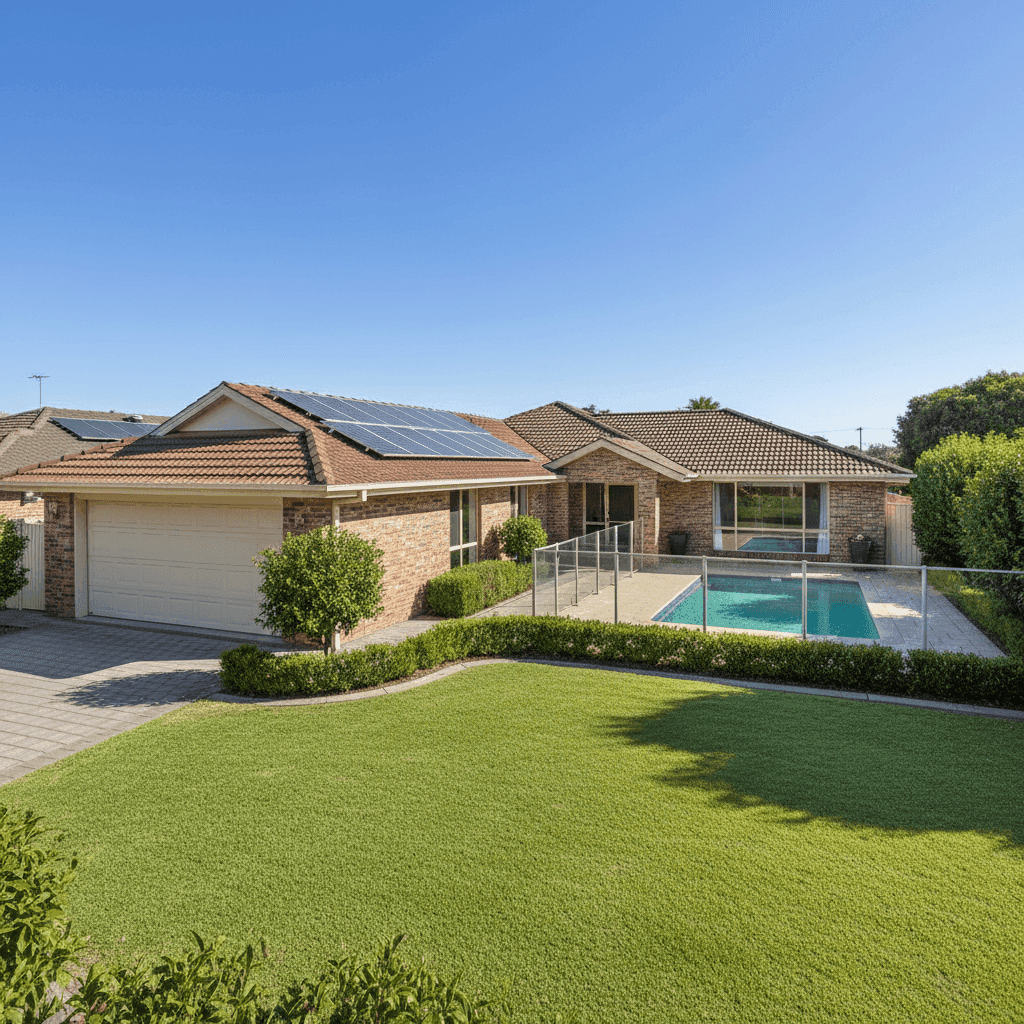
If you own a free standing home in Ascot, VIC 3551, you're probably curious about what a fair home insurance premium looks like — and whether you're paying too much, too little, or just about right. This article breaks down a real home and contents insurance quote for a four-bedroom, two-bathroom brick veneer home in Ascot, comparing it against Victorian and national benchmarks to help you make a more informed decision.
---
Is This Quote Fair?
The quote in question comes in at $1,295 per year (or roughly $127 per month) for combined home and contents cover, with a building sum insured of $850,000 and contents valued at $50,000. Our analysis rates this quote as CHEAP — below average — which is genuinely good news for the homeowner.
To put that in perspective: the average home insurance premium across Victoria sits at $2,921 per year, with a state median of $2,694. Nationally, the picture is similar — an average of $2,965 and a median of $2,716. This quote is less than half the Victorian average, representing significant savings without any obvious red flags in the coverage structure.
Of course, a lower premium doesn't automatically mean the policy is the right fit. It's worth scrutinising the excess amounts — a $3,000 building excess and $1,000 contents excess are on the higher side, and these figures would come into play if you ever needed to make a claim. Higher excesses are a common mechanism insurers use to bring premiums down, so it's a trade-off worth understanding before signing on the dotted line.
That said, for a well-built, relatively modern home in a non-cyclone-risk area, this premium is competitively priced and worth serious consideration.
---
How Ascot Compares
While suburb-level data for Ascot (3551) isn't currently available in our database, we can draw meaningful comparisons using broader geographic data. You can explore available Ascot suburb insurance stats as our data grows.
Here's how this quote stacks up against the wider landscape:
| Benchmark | Annual Premium |
|---|---|
| This Quote | $1,295 |
| VIC State Average | $2,921 |
| VIC State Median | $2,694 |
| National Average | $2,965 |
| National Median | $2,716 |
| LGA (Mount Alexander) Average | $3,185 |
Notably, the Mount Alexander LGA average of $3,185 is actually higher than both the state and national averages — suggesting that properties in this region can attract steeper premiums from some insurers. That makes this quote even more impressive by comparison. Homeowners in the area should be aware that shopping around can yield very different results.
For a broader view of how Victorian premiums are trending, visit our VIC insurance statistics page, or check out national home insurance data to see the full picture.
---
Property Features That Affect Your Premium
Several characteristics of this particular property work in its favour from an insurance pricing standpoint:
Construction year (2018) A home built in 2018 benefits from modern building codes, which typically means better structural integrity, improved fire resistance, and compliance with contemporary safety standards. Insurers generally view newer builds as lower risk, which can translate to more competitive premiums.
Brick veneer external walls Brick veneer is one of the most common and well-regarded wall materials in Australian residential construction. It offers solid fire resistance and durability, both of which are looked upon favourably by underwriters.
Tiled roof Terracotta or concrete tiles are considered a resilient roofing material, particularly in non-cyclone regions. They tend to perform well against hail and general weathering, reducing the likelihood of weather-related claims.
Slab foundation A concrete slab is a stable and widely accepted foundation type in Victoria, with minimal subsidence risk compared to some older foundation styles.
No cyclone risk Ascot is not classified as a cyclone risk area, which removes one of the more significant premium loading factors that affect properties in northern Australia.
Solar panels and ducted climate control While these features add to the replacement value of the home, they're increasingly standard in modern builds and are factored into the building sum insured. It's important to ensure your sum insured accurately reflects the cost of replacing these systems, as underinsurance can be a costly mistake.
Swimming pool A pool adds value to the property but also introduces some liability considerations. Most home insurance policies cover the pool structure under the building sum insured, so confirming this with your insurer is worthwhile.
---
Tips for Homeowners in Ascot
1. Review your sum insured regularly Building costs have risen sharply across Australia in recent years. The $850,000 building sum insured on this policy should reflect the full cost of rebuilding — not the market value of the property. Use a building cost calculator or speak with a quantity surveyor to make sure you're not underinsured.
2. Understand your excess before you claim The $3,000 building excess on this policy is relatively high. If you experienced minor storm damage or a small accidental event, the repair cost might not exceed your excess — meaning you'd cover it out of pocket anyway. Consider whether a lower excess (and slightly higher premium) might suit your situation better.
3. Don't forget your contents A $50,000 contents value may be sufficient for some households, but it's easy to underestimate how much your belongings are actually worth. Walk through each room and tally up furniture, appliances, electronics, clothing, and valuables. Many Australians are surprised to find their contents exceed their insured amount.
4. Shop around at renewal time Even if you're happy with your current insurer, premiums can shift significantly from year to year. The Mount Alexander LGA average of $3,185 shows that some homeowners in the region are paying well above what's necessary. Use a comparison tool like CoverClub at each renewal to ensure you're still getting a competitive rate.
---
Compare Your Own Quote
Whether you're a first-time buyer or a long-time Ascot local, making sure your home insurance is both comprehensive and competitively priced is one of the smartest financial decisions you can make. The quote analysed here demonstrates that well below-average premiums are achievable in this area — but the right policy for you will depend on your specific circumstances, risk appetite, and coverage needs.
Ready to see what you could be paying? Get a home insurance quote through CoverClub and compare options tailored to your property in Ascot and beyond.