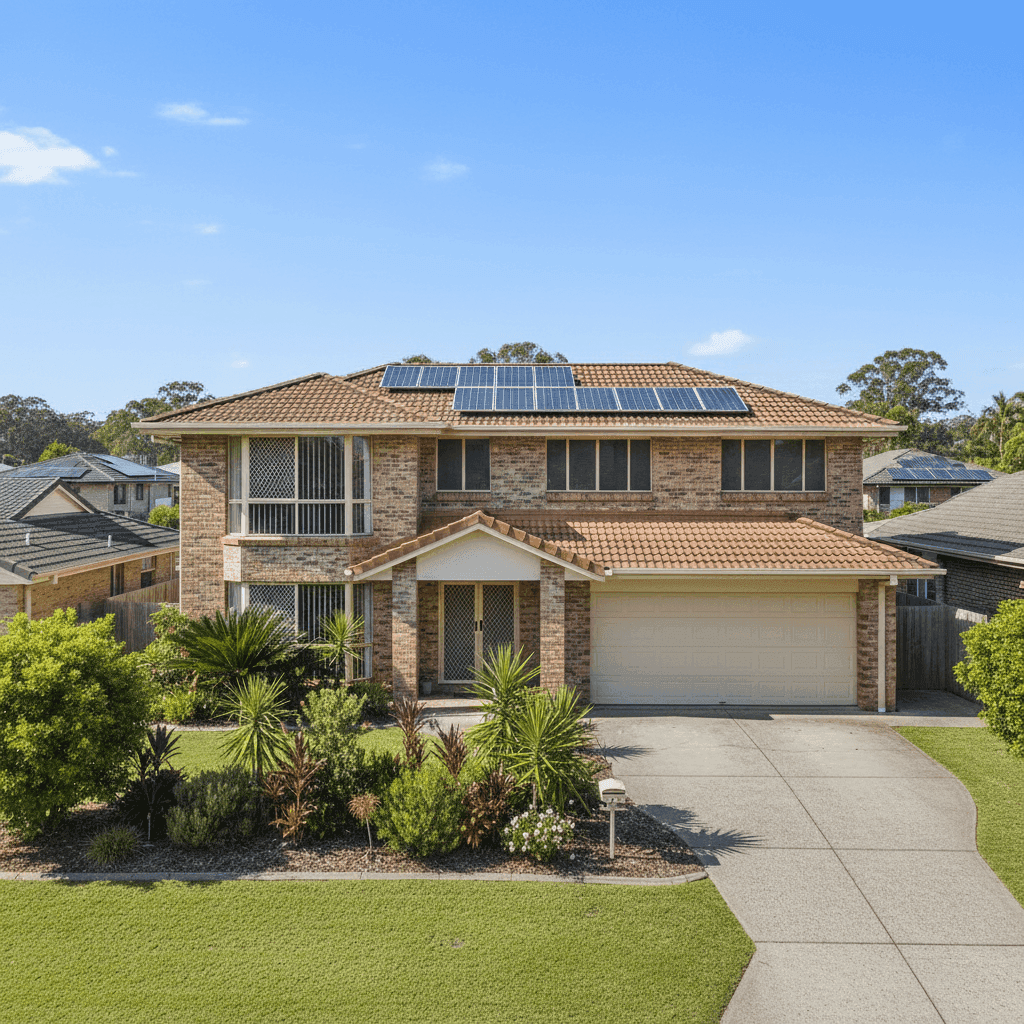
If you own a four-bedroom free standing home in Ashmore, QLD 4214, you're probably curious about what a fair home insurance premium looks like — and whether the quote sitting in your inbox is worth accepting. Ashmore is a well-established suburb on the Gold Coast, known for its mix of family homes, proximity to Southport, and solid residential character. In this article, we break down a real home and contents insurance quote for a brick veneer property in the area, and put it into context against suburb, state, and national benchmarks.
---
Is This Quote Fair?
The quote in question comes in at $2,149 per year (or $206/month) for combined home and contents cover, with a building sum insured of $621,000 and contents valued at $50,000. Both the building and contents excess are set at $1,000.
Based on CoverClub's pricing data, this quote is rated CHEAP — below average for the area. That's a meaningful result. It suggests the insurer has priced this property favourably relative to what most Ashmore homeowners are paying for similar cover.
To put it plainly: if you were shopping the market blind and landed on this figure, you'd be doing better than the majority of your neighbours.
---
How Ashmore Compares
Understanding where your premium sits within the broader market is one of the most useful things you can do as a homeowner. Here's how this quote stacks up across different reference points:
| Benchmark | Premium |
|---|---|
| This Quote | $2,149/yr |
| Ashmore Suburb Average | $3,674/yr |
| Ashmore Suburb Median | $3,550/yr |
| Ashmore 25th Percentile | $2,956/yr |
| Ashmore 75th Percentile | $4,503/yr |
| QLD State Average | $9,129/yr |
| QLD State Median | $3,903/yr |
| National Average | $5,347/yr |
| National Median | $2,764/yr |
| Gold Coast LGA Average | $8,161/yr |
A few things stand out here. First, this quote of $2,149 actually sits below the suburb's 25th percentile of $2,956 — meaning it's cheaper than at least 75% of quotes collected for Ashmore. That's a strong result by any measure.
Second, the QLD state average of $9,129 looks eye-watering by comparison, but it's worth noting that Queensland's insurance market is heavily skewed by high-risk areas — particularly cyclone-prone regions in Far North Queensland and flood-affected parts of South East Queensland. The state median of $3,903 is a more representative figure for most suburban homeowners.
The Gold Coast LGA average of $8,161 is similarly elevated, reflecting the diversity of risk profiles across the region — from hinterland properties to coastal and canal homes that attract significantly higher premiums.
At the national level, the average sits at $5,347, though the median of $2,764 is much closer to what typical suburban homeowners pay. This quote lands just above that national median, which reinforces its competitive positioning.
You can explore more Ashmore-specific insurance data and trends on CoverClub's suburb stats page.
---
Property Features That Affect Your Premium
Insurance pricing isn't arbitrary — it's driven by the specific characteristics of your home. Here's how the features of this property likely influence its premium:
Brick Veneer Construction Brick veneer is one of the more insurer-friendly wall materials in Australia. It offers good fire resistance and structural durability compared to weatherboard or lightweight cladding, which typically translates to more competitive premiums.
Tiled Roof Terracotta or concrete tile roofs are generally well-regarded by insurers for their longevity and resilience. They tend to fare better in storms than metal roofing in some scenarios, though they can be more expensive to repair if damaged. Overall, tiles are considered a standard, low-to-moderate risk roofing type.
Slab Foundation A concrete slab foundation is common in Queensland homes built from the 1970s onward. Slabs are structurally sound and don't carry the same subsidence or pest-related risks as older timber stumped homes, which can be a positive factor in pricing.
Construction Year: 1985 At roughly 40 years old, this home is mature but not ancient. Homes of this era were built to standards that predate modern bushfire and cyclone construction codes, but Ashmore is not classified as a cyclone risk area, which removes a significant pricing variable. Insurers may factor in some age-related risk for plumbing, electrical, and roofing components, but this is generally modest for well-maintained brick homes.
Solar Panels The presence of solar panels adds a small layer of complexity to building cover. Panels need to be included in your sum insured, and some insurers specifically cover them under building, others under contents, and some exclude them unless declared. It's worth confirming your policy covers the panels and their installation hardware explicitly.
Timber/Laminate Flooring Timber and laminate floors are a standard feature in many Australian homes. They don't dramatically shift premiums but are worth noting when assessing contents cover — particularly for high-end timber flooring that may be costly to replace after water damage.
Building Size: 214 sqm At 214 square metres, this is a comfortably sized family home. The building sum insured of $621,000 works out to approximately $2,902 per square metre, which is broadly in line with current rebuild cost estimates for brick veneer homes in South East Queensland.
---
Tips for Homeowners in Ashmore
1. Review your sum insured annually Construction costs in Queensland have risen significantly over the past few years. The $621,000 sum insured may be appropriate today, but it's worth checking against a building cost calculator each year at renewal to avoid being underinsured — a common and costly mistake.
2. Confirm your solar panels are covered As mentioned above, solar panel coverage varies between insurers. Review your Product Disclosure Statement (PDS) to confirm your panels are explicitly included in your building cover, and that the insured value accounts for the full replacement cost of the system.
3. Don't overlook contents underinsurance $50,000 in contents cover is on the lower end for a four-bedroom home. Take the time to walk through each room and estimate the replacement cost of your furniture, appliances, clothing, and valuables. Many homeowners are surprised to find their contents are worth considerably more than their initial estimate.
4. Compare at renewal, not just when you first buy Even if this quote is competitively priced today, premiums can shift meaningfully from year to year. Using a comparison tool like CoverClub at each renewal ensures you're not quietly rolled onto a higher rate while better options exist in the market.
---
Compare Your Own Quote
Whether you're reviewing a quote for the first time or reassessing your existing cover, CoverClub makes it easy to see how your premium stacks up. With real data from thousands of Australian properties, you can quickly understand whether you're getting a fair deal — or paying more than you need to.