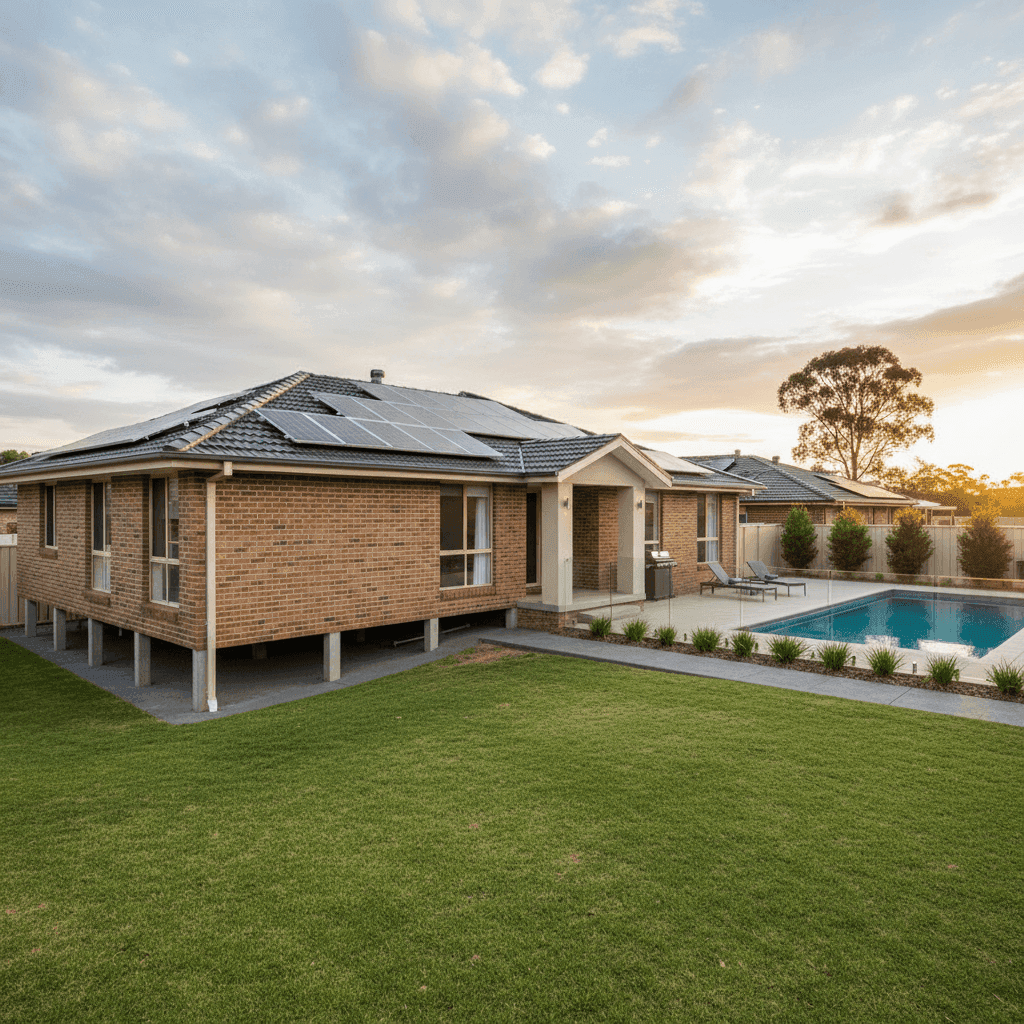
If you own a free standing home in Ashtonfield, NSW 2323, you're likely no stranger to the balancing act of finding quality home insurance without overpaying. Nestled in the Lake Macquarie local government area in the Hunter Region, Ashtonfield is a well-established suburb with a mix of modern and early-2000s builds — and insurance premiums that can vary quite a bit depending on your property's features. This article breaks down a real home and contents insurance quote for a four-bedroom, three-bathroom free standing home in the area, and puts it in context against suburb, state, and national benchmarks.
---
Is This Quote Fair?
The quote in question comes in at $3,133 per year (or $270/month) for combined home and contents cover, with a building sum insured of $1,016,000 and contents valued at $199,000. The building excess is $5,000 and the contents excess is $2,000.
Our price rating for this quote is FAIR — Around Average.
To understand what that means in practice, it helps to look at where this premium sits within the local distribution. The suburb average for Ashtonfield sits at $2,558/year, with a median of $2,413/year. This quote lands above both of those figures, but comfortably within the upper half of the market — the 75th percentile for the suburb is $3,224/year, meaning roughly 75% of comparable quotes come in at or below that amount. At $3,133, this premium is just under that threshold, which is consistent with a "fair" rating rather than an expensive one.
It's also worth noting that a higher sum insured naturally pushes premiums upward. A building insured for just over $1 million is on the higher end for the area, which goes some way toward explaining why this quote sits above the suburb average.
---
How Ashtonfield Compares
Zooming out to a broader picture tells an interesting story. You can explore the full data on the Ashtonfield suburb stats page, but here's a quick summary:
| Benchmark | Average Premium | Median Premium |
|---|---|---|
| Ashtonfield (suburb) | $2,558/yr | $2,413/yr |
| NSW (state) | $9,528/yr | $3,770/yr |
| Australia (national) | $5,347/yr | $2,764/yr |
| Lake Macquarie LGA | $11,064/yr | — |
At first glance, the NSW state average of $9,528/year looks alarming — but this figure is heavily skewed by high-risk and high-value properties across the state, particularly in flood-prone or bushfire-affected areas. The state median of $3,770/year is a more representative benchmark, and this quote sits well below it.
Similarly, the national average of $5,347/year is pulled upward by cyclone-prone regions in Queensland and WA, as well as major metropolitan markets. The national median of $2,764/year is closer to reality for most Australian homeowners, and again, this Ashtonfield quote is only modestly above that figure.
The Lake Macquarie LGA average of $11,064/year stands out as notably high — likely driven by flood-affected and waterfront properties within the broader LGA. Ashtonfield itself appears to sit in a more favourable risk zone, with local premiums significantly lower than the LGA-wide figure.
Based on a sample of 30 quotes in the suburb, the data paints a consistent picture: this is a reasonable premium for the level of cover provided.
---
Property Features That Affect Your Premium
Several characteristics of this property have a meaningful influence on the premium calculation:
Brick veneer construction and tiled roof — This is generally a favourable combination from an insurer's perspective. Brick veneer offers solid fire and weather resistance, and tiled roofs are considered durable and low-maintenance. Both features typically attract more competitive premiums compared to, say, weatherboard cladding or metal roofing in certain contexts.
Pole/stump foundation (elevated less than 1m) — The home sits on a pole-style foundation, elevated slightly off the ground. While a modest elevation can offer some protection from minor surface water ingress, insurers may factor in the construction complexity of elevated homes when assessing rebuild costs. This can contribute to a higher sum insured requirement.
Timber and laminate flooring — These floor types can be more susceptible to water damage than tiles or concrete, which may marginally influence contents and building claims risk assessments.
Swimming pool — A pool adds to the replacement value of the property and may introduce additional liability considerations, both of which can nudge premiums upward.
Solar panels — Rooftop solar systems add to the insured value of the building. It's important to confirm with your insurer that solar panels are explicitly covered under your policy, as some policies treat them as optional inclusions.
Ducted climate control — Ducted air conditioning is a significant fixed asset and contributes to the overall building sum insured. Ensuring it's adequately covered in your policy is essential.
No cyclone risk — Ashtonfield falls outside designated cyclone risk zones, which is a meaningful premium-reducing factor compared to properties in northern Australia.
---
Tips for Homeowners in Ashtonfield
1. Review your sum insured annually Building costs have risen significantly in recent years due to labour and material shortages. At $1,016,000, this home's sum insured reflects a thorough rebuild cost assessment — but it's worth revisiting this figure each year to ensure you're neither underinsured nor paying for more cover than you need.
2. Confirm solar panels and pool equipment are covered Not all standard home insurance policies automatically cover rooftop solar systems or pool equipment as part of the building. Check your Product Disclosure Statement (PDS) carefully, and ask your insurer directly if you're unsure.
3. Consider your excess strategically This quote carries a $5,000 building excess and a $2,000 contents excess — both on the higher side. Higher excesses typically reduce your annual premium, which can make sense if you have strong emergency savings. However, make sure you're genuinely comfortable covering that out-of-pocket cost in the event of a claim.
4. Compare quotes before renewal Loyalty doesn't always pay in insurance. Insurers often offer better rates to new customers, so it's worth shopping around at renewal time. Use CoverClub's quote comparison tool to see how your current premium stacks up against other options in your area.
---
Ready to Compare?
Whether you're reviewing an existing policy or shopping for cover for the first time, CoverClub makes it easy to see how your quote compares to real data from your suburb and beyond. Get a home insurance quote today and find out if you're getting a fair deal — or if there's room to do better.