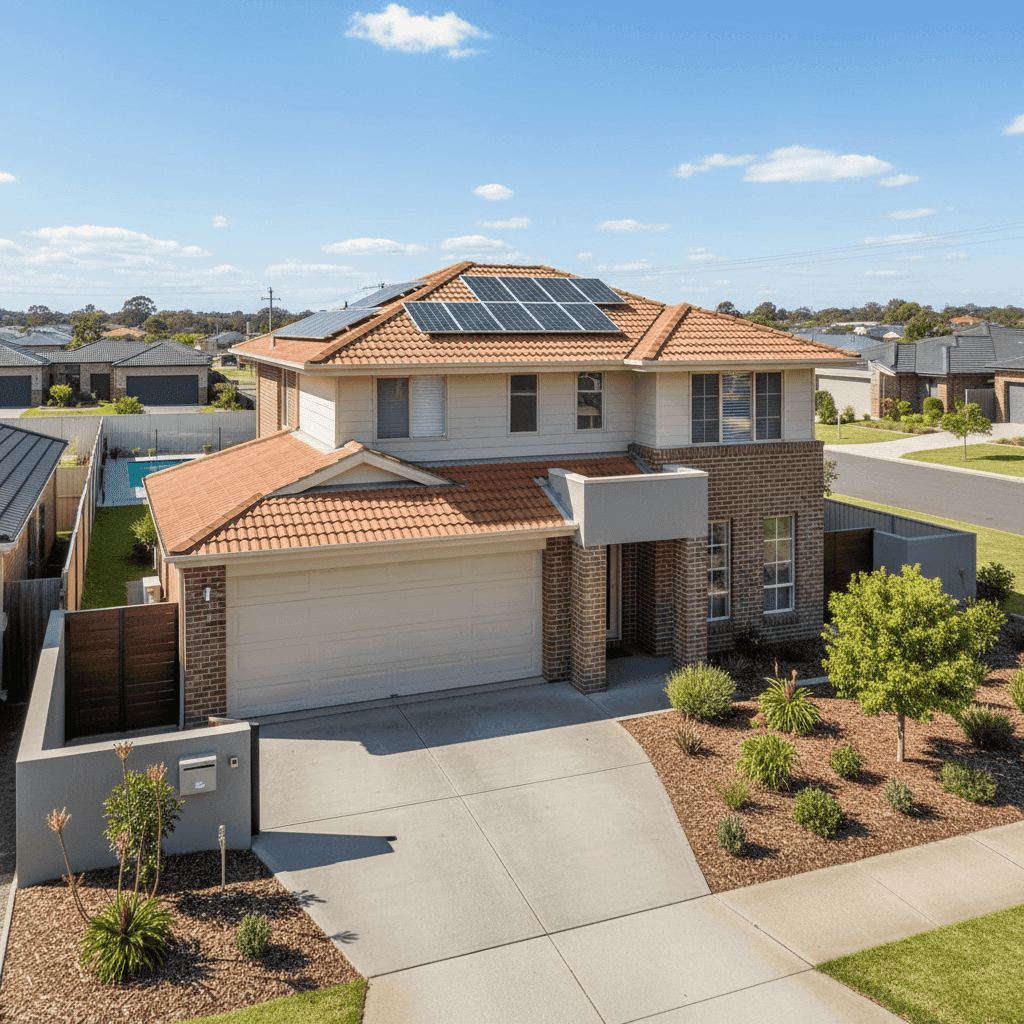
Ashtonfield is a well-established residential suburb in the Hunter Valley region of New South Wales, sitting within the City of Maitland. It's the kind of neighbourhood where brick veneer homes on slab foundations are the norm — solid, comfortable, and built to last. This article takes a close look at a real home and contents insurance quote for a four-bedroom, two-bathroom free standing home in Ashtonfield (postcode 2323), breaking down whether the price stacks up and what factors are shaping the premium.
---
Is This Quote Fair?
The quote in question comes in at $2,365 per year (or $232/month) for combined home and contents cover, with a building sum insured of $842,000 and $50,000 in contents coverage. The building excess is $2,000 and the contents excess is $1,000.
Our price rating for this quote is FAIR — Around Average, which is a reasonable outcome for a property of this size and specification.
To put that in context: the suburb average for Ashtonfield sits at $3,119/year, while the suburb median is $2,526/year. This quote lands below both figures, which is an encouraging sign. It's also comfortably beneath the NSW state average of $3,801/year and the national average of $2,965/year.
While "fair" might sound underwhelming, it actually reflects a well-priced policy relative to what most homeowners in the area are paying. The quote isn't in the cheapest quartile (the 25th percentile for Ashtonfield is $1,722/year), but those lower-priced policies may carry higher excesses, narrower coverage, or lower sum insured amounts that may not adequately protect a property of this size.
---
How Ashtonfield Compares
Understanding where your premium sits relative to broader benchmarks is key to evaluating value. Here's how this quote measures up:
| Benchmark | Premium |
|---|---|
| This Quote | $2,365/yr |
| Ashtonfield Suburb Average | $3,119/yr |
| Ashtonfield Suburb Median | $2,526/yr |
| Ashtonfield 25th Percentile | $1,722/yr |
| Ashtonfield 75th Percentile | $3,973/yr |
| NSW State Average | $3,801/yr |
| NSW State Median | $3,410/yr |
| National Average | $2,965/yr |
| National Median | $2,716/yr |
This quote beats the suburb average by around $754/year and sits below the NSW state average by more than $1,400/year — a meaningful saving. It also comes in under the national average, which is notable given that this is a larger-than-average home at 244 sqm with several features (pool, solar panels, ducted climate control) that can push premiums higher.
One figure worth flagging is the LGA average for Lake Macquarie, which is recorded at $11,064/year. This unusually high figure is likely skewed by a small number of high-value or high-risk properties within the broader local government area, and shouldn't be used as a direct comparison point for a typical Ashtonfield home.
You can explore more local data on the Ashtonfield suburb stats page, or broaden your view with NSW state insurance statistics and national home insurance benchmarks.
---
Property Features That Affect Your Premium
Every home tells a story through its construction details, and insurers read that story carefully when pricing a policy. Here's how the key features of this property influence the premium:
Brick Veneer Walls & Tiled Roof Brick veneer construction is viewed favourably by insurers — it's durable, fire-resistant, and widely used across Australian suburbs. Combined with a tiled roof, this property sits in a lower-risk construction category than homes with timber cladding or metal roofing, which can help moderate the premium.
Slab Foundation A concrete slab foundation is the standard for homes built in the Hunter region during the 1990s. It's structurally sound and doesn't carry the added risks associated with older raised timber subfloors (such as termite exposure or moisture damage), which can be a positive factor in underwriting.
Timber & Laminate Flooring While attractive and popular, timber and laminate floors can be more susceptible to water damage than tiles. This is a factor insurers consider when assessing contents and internal finishes risk, and may have a modest upward influence on the premium.
Swimming Pool A backyard pool adds both value and liability considerations to a property. Insurers factor in the cost of pool surrounds, equipment, and potential liability exposure, which can nudge premiums upward. Ensuring your policy explicitly covers pool-related structures and liability is important.
Solar Panels Solar panel systems represent a significant asset — and a potential liability in the event of storm or hail damage. Many standard policies cover panels as part of the building sum insured, but it's worth confirming this is the case and that the $842,000 building sum adequately accounts for replacement costs.
Ducted Climate Control Ducted air conditioning systems are expensive to repair or replace. Their inclusion in the property increases the total replacement cost of the building, which is appropriately reflected in the higher sum insured.
No Cyclone Risk Ashtonfield is not classified as a cyclone risk area, which is a meaningful premium benefit. Properties in northern Queensland or coastal WA can pay significantly more due to cyclone loading. This property avoids that surcharge entirely.
Construction Year: 1995 A home built in 1995 is approaching 30 years old. While well within the serviceable range, insurers may consider the age of roofing, plumbing, and electrical systems. Keeping maintenance records up to date and ensuring these systems are in good condition can support your claim outcomes.
---
Tips for Homeowners in Ashtonfield
1. Review your building sum insured regularly With a 244 sqm home featuring ducted climate control, solar panels, and a pool, the cost to rebuild from scratch is substantial. Construction costs have risen sharply across NSW in recent years, so it's worth reassessing whether $842,000 still reflects current rebuild costs. Use a quantity surveyor or an online building cost calculator to sense-check this figure annually.
2. Check your pool and solar panel coverage explicitly Don't assume these are covered — read the Product Disclosure Statement (PDS) carefully. Confirm that your pool equipment, solar inverter, and panel array are included under the building definition, and understand any sub-limits that may apply.
3. Consider your excess strategy This policy carries a $2,000 building excess and $1,000 contents excess. Opting for a higher excess is one of the most effective ways to reduce your annual premium, but only makes sense if you can comfortably cover that amount out of pocket in the event of a claim. Conversely, if cash flow is a concern, a lower excess policy may be worth the slightly higher premium.
4. Compare at renewal time — every year Insurance markets shift constantly. The fact that this quote comes in below the suburb and state averages is a good sign, but it's not a reason to set and forget. Loyalty doesn't always pay in insurance — comparing quotes annually through a platform like CoverClub takes minutes and can surface better value options.
---
Ready to Compare Your Options?
Whether you're a first-time buyer in Ashtonfield or a long-time homeowner wondering if you're overpaying, comparing quotes side by side is the smartest move you can make at renewal time. CoverClub makes it easy to see how your premium stacks up against real data from your suburb and state.
Get a home insurance quote today and find out if you're getting the cover you deserve at a price that makes sense.