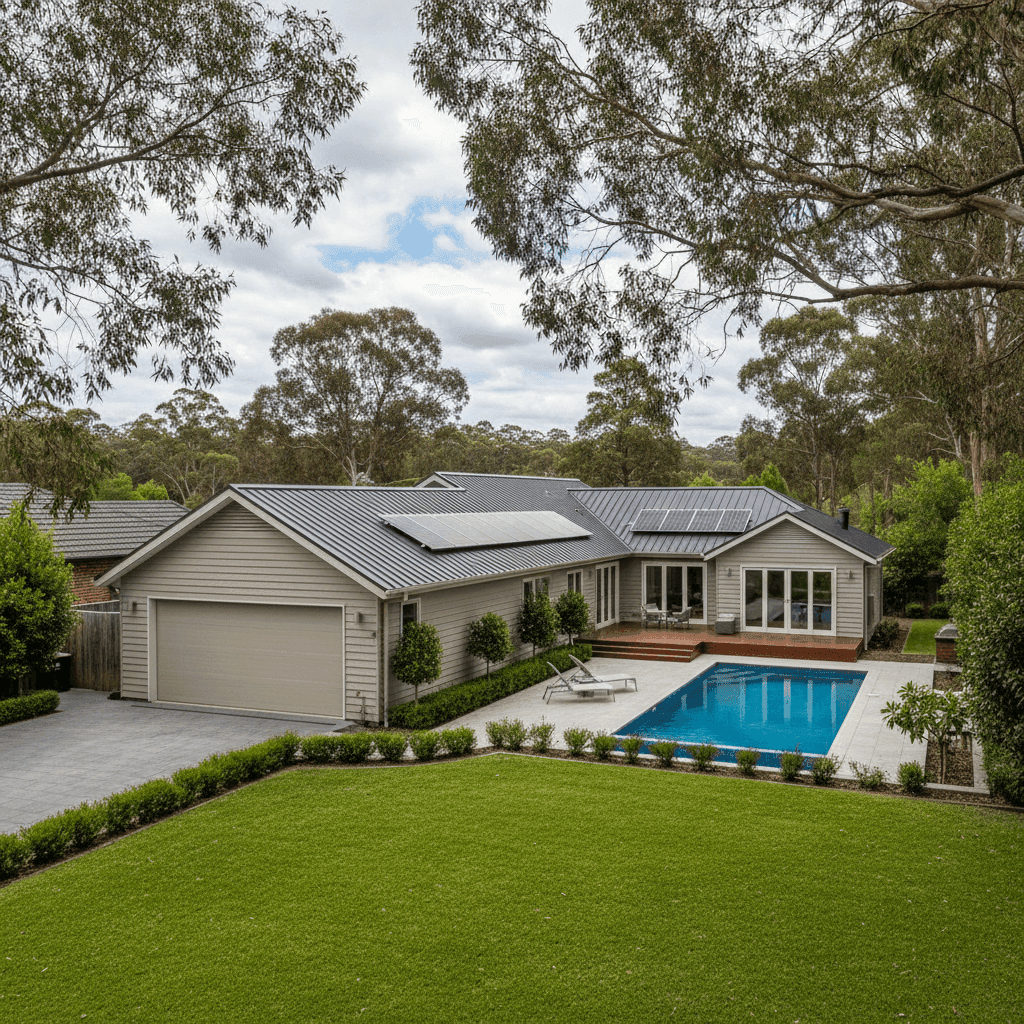
Asquith is a leafy, family-friendly suburb on Sydney's Upper North Shore, sitting within the Hornsby local government area. It's the kind of neighbourhood where well-established homes sit on generous blocks, often with pools, mature gardens, and the kind of character features that make a house a home — but also the kind that can make insurers take a closer look. This article breaks down a real building insurance quote for a five-bedroom free standing home in Asquith, examines whether the price stacks up, and offers practical guidance for homeowners in the area.
---
Is This Quote Fair?
The quote in question comes in at $5,397 per year (or $517/month) for building-only cover on a 315 sqm free standing home, with a building sum insured of $957,000 and a $2,000 excess.
Our price rating for this quote is Expensive (Above Average) — and the data backs that up.
To put it in context:
- The suburb average for Asquith (2077) is just $1,648/year, and the median sits at $1,238/year
- This quote is more than 3× the suburb average and over 4× the suburb median
- Even against the Hornsby LGA average of $3,958/year, this quote runs notably higher
- Nationally, the average home insurance premium sits at $5,347/year, meaning this quote is broadly in line with the national average — but Asquith typically prices well below that benchmark
So while the quote isn't outlandish by national standards, it's a significant premium above what most Asquith homeowners are paying. That gap deserves explanation.
You can explore full pricing data for the suburb at our Asquith insurance stats page, or compare it against all NSW premiums and national benchmarks.
---
How Asquith Compares
Here's a snapshot of how this quote sits relative to broader benchmarks:
| Benchmark | Premium |
|---|---|
| This Quote | $5,397/yr |
| Asquith Suburb Average | $1,648/yr |
| Asquith Suburb Median | $1,238/yr |
| Hornsby LGA Average | $3,958/yr |
| NSW State Average | $9,528/yr |
| NSW State Median | $3,770/yr |
| National Average | $5,347/yr |
| National Median | $2,764/yr |
A few things stand out here. First, the NSW state average of $9,528/year is dramatically higher than both the national average and this particular quote — suggesting that some very high-risk or high-value properties elsewhere in New South Wales are pulling that figure up considerably. Second, Asquith's suburb average of $1,648/year is well below both state and national averages, which points to it generally being a lower-risk suburb for insurers.
It's worth noting that the suburb sample size for Asquith is relatively small (14 quotes), so individual property characteristics can have an outsized effect on where any single quote lands. This property's specific features appear to be contributing significantly to the elevated premium.
---
Property Features That Affect Your Premium
Several characteristics of this property are likely pushing the premium above what a typical Asquith home might attract. Let's work through the key ones:
Weatherboard Timber Walls
Weatherboard construction is one of the most significant premium drivers in Australian home insurance. Timber is far more susceptible to fire than brick veneer or double brick, and it also carries higher risk of rot, pest damage, and storm-related claims. Insurers price this risk accordingly, and it's common to see weatherboard homes attract premiums 30–60% higher than comparable brick homes.
Pole (Stumped) Foundation
A home built on poles or stumps introduces additional structural complexity. While this style of construction is common in hilly areas like parts of the Upper North Shore, it does elevate the perceived risk of structural movement, flooding under the subfloor, and maintenance issues. Some insurers apply loadings to pole-set homes.
Timber and Laminate Flooring
Combined with a timber-framed structure, timber and laminate flooring increases the overall combustibility of the home. It also tends to be more expensive to replace than concrete slab flooring, which feeds into the sum insured calculation.
High Sum Insured ($957,000)
A 315 sqm home with above-average fittings quality commands a substantial rebuild cost. At $957,000, this is a high sum insured — and premium scales with it. Above-average fittings (think quality cabinetry, stone benchtops, premium fixtures) cost more to replace, and insurers factor this into the rebuild estimate.
Pool, Solar Panels, and Ducted Climate Control
Each of these extras adds to the insurable value of the property. Pools introduce liability considerations and can increase claim costs. Solar panel systems — particularly larger installations — are expensive to repair or replace after storm, hail, or fire damage. Ducted climate control systems are similarly costly to reinstate. Together, these features add meaningful value to the sum insured.
Steel/Colorbond Roof
On a more positive note, a Colorbond steel roof is generally viewed favourably by insurers. It's durable, fire-resistant, and performs well in storms compared to terracotta or concrete tiles. This likely provides some offset against the other risk factors.
---
Tips for Homeowners in Asquith
If you're a homeowner in Asquith — particularly with a weatherboard or timber-framed property — here are some practical steps to manage your insurance costs:
- Shop around every renewal. The spread between the cheapest and most expensive quotes in Asquith is significant. With a suburb 25th percentile of $830/year and a 75th percentile of $1,786/year, there's clearly a wide range on offer. Don't auto-renew — compare quotes annually.
- Review your sum insured carefully. Over-insuring is a real cost driver. Use a professional quantity surveyor or an online rebuild cost calculator to ensure your sum insured reflects actual rebuild costs — not market value or an inflated estimate. Equally, don't under-insure, as this can leave you badly exposed at claim time.
- Ask about discounts for security and safety features. Many insurers offer reduced premiums for homes with monitored alarms, deadbolts, and smoke detectors. If you've invested in these, make sure your insurer knows about them.
- Consider your excess strategy. This policy carries a $2,000 building excess. Opting for a higher voluntary excess can reduce your annual premium meaningfully — just ensure it's an amount you could comfortably cover in the event of a claim.
---
Compare Your Options with CoverClub
Whether you're reviewing your current policy or getting cover for the first time, it pays to compare. CoverClub makes it easy to see what home insurance actually costs for properties like yours in Asquith and across Australia. Get a quote today and find out if you could be paying less — without sacrificing the cover you need.