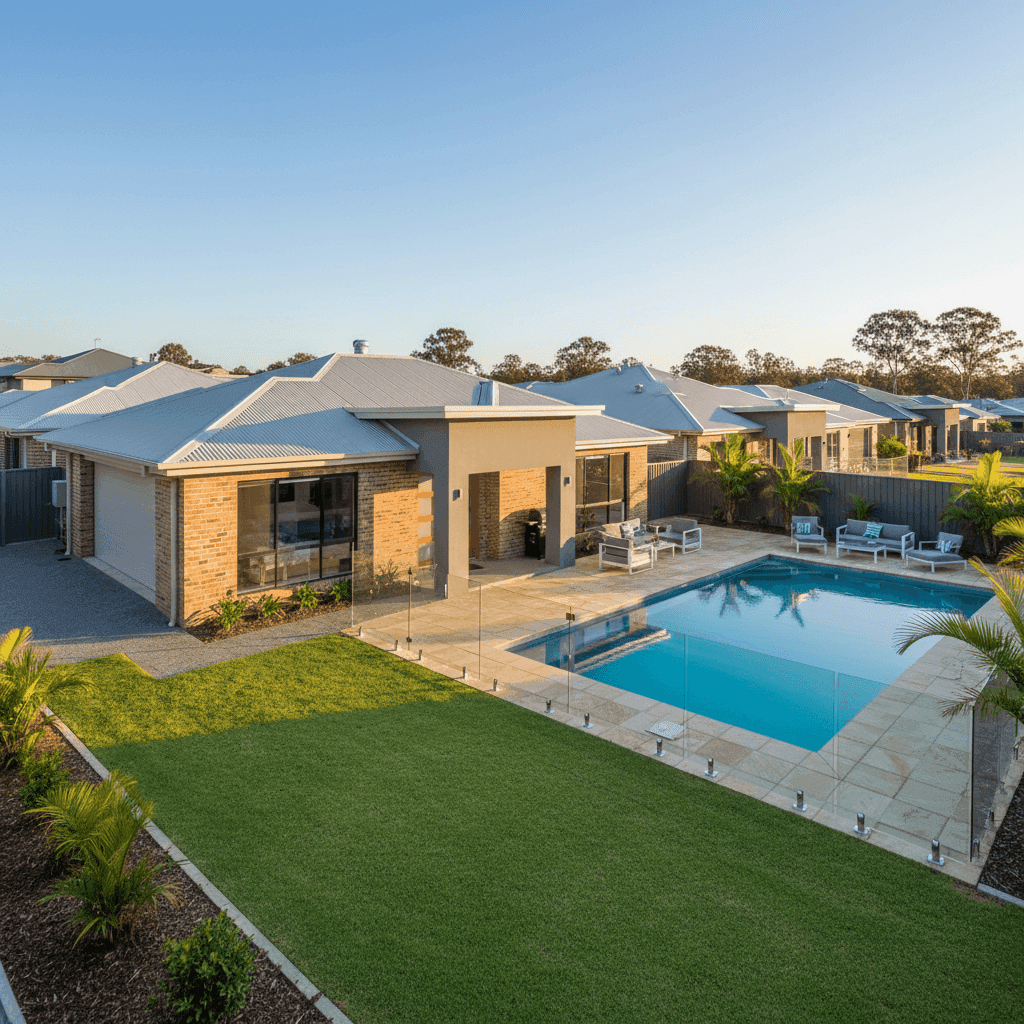
Augustine Heights is a well-established residential suburb in the City of Ipswich, about 30 kilometres southwest of Brisbane's CBD. Known for its family-friendly streets and newer housing stock, it's a popular choice for homeowners seeking space without straying too far from urban conveniences. This article takes a close look at a real home and contents insurance quote for a five-bedroom, free standing home in the area — breaking down whether the premium stacks up, what's driving the cost, and what local homeowners can do to get better value.
---
Is This Quote Fair?
The quote in question comes in at $2,904 per year (or $271 per month) for a combined home and contents policy. It covers a building sum insured of $1,038,000 and $50,000 in contents, with a $1,000 excess on both building and contents claims.
Our analysis rates this premium as Expensive — Above Average for the area.
To put that in perspective, the suburb average for Augustine Heights sits at $1,911 per year, with a median of $1,976 per year (based on 55 quotes in the Augustine Heights suburb data). This quote lands well above the suburb's 75th percentile of $2,686 per year — meaning it's pricier than at least three-quarters of comparable quotes in the postcode.
That said, context matters. The building sum insured of over $1 million is notably high for the area, and the property's size — 305 square metres — is substantial. Larger, higher-value homes naturally attract higher premiums, so some of the cost difference is explainable. The question is whether the gap is justified by the property's specific characteristics, or whether there's room to shop around.
---
How Augustine Heights Compares
Understanding where a premium sits relative to broader benchmarks is one of the most useful tools for homeowners evaluating their cover.
| Benchmark | Average Premium | Median Premium |
|---|---|---|
| Augustine Heights (suburb) | $1,911/yr | $1,976/yr |
| QLD (state) | $4,547/yr | $3,931/yr |
| National | $2,965/yr | $2,716/yr |
| Ipswich LGA | $8,901/yr | — |
A few things stand out here. First, Augustine Heights premiums are significantly lower than the Queensland state average, which reflects the suburb's relatively low exposure to natural hazards like flooding and cyclones — major cost drivers across much of regional and coastal QLD. You can explore Queensland-wide insurance data to see just how wide the variation is across the state.
Second, the $2,904 quote sits just below the national average of $2,965 — which is reassuring in one sense, but still above what most Augustine Heights homeowners are paying locally.
The Ipswich LGA average of $8,901 per year is a striking figure, but it's heavily skewed by flood-affected suburbs within the LGA — areas like Goodna and Ipswich city centre that carry substantially higher risk profiles. Augustine Heights, being elevated and away from major waterways, benefits from a more favourable risk assessment.
---
Property Features That Affect Your Premium
Several characteristics of this particular property influence how insurers price the risk.
Size and sum insured: At 305 square metres with a building sum insured of $1,038,000, this is a large home by most measures. Rebuild costs are the primary driver of building premiums, and a higher sum insured directly increases what the insurer would pay out in a total loss — so the premium reflects that exposure.
Brick veneer construction: Brick veneer walls are generally viewed favourably by insurers. They offer good fire resistance and structural durability compared to lightweight cladding, which can help moderate premiums.
Steel/Colorbond roof: Colorbond roofing is a common and practical choice in Queensland. It's lightweight, resistant to corrosion, and performs well in high winds — all factors that insurers consider when assessing risk. It's generally treated neutrally to positively in premium calculations.
Concrete slab foundation: A slab foundation is standard for homes of this era and is considered low-risk from an insurer's perspective. It offers stability and reduces the likelihood of subsidence-related claims.
Swimming pool: Pools add value to a property but also introduce liability considerations. Insurers factor in the additional risk of accidents and the cost of pool-related damage or repairs when pricing a policy.
Ducted climate control: Ducted air conditioning systems are a significant fixed asset within the home. Their inclusion can push up the building sum insured and, by extension, the premium — particularly for systems installed throughout a large home.
Timber and laminate flooring: These flooring types can be more susceptible to water damage than tiles, which may be a minor factor in how insurers assess internal risk.
No cyclone risk: Augustine Heights falls outside designated cyclone risk zones, which is a meaningful cost advantage compared to properties in North Queensland or coastal areas further north.
---
Tips for Homeowners in Augustine Heights
1. Review your building sum insured carefully A sum insured of $1,038,000 is substantial. Make sure it reflects the actual rebuild cost of your home — not its market value. Overinsuring can mean you're paying more premium than necessary, while underinsuring leaves you exposed. Consider using a professional building estimator or your insurer's calculator to arrive at an accurate figure.
2. Compare multiple quotes before renewing With the suburb average sitting around $1,911 per year, there may be meaningful savings available by shopping around. Insurers use different models to price risk, and premiums for the same property can vary by hundreds of dollars. Get a comparison quote through CoverClub to see what's available in your area.
3. Ask about bundling discounts Many insurers offer discounts when you combine home and contents cover under a single policy. If you're currently holding separate policies, consolidating them could reduce your overall cost.
4. Check your excess settings A $1,000 excess on both building and contents is fairly standard, but increasing your excess — if you're comfortable covering more out of pocket in the event of a claim — can reduce your annual premium. Run the numbers to see if a higher excess makes sense for your situation.
---
Find a Better Deal with CoverClub
Whether you're reviewing your current policy or insuring a property for the first time, comparing quotes is the single most effective way to make sure you're not overpaying. CoverClub makes it easy to see how your premium stacks up against real data from your suburb and beyond. Start a quote today and find out if there's a better deal waiting for you.