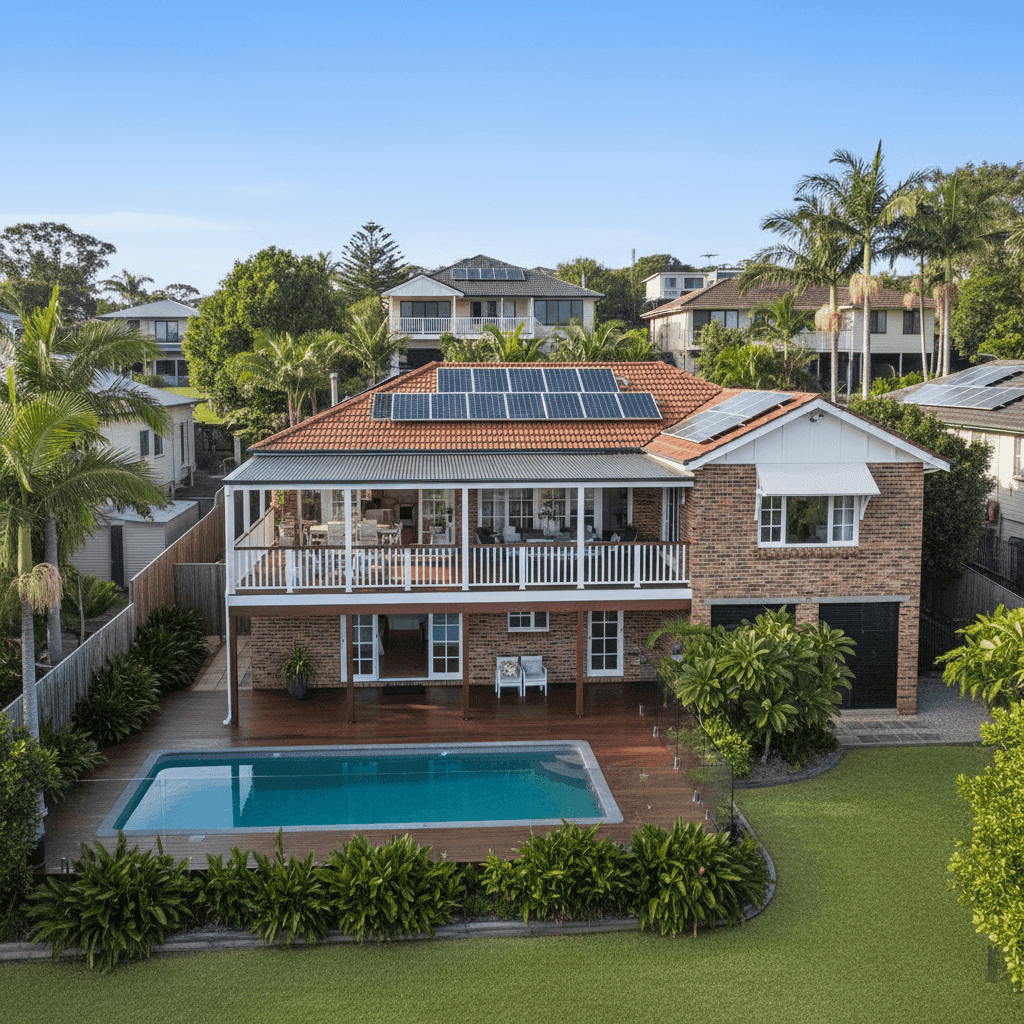
Avoca Beach is one of the Central Coast's most sought-after coastal suburbs — a relaxed beachside community that attracts families, retirees, and sea-changers alike. But owning a home here, like anywhere in NSW, means navigating the realities of home insurance. This article breaks down a real home and contents insurance quote for a four-bedroom, free-standing home in Avoca Beach (postcode 2251), examining whether the price stacks up and what local homeowners can do to make sure they're getting the best deal.
---
Is This Quote Fair?
The quote in question comes in at $3,534 per year (or $364/month) for combined home and contents cover, with a building sum insured of $803,000 and contents valued at $50,000. The building excess is $3,000 and the contents excess $1,000.
Our price rating for this quote is FAIR — Around Average, and the data backs that up. Based on 22 quotes collected for Avoca Beach (NSW 2251), the suburb's median premium sits at $3,799/yr and the average at $4,545/yr. At $3,534, this quote falls just below the median — meaning roughly half of comparable properties in the area are paying more. It also sits comfortably within the interquartile range of $3,141 to $5,503, which represents the middle 50% of quotes in the suburb.
In short: this isn't a bargain-basement price, but it's not overpriced either. For a property of this size and age in a coastal NSW suburb, it reflects a reasonable market rate.
---
How Avoca Beach Compares
To put this quote in broader context, it helps to look at how Avoca Beach sits relative to NSW as a whole and national benchmarks.
| Benchmark | Average Premium | Median Premium |
|---|---|---|
| Avoca Beach (2251) | $4,545/yr | $3,799/yr |
| Central Coast LGA | $8,387/yr | — |
| NSW | $9,528/yr | $3,770/yr |
| National | $5,347/yr | $2,764/yr |
A few things stand out here. The NSW average premium of $9,528 looks alarming at first glance, but the NSW median of $3,770 tells a more grounded story — the average is being pulled upward by high-risk or high-value properties elsewhere in the state (think flood-prone areas or prestige Sydney suburbs). The same dynamic plays out at the LGA level, where the Central Coast average of $8,387 is significantly higher than what most Avoca Beach homeowners are actually paying.
The national median of $2,764 is lower than Avoca Beach's median, which makes sense — coastal NSW properties generally carry higher risk profiles than the average Australian home, particularly given storm and erosion exposure.
The $3,534 quote analysed here is slightly above the national median but well below both the NSW and Central Coast LGA averages. For a coastal property of this specification, that's a solid result.
---
Property Features That Affect Your Premium
Several characteristics of this property have a meaningful influence on the premium. Understanding them helps you see why your quote looks the way it does.
Age and Construction (Built 1987, Brick Veneer, Tiled Roof) A home built in 1987 is well past its warranty period but not so old as to trigger major concerns for most insurers. Brick veneer walls are generally viewed favourably — they're durable, fire-resistant, and relatively low-maintenance compared to timber weatherboard. A tiled roof is similarly regarded as a lower-risk construction type. Together, these features tend to work in the homeowner's favour when it comes to pricing.
Elevated Foundation on Stumps This property is elevated by at least one metre on stumps — a construction style common across coastal and hilly parts of NSW. Elevation can be a double-edged sword for insurers: it may reduce flood risk (a positive), but elevated homes can be more exposed to wind damage and may have higher rebuild costs due to the complexity of the subfloor structure. The $3,000 building excess suggests the insurer is managing some of this risk through the excess rather than the premium itself.
Swimming Pool A pool adds liability exposure to a policy — it's a feature insurers factor in when assessing risk, particularly for accidental injury claims. It also increases the overall replacement value of the property, which contributes to the higher sum insured.
Solar Panels Solar panels are increasingly common on Australian homes, and most insurers now include them as part of building cover. However, they do add to the replacement cost calculation and can affect claims related to storm or hail damage. It's worth confirming with your insurer exactly how your panels are covered.
Building Size: 214 sqm At 214 square metres, this is a generously sized family home. Larger floor areas mean higher rebuild costs, which directly influences the sum insured — and therefore the premium. The $803,000 building sum insured reflects both the size and the current cost of construction materials and labour in coastal NSW.
---
Tips for Homeowners in Avoca Beach
1. Review your sum insured regularly Construction costs in NSW have risen significantly in recent years. If your sum insured hasn't been updated to reflect current rebuild costs, you could be underinsured — meaning a major claim might not fully cover your losses. Use a building cost calculator or speak to a quantity surveyor to check your figure annually.
2. Consider a higher excess to reduce your premium The building excess on this policy is $3,000. If you have a financial buffer and are unlikely to make small claims, opting for a higher excess is one of the most effective ways to bring your annual premium down. Even moving from a $1,000 to a $2,500 excess can produce meaningful savings.
3. Check your pool and solar panel cover explicitly Don't assume these features are automatically covered to their full replacement value. Ask your insurer directly how pool equipment (pumps, filters, heating) and solar panel systems (including inverters) are treated under your policy. Some policies have sub-limits or exclusions worth knowing about.
4. Compare quotes at renewal — every year Insurance loyalty rarely pays off in Australia. Insurers frequently offer better rates to new customers than to existing ones. Making it a habit to compare quotes before each renewal takes only a few minutes and can save hundreds of dollars annually.
---
Ready to Compare?
Whether you're a first-time buyer in Avoca Beach or a long-term homeowner wondering if you're overpaying, comparing quotes is the fastest way to find out. At CoverClub, you can enter your property details and see how your current premium stacks up — no obligation, no jargon. Check out the Avoca Beach insurance stats page to explore more local data, or browse NSW-wide trends and national benchmarks to get the full picture.