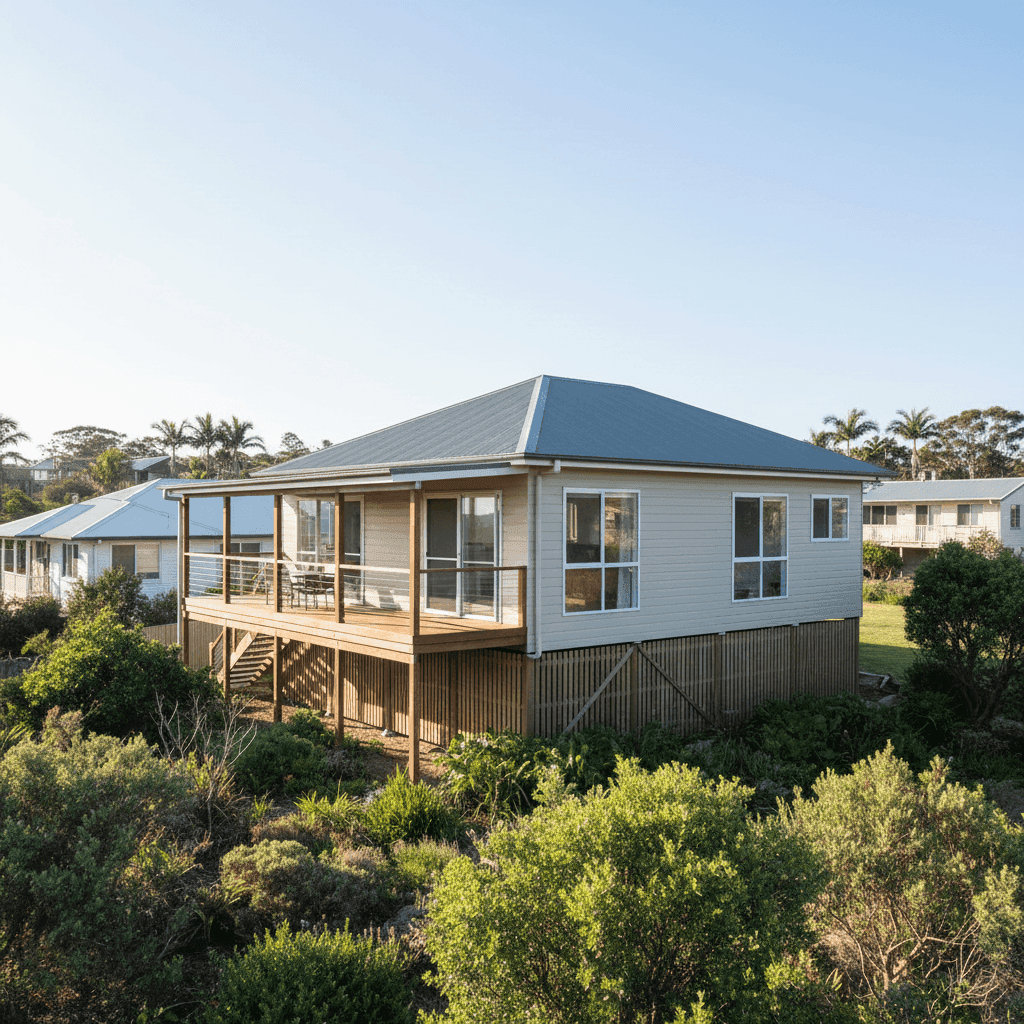
Avoca Beach is one of the Central Coast's most sought-after coastal communities — a relaxed seaside village that draws families and sea-changers alike. But owning a home here, like anywhere on the NSW coast, comes with the responsibility of making sure you're properly protected. So what does home and contents insurance actually cost for a free standing home in Avoca Beach, and is the quote you're looking at a good deal? Let's break it down.
---
Is This Quote Fair?
The quote in question is $2,804 per year (or $283/month) for a combined home and contents policy on a 3-bedroom, 1-bathroom free standing home in Avoca Beach NSW 2251. The building is insured for $457,000, with $50,000 in contents cover. The building excess sits at $3,000 and the contents excess at $1,000.
Our price rating for this quote is CHEAP — below average for the suburb. That's a meaningful finding. Based on 22 quotes collected for Avoca Beach, the suburb average premium is $4,545 per year and the median is $3,799. This quote comes in well below both benchmarks — and even sits beneath the 25th percentile of $3,141, meaning it's cheaper than at least 75% of quotes we've seen in the area.
In plain terms: if this quote is for comparable cover, it represents genuine value for a homeowner in this postcode.
Of course, price alone doesn't tell the full story. It's worth checking the policy's inclusions, exclusions, and claim limits carefully — particularly around storm, flood, and escape of liquid, which are common sticking points in coastal NSW policies.
---
How Avoca Beach Compares
Understanding where your premium sits in the broader market helps you make a more confident decision. Here's how Avoca Beach stacks up:
| Benchmark | Annual Premium |
|---|---|
| This Quote | $2,804 |
| Avoca Beach 25th Percentile | $3,141 |
| Avoca Beach Median | $3,799 |
| Avoca Beach Average | $4,545 |
| Avoca Beach 75th Percentile | $5,503 |
| NSW State Median | $3,770 |
| NSW State Average | $9,528 |
| National Median | $2,764 |
| National Average | $5,347 |
| Central Coast LGA Average | $8,387 |
A few things stand out here. The NSW state average of $9,528 is dramatically higher than the state median of $3,770 — a gap that reflects the influence of high-risk and high-value properties pulling the average upward. Similarly, the Central Coast LGA average of $8,387 is elevated, likely driven by flood-prone or bushfire-exposed properties elsewhere in the region.
The national median of $2,764 is remarkably close to this quote, suggesting that despite being in a coastal suburb with real environmental risk factors, the premium here is broadly in line with what Australians pay across the country. That's a positive sign.
For Avoca Beach specifically, the spread between the 25th percentile ($3,141) and 75th percentile ($5,503) is significant — a $2,362 range — which tells you that insurer pricing in this suburb varies considerably. Shopping around is not just advisable; it's essential.
---
Property Features That Affect Your Premium
Insurers don't just look at your postcode — they assess the specific characteristics of your home. Several features of this property are worth understanding in the context of your premium.
Hardiplank/Hardiflex external walls are a fibre cement cladding product that's popular in Australian residential construction. It's generally viewed favourably by insurers because it's non-combustible and resistant to rot, insects, and moisture — all relevant in a coastal environment like Avoca Beach.
Steel/Colorbond roofing is similarly well-regarded. It's durable, fire-resistant, and handles coastal salt air better than many alternatives. Insurers tend to price Colorbond roofs more competitively than older materials like terracotta tiles or asbestos sheeting.
Elevated on stumps is an interesting factor. Being raised at least one metre off the ground can actually work in your favour from a flood and storm surge perspective — water is less likely to inundate the living areas. However, elevated homes can also be more exposed to wind uplift, which some insurers factor into their coastal risk assessments.
Timber and laminate flooring is standard for this style of home and doesn't typically attract any premium loading on its own.
Construction year of 1999 means the home is relatively modern — built to post-1990s building codes that incorporated improved cyclone and wind resistance standards, even in non-cyclone zones. This can be a quiet advantage when insurers assess structural risk.
The home has no pool, no solar panels, and no ducted climate control system — all of which simplifies the risk profile and removes potential sources of claims that can inflate premiums.
---
Tips for Homeowners in Avoca Beach
1. Review your sum insured annually Building costs have risen sharply across NSW in recent years. At $457,000, your sum insured should reflect what it would actually cost to rebuild your home today — not its market value. Check with a quantity surveyor or use your insurer's rebuild calculator to make sure you're not underinsured.
2. Understand your flood and storm cover Avoca Beach sits in a coastal environment where storm surge, heavy rainfall, and run-off events can all cause damage. Make sure your policy clearly distinguishes between "storm," "flood," and "rainwater run-off" — these are often defined differently, and gaps in cover can be costly. The Avoca Beach suburb stats page can help you understand what risks local homeowners are most commonly dealing with.
3. Consider your excess strategically This quote carries a $3,000 building excess — higher than average. A higher excess typically lowers your premium, which may explain part of why this quote is so competitive. Think carefully about whether you could comfortably cover a $3,000 out-of-pocket cost in the event of a claim. If not, it may be worth requesting a lower excess option, even if it nudges the premium up slightly.
4. Compare at renewal, every year The insurance market shifts constantly. Even if this quote is excellent value today, your insurer may reprice significantly at renewal. Set a reminder to compare quotes each year before your policy renews — it takes less time than you'd think and can save hundreds of dollars.
---
Ready to Find Your Best Rate?
Whether you're a first-time buyer or a long-term Avoca Beach local, comparing home insurance quotes is one of the simplest ways to make sure you're not overpaying. CoverClub makes it easy to see real quotes side by side, tailored to your specific property. Get a quote today at CoverClub and find out how your current premium stacks up.