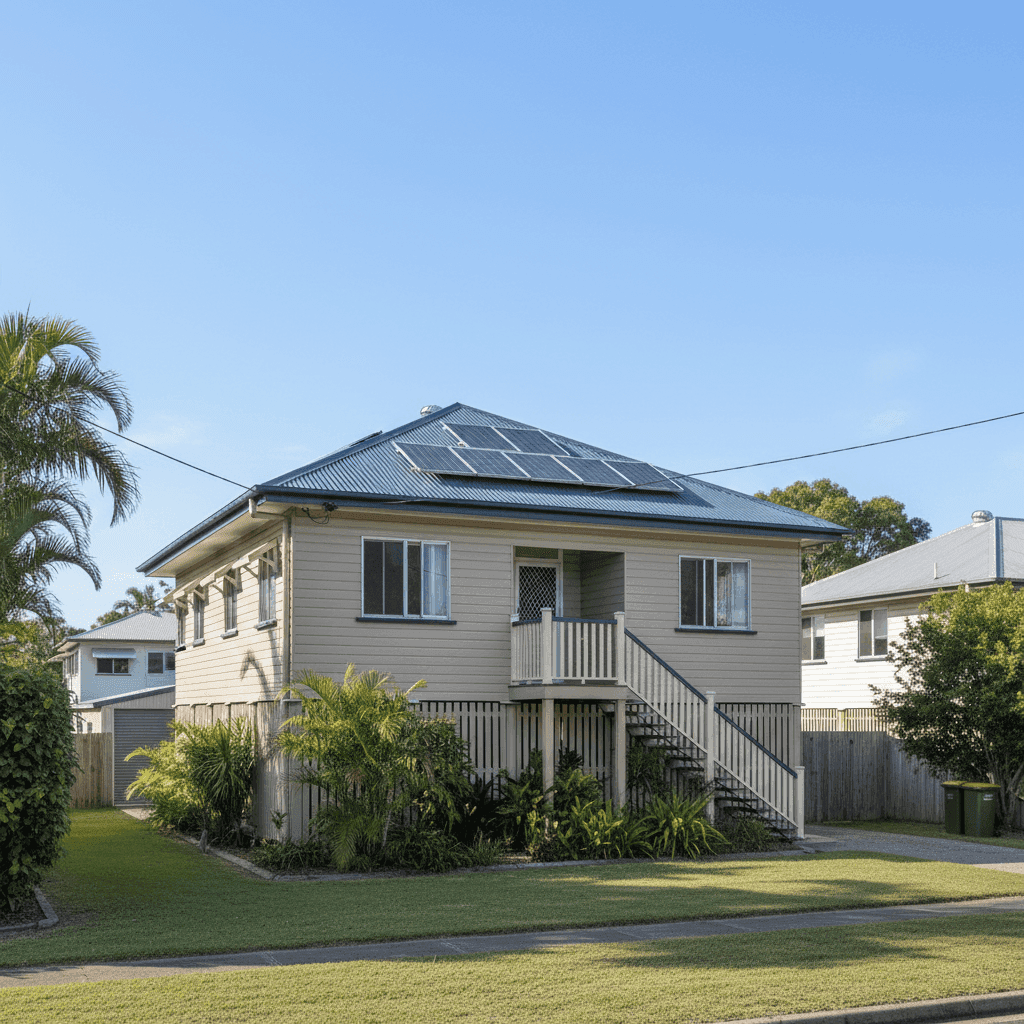
If you own a free standing home in Ayr, QLD 4807, you already know that getting the right home insurance isn't simply a matter of picking the cheapest policy. Location, construction, and local risk factors all play a significant role in what you'll pay — and in a town like Ayr, those factors can be considerable. This article breaks down a real building insurance quote for a 3-bedroom, 1-bathroom home in Ayr, compares it against local and national benchmarks, and offers practical tips to help you manage your premium.
---
Is This Quote Fair?
The quote in question comes in at $7,986 per year (or $765/month) for building-only cover on a 130 sqm free standing home, with a sum insured of $450,000 and a $1,000 building excess.
Our price rating for this quote is EXPENSIVE — above average for the Ayr area.
To put that in perspective, the suburb average premium for Ayr (QLD 4807) sits at $3,517/year, with a median of $2,982/year across 89 quotes in our dataset. At $7,986, this quote is more than double the suburb median — a significant gap that warrants a closer look.
That said, "expensive" doesn't automatically mean "wrong." Several property-specific characteristics (discussed below) can legitimately push a premium well above the local average. The key question is whether the price reflects genuine risk factors or whether there's room to shop around for a better deal.
---
How Ayr Compares to the Rest of QLD and Australia
Understanding where Ayr sits in the broader insurance landscape helps put any individual quote into context.
| Benchmark | Average Premium | Median Premium |
|---|---|---|
| Ayr (QLD 4807) | $3,517/yr | $2,982/yr |
| Queensland | $9,129/yr | $3,903/yr |
| National | $5,347/yr | $2,764/yr |
| Burdekin LGA | $19,587/yr | — |
A few things stand out here. First, the Queensland state average of $9,129/year is extraordinarily high compared to the national average of $5,347 — a reflection of the state's significant exposure to cyclones, flooding, and severe storms. Second, the Burdekin LGA average of $19,587/year is eye-watering, suggesting that some properties in the broader region attract extremely high premiums due to localised risk.
Against that backdrop, the $7,986 quote — while above the Ayr suburb average — is actually below both the Queensland state average and the Burdekin LGA average. This nuance matters: if you were to compare only against the suburb median, the quote looks expensive. But zooming out to the LGA and state level, it begins to look more understandable given the risk environment.
The 75th percentile for Ayr sits at $4,426/year, meaning roughly 25% of quotes in the suburb already exceed that figure. A quote of $7,986 is above even that upper quartile, which confirms it's on the higher end — but not entirely out of step with what some Ayr homeowners are paying.
---
Property Features That Affect Your Premium
Several characteristics of this particular home are likely driving the premium higher than the suburb average. Here's what insurers are paying attention to:
🏚️ Fibro Asbestos Walls
This is arguably the single biggest premium driver. Homes with fibro asbestos external walls are considered high-risk by insurers because of the cost and complexity of repairs. Any damage — whether from a storm, impact, or fire — requires specialist licensed contractors to handle asbestos safely, dramatically increasing claim costs. Many insurers either decline to cover these properties outright or apply significant loadings.
🌀 Cyclone Risk Area
Ayr sits in Far North Queensland's cyclone belt. Insurers apply cyclone risk loadings to all properties in designated cyclone zones, and the Burdekin region — home to Ayr — is well within that zone. This alone can add hundreds or even thousands of dollars to an annual premium compared to properties in southern Queensland.
📅 1960s Construction
Older homes built in the 1960s often don't meet modern building codes, particularly around wind and cyclone resistance. Upgrading or repairing them to current standards after a claim is more expensive, which insurers factor into their pricing.
🪵 Timber Stumps Foundation & Timber/Laminate Flooring
Stump foundations are common in older Queensland homes and can be more vulnerable to movement, moisture, and pest damage over time. Combined with timber flooring, these features can increase the cost of a claim, particularly after flooding or storm events.
☀️ Solar Panels
Solar panels add replacement value to the building sum insured and can complicate roof repairs after storm or hail damage. Most insurers include them under building cover, but their presence does contribute to overall replacement cost calculations.
---
Tips for Homeowners in Ayr
1. Get Multiple Quotes — Especially for Fibro Homes
Not all insurers treat fibro asbestos walls the same way. Some apply heavier loadings than others, and a handful specialise in older construction types. Shopping around through a comparison platform like CoverClub can surface meaningful price differences for the same level of cover.
2. Review Your Sum Insured Carefully
At $450,000 for a 130 sqm home, the sum insured works out to roughly $3,460/sqm — on the higher end for a standard home, though potentially justified given asbestos remediation costs. Make sure your sum insured reflects actual rebuilding costs (including demolition and asbestos removal), not just market value. Overinsuring unnecessarily inflates your premium.
3. Consider Cyclone Mitigation Upgrades
Some insurers offer discounts for homes that have undergone cyclone-resilience improvements, such as roof tie-down retrofits or impact-resistant shutters. Given that cyclone loading is a major component of premiums in this region, even a modest discount can translate to significant annual savings.
4. Ask About Excess Options
This quote carries a $1,000 building excess. Opting for a higher voluntary excess — say, $2,500 or $5,000 — can reduce your annual premium noticeably. If your financial position allows you to absorb a larger out-of-pocket cost in the event of a claim, this is a straightforward way to bring down ongoing costs.
---
Compare Your Options with CoverClub
Whether this quote is the right fit depends on your full picture — your risk tolerance, your budget, and what other insurers are offering for the same property. CoverClub makes it easy to compare real quotes side by side, with transparent pricing data drawn from thousands of Australian homes. Get a quote today and see how your premium stacks up against the suburb, state, and national benchmarks.