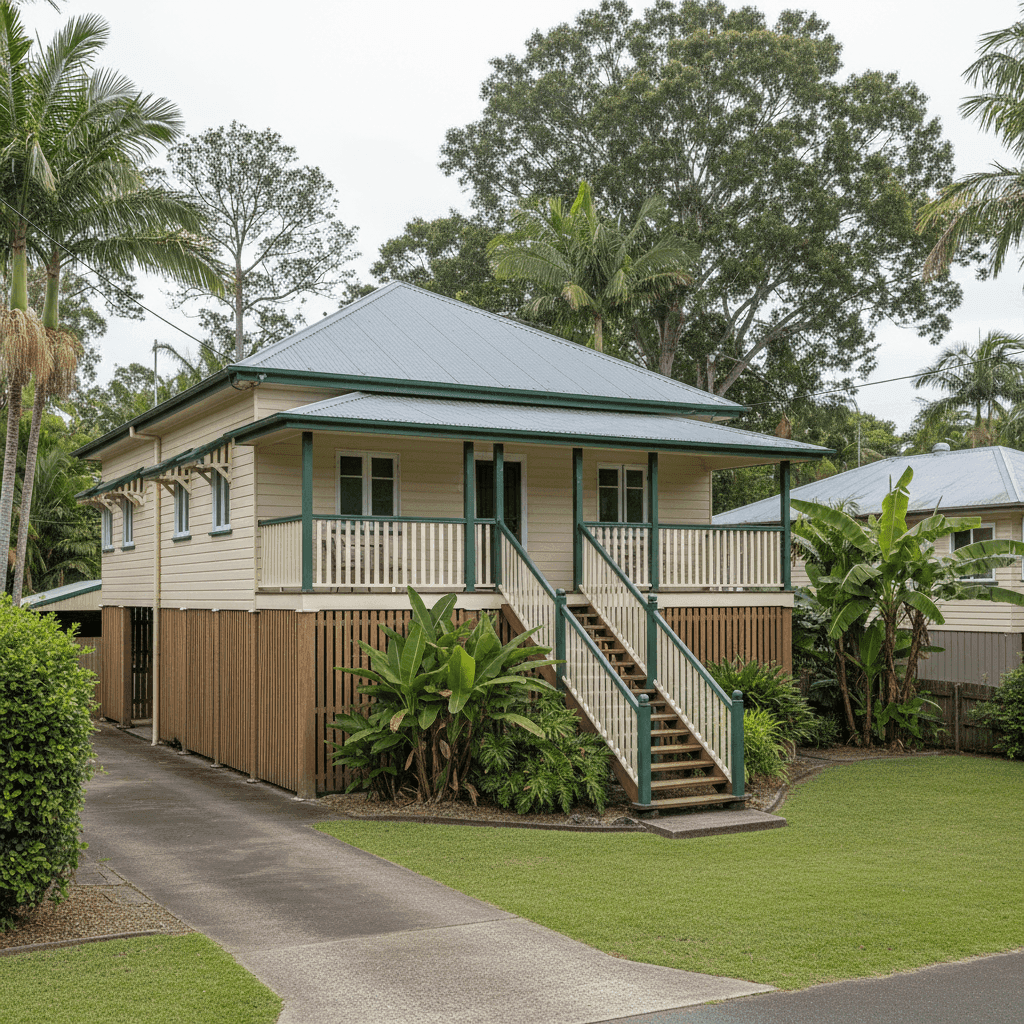
Nestled in the wet tropics south of Cairns, Babinda is a small but characterful Queensland town known for its lush rainforest surrounds and tight-knit community. For homeowners here, insuring a free standing home comes with its own set of considerations — from the age and construction of the dwelling to the region's exposure to heavy rainfall and flood risk. This article breaks down a real building insurance quote for a 3-bedroom, 2-bathroom free standing home in Babinda (postcode 4861), rated Fair (Around Average), and puts it in context against local, state, and national benchmarks.
---
Is This Quote Fair?
The quoted annual premium of $5,801 (or $556/month) for building-only cover with a $1,000 excess has been rated Fair — Around Average. That's a reasonable starting point, but what does "fair" actually mean in dollar terms?
Compared to the eight quotes sampled in the Babinda suburb, this premium sits comfortably within the middle of the pack — above the median of $5,105 and the suburb average of $5,387, but still well below the 75th percentile of $6,185. In other words, roughly a quarter of comparable properties in the area are paying more. That's not alarming, but it does suggest there may be room to shop around and find a more competitive rate.
The sum insured is set at $550,000 for building cover, which is a significant but not unusual figure for a well-maintained home in regional Queensland — particularly one with timber flooring, ducted climate control, and quality construction on stumps. Getting the sum insured right is critical: over-insuring inflates your premium unnecessarily, while under-insuring can leave you seriously out of pocket after a major claim.
---
How Babinda Compares
Understanding where your premium sits relative to broader benchmarks is one of the most useful tools a homeowner has. Here's how this quote stacks up:
| Benchmark | Premium |
|---|---|
| This Quote | $5,801/yr |
| Babinda Suburb Average | $5,387/yr |
| Babinda Suburb Median | $5,105/yr |
| QLD State Average | $9,129/yr |
| QLD State Median | $3,903/yr |
| Cairns LGA Average | $12,404/yr |
| National Average | $5,347/yr |
| National Median | $2,764/yr |
A few things stand out immediately. The Cairns LGA average of $12,404 is extraordinarily high — more than double this quote — which reflects the severe cyclone, storm surge, and flood exposure across much of the Cairns region. Babinda, while located within the Cairns LGA, appears to attract notably lower premiums than the LGA average, likely due to its inland position and the specific risk profile of elevated, older-style homes in the area.
The QLD state average of $9,129 is also significantly higher than this quote, driven upward by coastal and far-north Queensland properties with extreme weather exposure. However, the QLD median of just $3,903 tells a different story — it signals that the majority of Queensland properties are actually insured for less, with a smaller cohort of very high-risk properties pulling the average up sharply.
At the national level, this quote is slightly above the national average of $5,347 and well above the national median of $2,764. You can explore Queensland-wide insurance data and Babinda-specific statistics to dig deeper into how premiums are trending in your area.
---
Property Features That Affect Your Premium
Every home tells a story to an insurer, and this property has several characteristics that directly influence its risk profile and, by extension, the premium.
Construction era and materials: Built in 1960, this home is a classic Queensland weatherboard dwelling. Weatherboard timber walls are more susceptible to fire, termite damage, and general wear than brick or rendered masonry, which insurers typically factor into their pricing. That said, well-maintained weatherboard homes in elevated positions are a known quantity for Australian insurers.
Elevated on stumps: Being raised at least one metre off the ground on stumps is a significant advantage in a region prone to heavy rainfall and localised flooding. Elevation reduces the risk of inundation reaching the living areas, which can meaningfully lower flood-related claim costs. This is likely one of the factors keeping this premium below the Cairns LGA average.
Steel/Colorbond roof: A Colorbond roof is generally viewed favourably by insurers. It's durable, resistant to corrosion, and performs well in high-wind and heavy-rain events — all relevant considerations in tropical Queensland. Compared to older tile or corrugated iron roofing, Colorbond tends to require less maintenance and is less likely to fail in a storm.
Timber and laminate flooring: These floor types can be vulnerable to water ingress and swelling, which is worth keeping in mind given the region's rainfall. However, the elevated foundation significantly mitigates this risk.
Ducted climate control: This is a higher-value fitting that contributes to the overall rebuild cost estimate. Ducted systems are expensive to replace and are factored into the sum insured calculation.
No pool or solar panels: The absence of a pool and solar panels simplifies the risk profile and removes two common sources of claims and premium loading.
---
Tips for Homeowners in Babinda
1. Review your sum insured annually Building costs have risen sharply across Australia in recent years. The $550,000 sum insured should reflect the full cost of rebuilding your home from scratch — not its market value. Use a building cost calculator or speak with a quantity surveyor to ensure you're not underinsured, especially given the age and construction type of this property.
2. Ask about flood and storm surge inclusions Living in the Cairns LGA means flood cover is a critical component of any policy. Confirm exactly what your policy covers — some insurers distinguish between riverine flooding, stormwater overflow, and storm surge, and exclusions can catch homeowners off guard at claim time.
3. Maintain your weatherboard exterior Insurers may reduce cover or increase premiums if a home is not well-maintained. Regular painting, checking for rot, and managing termite prevention are all practical steps that protect both the property and your insurance standing.
4. Compare quotes before renewal With a "Fair" rating, this quote is reasonable — but not exceptional. The gap between the suburb's 25th percentile ($4,469) and this quote ($5,801) is over $1,300 per year. Shopping around at renewal time could yield meaningful savings without sacrificing cover quality. Get a comparison quote at CoverClub to see what other insurers are offering for your property.
---
Compare Your Home Insurance Today
Whether you're renewing an existing policy or insuring a new purchase, getting a second opinion on your premium is always worthwhile. CoverClub makes it easy to compare building and contents insurance quotes tailored to your property and location. Start your comparison at CoverClub and find out if you could be paying less for the same level of protection.