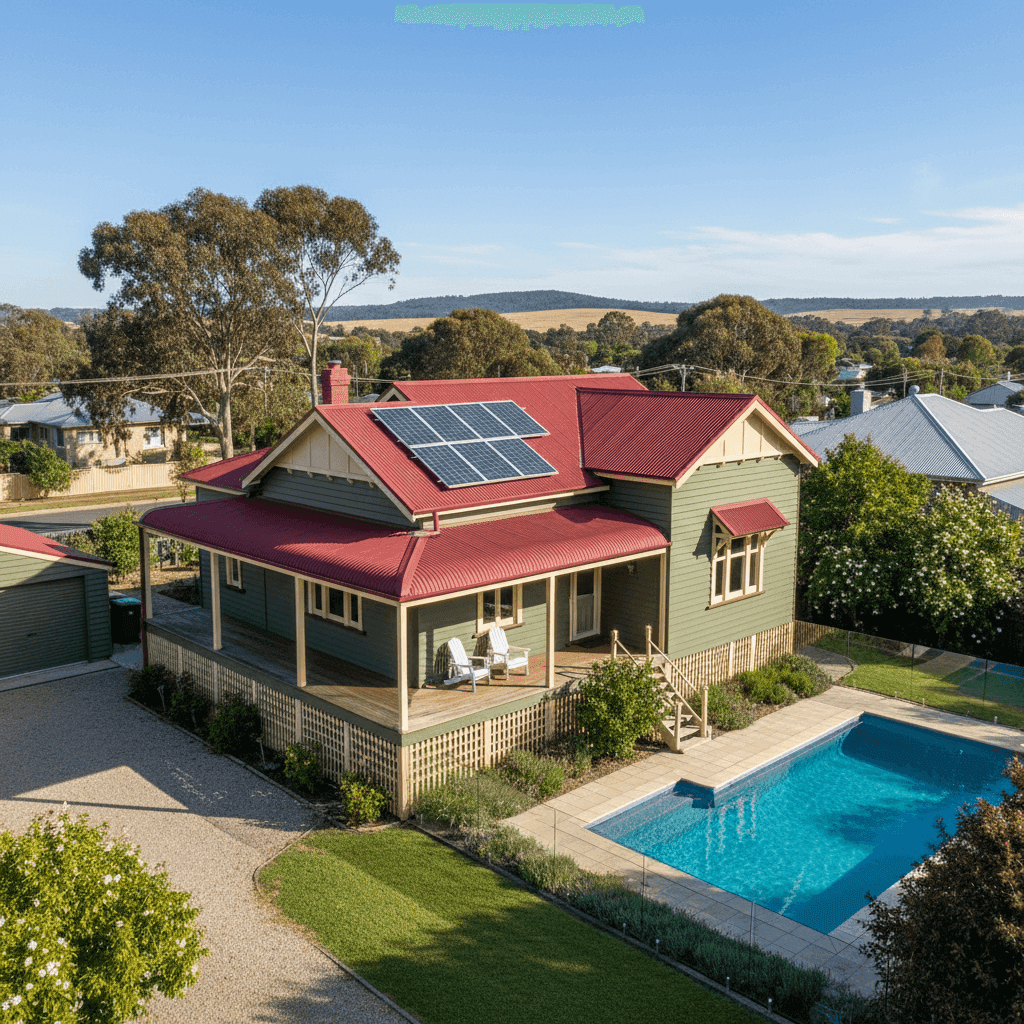
Bacchus Marsh is a charming township at the foot of the Lerderderg Gorge, sitting roughly 55 kilometres west of Melbourne's CBD. Known for its wide tree-lined avenues and heritage streetscapes, it's also home to a significant number of older character properties — including weatherboard homes on stumps that date back to the early twentieth century. If you own one of these homes, understanding what you're paying for insurance — and whether that price is reasonable — matters more than ever as premiums climb across Victoria and the country.
This article breaks down a real home and contents insurance quote for a 3-bedroom, 2-bathroom free-standing home in Bacchus Marsh (postcode 3340), built in 1911, and compares it against local, state, and national benchmarks.
---
Is This Quote Fair?
The annual premium for this property came in at $2,117 per year (or roughly $203 per month), covering both building and contents. The building is insured for $750,000 and contents for $170,000, with a $5,000 excess applying to both.
Our pricing engine rates this quote as Fair — Around Average, and the data supports that assessment. Here's why:
- The quote sits just below the suburb's 75th percentile of $2,193/yr, meaning it's more expensive than roughly half of comparable Bacchus Marsh quotes, but not in the top quarter.
- It's comfortably above the suburb median of $1,647/yr — but that gap is largely explained by the higher-than-average sum insured ($750,000 for building alone) and the presence of features like a pool and solar panels.
- Compared to the Victorian state average of $3,000/yr and the national average of $5,347/yr, this premium looks quite competitive.
In short, for what this property is — a heritage weatherboard home with a pool, solar panels, and ducted climate control — a premium of $2,117 is a reasonable outcome. You're not getting a bargain, but you're not being overcharged either.
---
How Bacchus Marsh Compares
One of the more striking figures in the Bacchus Marsh data is the suburb average of $15,121/yr — which is dramatically higher than the median of $1,647/yr. This kind of gap between average and median almost always signals a small number of very high-risk or very high-value properties pulling the average upward. With only 63 quotes in the sample, a handful of outliers can skew the mean significantly. For most homeowners, the median and interquartile range are more meaningful benchmarks.
Here's a quick summary of where this quote sits across different benchmarks:
| Benchmark | Premium |
|---|---|
| This quote | $2,117/yr |
| Bacchus Marsh median | $1,647/yr |
| Bacchus Marsh 75th percentile | $2,193/yr |
| LGA (Melton) average | $2,509/yr |
| VIC state average | $3,000/yr |
| VIC state median | $2,718/yr |
| National average | $5,347/yr |
| National median | $2,764/yr |
This quote beats the LGA (Melton) average by nearly $400/yr, comes in well under the Victorian state average, and is less than half the national average. You can explore more localised data on the Bacchus Marsh suburb stats page, compare it against all Victorian postcodes, or benchmark it against national home insurance data.
---
Property Features That Affect Your Premium
Several characteristics of this property have a meaningful influence on what insurers charge. Understanding them helps you make sense of your quote — and potentially find ways to reduce it.
Heritage Construction (Built 1911)
A home built in 1911 is over 110 years old. Weatherboard timber walls and a stump foundation are typical of this era, and while they give the home enormous character, they present specific risks for insurers. Timber is more susceptible to fire, termite damage, and moisture-related deterioration than brick veneer or double brick. Stumped foundations can shift or rot over time. These factors generally push premiums higher than for a comparable modern home.
Weatherboard Walls and Colorbond Roof
The combination of weatherboard timber cladding and a steel Colorbond roof is very common in regional Victoria. The Colorbond roof is actually a positive from an insurer's perspective — it's durable, fire-resistant, and low-maintenance. The weatherboard walls, however, are a fire risk consideration, particularly in areas that can experience hot, dry summers.
Swimming Pool
A pool adds replacement value to the property and introduces liability considerations. Most insurers factor pool fencing compliance and associated liability into their assessment, which can nudge premiums upward.
Solar Panels
Solar panels are an increasingly common feature but they do add to the insured value of the home. Depending on the policy, panels may be covered under building insurance, and their replacement cost (often $5,000–$15,000 or more) is reflected in the sum insured.
Ducted Climate Control
Ducted heating and cooling systems are fixed to the structure and typically covered under building insurance. A full ducted system can cost $10,000–$25,000 to replace, so it's an important inclusion in your sum insured calculation.
High Sum Insured
At $750,000 for building cover, this property is insured at a level that reflects its heritage character and full replacement cost — including demolition, debris removal, and rebuilding to current standards with period-appropriate materials. This is the single biggest driver of the premium level.
---
Tips for Homeowners in Bacchus Marsh
1. Review Your Sum Insured Annually
Building costs have risen sharply in recent years. If your sum insured hasn't kept pace, you may be underinsured — meaning a total loss payout might not cover full rebuilding costs. Use a building cost calculator or speak with a quantity surveyor to validate your figure.
2. Check What Your Policy Says About Heritage Features
Standard policies sometimes exclude or limit cover for heritage materials (like original hardwood flooring or ornate cornices). If your home has period features worth preserving, confirm your policy covers like-for-like replacement, not just standard modern equivalents.
3. Maintain Your Timber and Stumps
Insurers can deny claims where damage results from gradual deterioration or lack of maintenance. Regular inspection of your stumps, subfloor, and weatherboards — and addressing issues promptly — not only protects your home but keeps you on the right side of your policy conditions.
4. Bundle and Compare
Home and contents bundling (as this quote does) often delivers a discount over purchasing them separately. That said, bundling with the same insurer doesn't always mean you're getting the best deal. Running a comparison at renewal time takes minutes and can save hundreds of dollars.
---
Ready to Compare?
Whether you're reviewing your current policy or shopping for the first time, comparing quotes is the fastest way to know if you're getting value. Get a home insurance quote at CoverClub and see how your premium stacks up against real data from your suburb, your state, and across Australia.