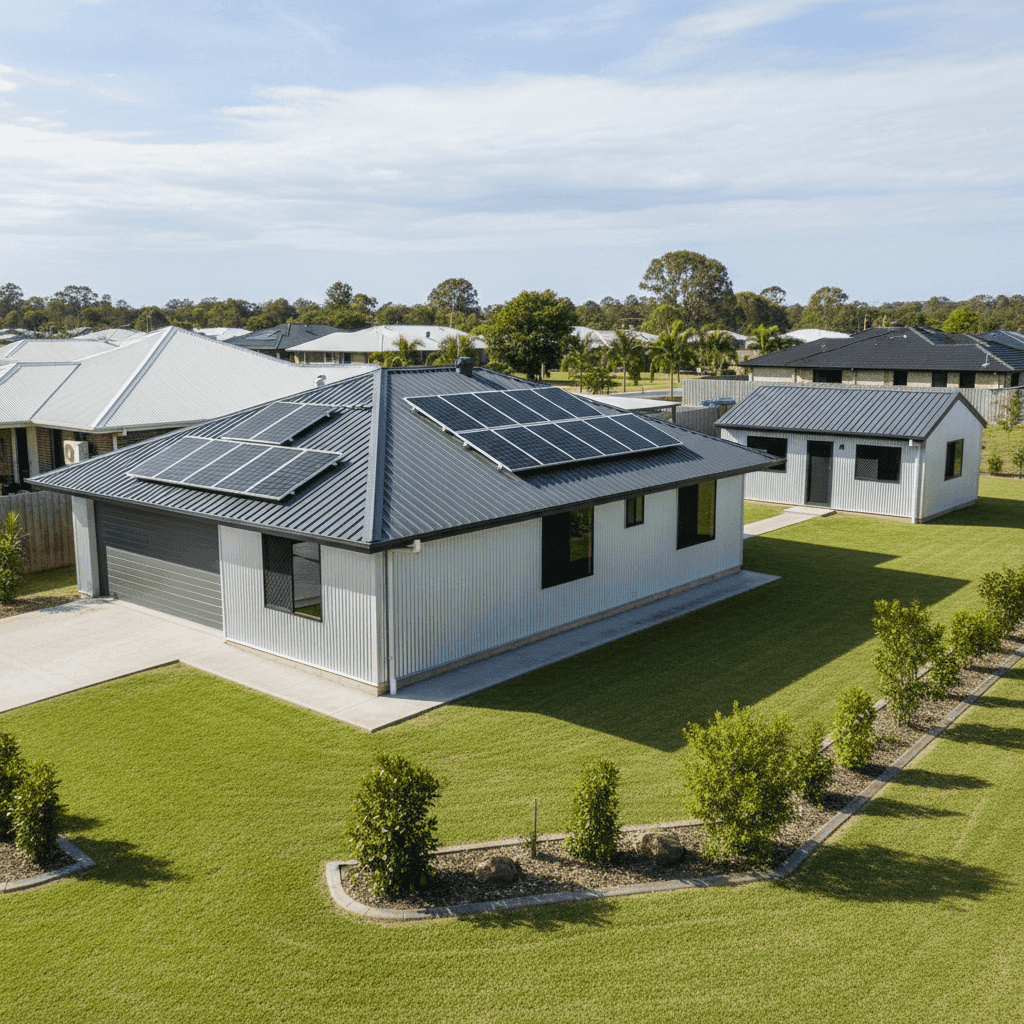
Home insurance in regional Queensland can be a complex puzzle — and nowhere is that more apparent than in Bakers Creek, a suburb sitting squarely in one of Australia's most active cyclone corridors. This analysis looks at a recent home and contents insurance quote for a three-bedroom, free-standing home in Bakers Creek (QLD 4740), breaking down whether the premium stacks up and what's driving the cost.
---
Is This Quote Fair?
The quote in question comes in at $5,583 per year (or $558/month) for combined home and contents cover, with a building sum insured of $584,000 and contents valued at $50,000. Both the building and contents excess are set at $2,000.
Our price rating for this quote is FAIR — Around Average, and the data backs that up. The suburb average premium for Bakers Creek sits at $5,118/yr, meaning this quote lands just modestly above the local average — roughly 9% higher. It also falls comfortably within the middle band of the market: the 25th percentile for the suburb is $2,869/yr and the 75th percentile is $6,584/yr, so this quote is well within the upper-middle range rather than at the expensive extreme.
In short, you're not being gouged, but there's also room to do better depending on your insurer, your excess choices, and the specific features of your policy.
---
How Bakers Creek Compares
To understand this quote in context, it helps to zoom out and look at the broader picture. You can explore the full data on the Bakers Creek insurance stats page.
| Benchmark | Average Premium | Median Premium |
|---|---|---|
| Bakers Creek (suburb) | $5,118/yr | $4,020/yr |
| Queensland (state) | $4,547/yr | $3,931/yr |
| Australia (national) | $2,965/yr | $2,716/yr |
| Mackay LGA | $8,458/yr | — |
A few things stand out here. First, the Mackay LGA average of $8,458/yr is strikingly high — significantly above the Bakers Creek suburb average of $5,118/yr. This suggests that while Bakers Creek is an expensive area to insure relative to the national norm, it's actually on the more affordable end within the broader Mackay region. That's worth keeping in mind when shopping around.
Second, the gap between Bakers Creek and the national average is substantial. At $5,118/yr locally versus $2,965/yr nationally, residents here are paying roughly 73% more than the typical Australian homeowner. This isn't a quirk of one insurer — it reflects the genuine risk profile of the region, driven primarily by cyclone exposure and the higher rebuild costs associated with regional Queensland.
You can compare Queensland's insurance landscape on the QLD stats page, or see how the state stacks up nationally on the national stats page.
---
Property Features That Affect Your Premium
Several characteristics of this property have a direct bearing on what insurers charge. Understanding them can help you make smarter decisions at renewal time.
Cyclone Risk Zone
This is the single biggest factor. Bakers Creek falls within a designated cyclone risk area, which triggers mandatory cyclone cover under most Queensland home insurance policies. Insurers price this risk carefully, and it explains a large portion of the premium gap between this suburb and the national average. Cyclone-rated construction standards and building materials matter here.
Aluminium Walls and Colorbond Roof
The external walls are aluminium and the roof is steel/Colorbond — both are considered durable, low-maintenance materials that generally attract reasonable insurer ratings. Colorbond roofing in particular is well-regarded for its resistance to corrosion and fire, which can work in your favour at assessment time.
Slab Foundation and Tile Flooring
A concrete slab foundation is typically viewed favourably by insurers — it's stable, resistant to termites, and less susceptible to flood-related undermining compared to raised timber floors. Tile flooring similarly signals lower risk for water damage claims compared to carpet or timber boards.
Solar Panels
Solar panels are present on this property. It's important to confirm with your insurer whether the panels are included in your building sum insured or require a separate endorsement. Many standard policies cover rooftop solar as part of the building, but coverage limits and replacement cost assumptions can vary.
Granny Flat
The property includes a granny flat, which adds complexity to the insurance equation. Granny flats increase the total rebuild cost and may affect liability coverage, particularly if the flat is rented out. Make sure your building sum insured accounts for the full replacement cost of both the main dwelling and the secondary structure.
Ducted Climate Control
Ducted air conditioning systems are a meaningful asset — and a meaningful liability. These systems are expensive to repair or replace and are susceptible to storm and power surge damage. Ensure your policy explicitly covers ducted systems under building cover.
Building Size and Age
At 169 sqm and built in 1998, this is a mid-sized home of moderate age. Homes built in the late 1990s pre-date some of the more stringent cyclone-resistant building codes introduced after Cyclone Larry (2006) and Cyclone Yasi (2011), which can influence how insurers assess structural resilience.
---
Tips for Homeowners in Bakers Creek
1. Review your building sum insured carefully At $584,000, the building sum insured needs to reflect the true cost of rebuilding — not the market value of the property. Factor in the granny flat, solar panels, and any recent renovations. Underinsurance is a serious risk in regional Queensland, where builder availability after a major cyclone can push reconstruction costs significantly higher.
2. Consider a higher excess to reduce your premium Both the building and contents excess on this quote are set at $2,000. Opting for a higher excess — say $2,500 or $3,000 — can meaningfully reduce your annual premium. Just make sure the excess is an amount you could comfortably cover out of pocket in the event of a claim.
3. Shop around before renewal A "Fair" rating means the price is reasonable, but it doesn't mean it's the best available. The spread in Bakers Creek is wide — from $2,869/yr at the 25th percentile to $6,584/yr at the 75th percentile — which tells us different insurers price this suburb very differently. Comparing quotes annually is one of the most effective ways to keep your premium in check.
4. Check your cyclone-specific policy conditions In cyclone-prone areas, some policies include a separate cyclone excess or a waiting period before cyclone cover activates after a new policy is taken out. Read the Product Disclosure Statement (PDS) carefully and ask your insurer directly about any cyclone-specific exclusions or conditions.
---
Compare Your Options with CoverClub
Whether you're renewing soon or just curious about what else is out there, CoverClub makes it easy to compare home and contents insurance quotes for properties across Queensland and beyond. Get a quote today and see how your current premium stacks up — you might be surprised at the difference a quick comparison can make.