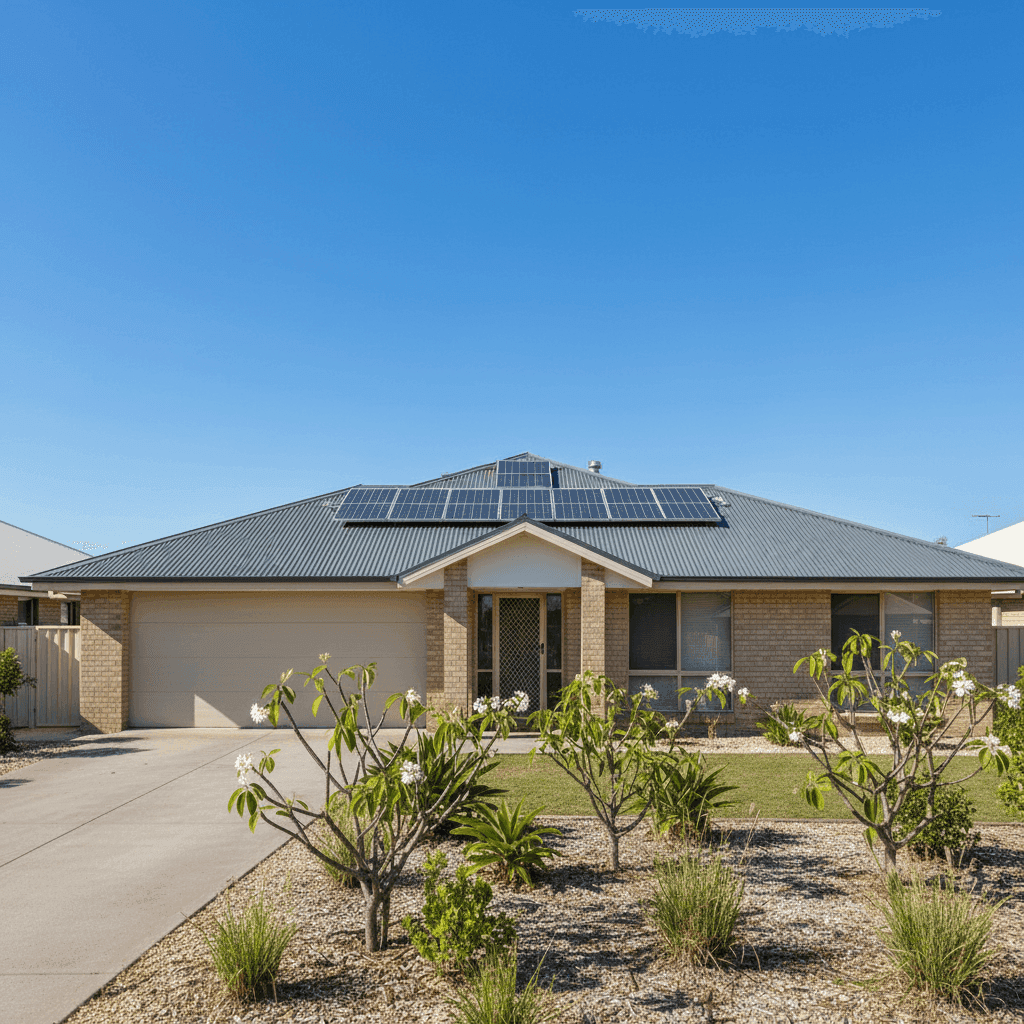
If you own a free standing home in Bakewell, NT 0832, you already know that insuring property in the Northern Territory comes with its own set of considerations — from the tropical climate to the ever-present cyclone season. This article breaks down a real home and contents insurance quote for a three-bedroom, double brick home in Bakewell, compares it against local, state, and national benchmarks, and offers practical tips to help you get the best value on your cover.
---
Is This Quote Fair?
The quote in question comes in at $2,857 per year (or $280 per month), covering both building (sum insured: $725,000) and contents ($50,000), each with a $1,000 excess. Based on CoverClub's pricing data, this quote is rated CHEAP — below average for the area.
That's genuinely good news for the homeowner. In a state where premiums are routinely elevated due to natural hazard exposure, landing a quote below the regional norm suggests either a well-priced insurer, favourable property characteristics, or both. It's worth understanding why this quote sits where it does — and whether it represents solid value or a potential gap in cover.
---
How Bakewell Compares
To put the $2,857 annual premium in context, here's how it stacks up across different comparison points:
| Benchmark | Average Premium |
|---|---|
| This Quote | $2,857/yr |
| LGA (Palmerston) Average | $4,056/yr |
| NT State Average | $3,709/yr |
| NT State Median | $3,580/yr |
| National Average | $2,965/yr |
| National Median | $2,716/yr |
The numbers tell an interesting story. This quote sits $1,199 below the Palmerston LGA average and $852 below the NT state average — a meaningful saving in dollar terms. It also comes in just under the national average of $2,965, which is remarkable given that NT properties typically attract significantly higher premiums than the national norm.
Compared to the national median of $2,716, the quote is slightly above — but that's entirely expected for a cyclone-risk property in the Territory. You can explore Bakewell-specific insurance statistics, NT state-wide data, and national benchmarks to dig deeper into how premiums vary across the country.
---
Property Features That Affect Your Premium
Several characteristics of this property directly influence the premium calculation. Understanding them helps you appreciate where the savings come from — and what risks remain.
Double Brick Construction
Double brick external walls are generally viewed favourably by insurers. Brick is more resistant to wind damage and fire than timber or cladding alternatives, which can translate to lower building premiums. In a cyclone-prone region like the NT, this construction type offers genuine structural resilience.
Steel/Colorbond Roof
Colorbond roofing is a popular choice in tropical Australia for good reason — it's lightweight, durable, and performs well in high-wind events. Insurers typically regard it positively compared to older roofing materials, though it still requires proper installation and maintenance to hold up in severe weather.
Slab Foundation & Tile Flooring
A concrete slab foundation is standard in the NT and provides stability in the local soil conditions. Tile flooring is similarly practical — it's resistant to moisture and easy to maintain in a humid climate, and it's unlikely to drive up your premium the way high-end timber or carpet might.
Solar Panels
This property has solar panels installed. It's worth noting that not all standard home insurance policies automatically cover solar panels as part of the building — some treat them as a separate item or exclude them entirely. Homeowners should confirm with their insurer that panels are explicitly included in the building sum insured.
Cyclone Risk Area
Bakewell falls within a designated cyclone risk zone, which is one of the primary reasons NT premiums are higher than the national average. Cyclone cover is typically included in NT home policies, but the terms — particularly around cyclone excess provisions — can vary significantly between insurers. Always read the Product Disclosure Statement (PDS) carefully.
Building Size & Age
At 139 sqm and built in 1997, this is a modest, mid-aged home. Properties from this era in the NT were generally built to reasonable standards, though they predate some of the more stringent cyclone-rating requirements introduced in later building codes. The standard fittings quality keeps replacement costs predictable, which helps with accurate sum insured calculations.
---
Tips for Homeowners in Bakewell
1. Review Your Building Sum Insured Annually
Construction costs in the NT have risen steadily in recent years. A sum insured of $725,000 for a 139 sqm home works out to roughly $5,216 per sqm — which is on the higher end and may reflect local labour and material costs. It's worth using a building cost calculator each year to ensure you're neither underinsured nor paying for more cover than you need.
2. Confirm Cyclone Excess Provisions
Many NT policies include a separate, higher excess for cyclone-related claims — sometimes a percentage of the sum insured rather than a flat dollar amount. With a $725,000 building sum insured, even a 1% cyclone excess would mean $7,250 out of pocket before your insurer contributes. Know your numbers before a storm hits.
3. Check Solar Panel Coverage Explicitly
Ask your insurer directly: are the solar panels covered under the building policy, and up to what value? If they're not listed or the coverage limit is low, you may need to arrange additional cover or a rider to protect your investment.
4. Compare Quotes Before Renewal
The fact that this quote is rated cheap relative to the Palmerston LGA average shows that meaningful price variation exists in this market. Don't assume your renewal premium will remain competitive — insurers regularly reprice at renewal. Run a fresh comparison at CoverClub each year to make sure you're still getting fair value.
---
Get a Quote for Your Bakewell Home
Whether you're a first-time buyer or a long-term Bakewell resident reviewing your existing cover, comparing quotes is the single most effective way to ensure you're not overpaying. CoverClub makes it easy to see how your premium stacks up against real market data — so you can make an informed decision with confidence. Start your comparison today and find out what your home should really cost to insure.