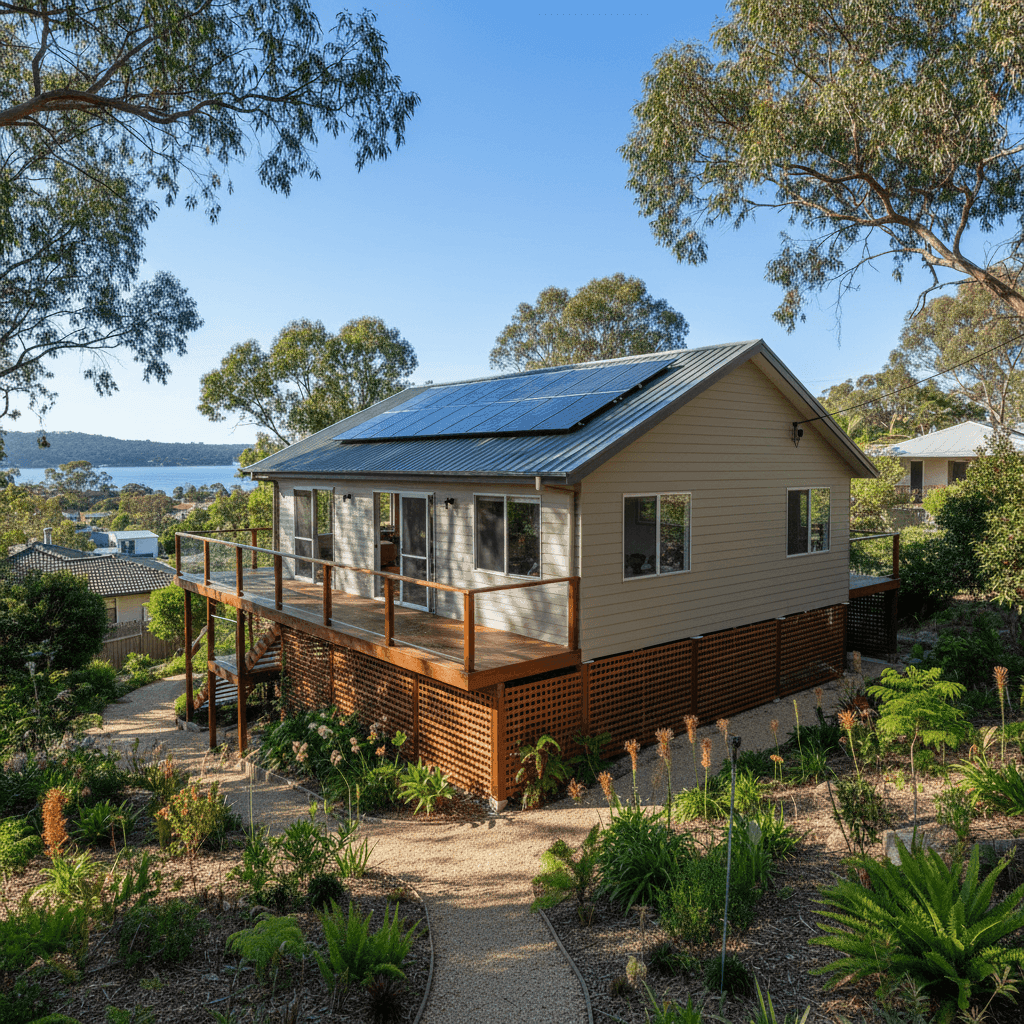
If you own a free standing home in Balmoral, NSW 2571, you're probably curious about whether you're paying a fair price for home and contents insurance — or whether there's room to save. Balmoral sits within the Wingecarribee Local Government Area in the Southern Highlands of New South Wales, a region known for its elevated lifestyle, cooler climate, and a mix of established and newer residential properties. In this article, we break down a real insurance quote for a five-bedroom, two-bathroom home in this suburb and put it into context against local, state, and national benchmarks.
---
Is This Quote Fair?
The quote in question comes in at $3,239 per year (or $337/month) for combined home and contents cover, with a building sum insured of $890,000 and contents valued at $230,000. Our price rating for this quote is CHEAP — meaning it sits below the average for comparable properties.
To put that into perspective: the average home insurance premium across New South Wales sits at $9,528 per year, and even the state median — which strips out extreme outliers — is $3,770 per year. This quote lands comfortably beneath both figures, which is a strong result for a property of this size and value.
At the national level, the average premium is $5,347/year, with a median of $2,764/year. So while this quote is above the national median, it's well under the national average — and importantly, it's covering a significantly higher building sum insured ($890,000) than many typical Australian homes.
In short: for a five-bedroom home with nearly $1.12 million in total cover, this is a competitive premium worth taking seriously.
---
How Balmoral Compares
Suburb-level data for Balmoral (2571) is still being aggregated, so we're working with LGA and state-level comparisons for now. You can check the latest local figures as they become available on the Balmoral suburb insurance stats page.
Here's how the numbers stack up:
| Benchmark | Average Premium |
|---|---|
| This Quote | $3,239/yr |
| Wingecarribee LGA Average | $3,312/yr |
| NSW State Average | $9,528/yr |
| NSW State Median | $3,770/yr |
| National Average | $5,347/yr |
| National Median | $2,764/yr |
The most telling comparison here is against the Wingecarribee LGA average of $3,312/year. This quote comes in $73 below that figure, suggesting it's genuinely competitive within the local market — not just cheap relative to city-skewed state averages.
The NSW state average of $9,528 is notably high, largely driven by premium coastal and flood-prone suburbs in Sydney and beyond. Balmoral, being inland and at elevation, generally benefits from lower risk ratings. You can explore broader NSW insurance cost trends here, or compare against the national picture if you're benchmarking across state lines.
---
Property Features That Affect Your Premium
Several characteristics of this particular property play a meaningful role in how insurers price the risk. Here's what stands out:
Construction Materials
The home features Hardiplank/Hardiflex external walls and a steel/Colorbond roof — both of which are generally viewed favourably by insurers. Fibre cement cladding like Hardiflex is non-combustible and resistant to rot, pests, and moisture. Colorbond roofing is durable, lightweight, and performs well in a range of weather conditions. Together, these materials reduce the likelihood of significant structural damage from storms or fire, which can help keep premiums lower.
Stump Foundation
The home sits on stumps, which is common in older and regional Australian builds. This foundation type can be a double-edged sword for insurance: it allows for good airflow and can be easier to repair in some cases, but it also means the underfloor space may be more vulnerable to moisture ingress or pest activity. Insurers will factor this into their assessment.
Timber and Laminate Flooring
Timber and laminate floors are generally considered mid-range in terms of replacement cost — more expensive than carpet but less so than high-end stone or engineered hardwood. This contributes to a balanced contents and building valuation.
Solar Panels
This property includes solar panels, which adds modest complexity to a building claim. Solar systems are typically covered under building insurance, but it's worth confirming with your insurer whether the panels, inverter, and associated wiring are explicitly included — and up to what value.
Ducted Climate Control
Ducted air conditioning is a fixed building asset and should be included in your building sum insured. At $890,000, the sum insured here appears to account for these inclusions, but it's always worth reviewing your rebuild cost estimate periodically — especially as construction costs continue to rise across regional NSW.
No Pool, No Cyclone Zone
The absence of a swimming pool removes a common liability risk factor, and the property's location outside a designated cyclone risk area means it avoids the significant premium loadings that apply to northern Queensland and parts of WA. Both of these factors work in the homeowner's favour.
---
Tips for Homeowners in Balmoral
Whether you're reviewing an existing policy or shopping for the first time, here are four practical steps to make sure you're getting the best outcome:
- Review your building sum insured annually. Construction costs in regional NSW have risen sharply over the past few years. The cost to rebuild a 214 sqm home today may be meaningfully higher than it was even two years ago. Use a building cost estimator or speak to a local builder to sense-check your sum insured.
- Confirm solar panels are explicitly covered. Ask your insurer directly whether your solar system — including the inverter and any battery storage — is covered under your building policy, and up to what limit. Some policies have sub-limits that may leave you underinsured if the system needs replacing after a storm or fire.
- Consider your excess strategy carefully. This quote carries a $3,000 building excess and a $1,000 contents excess. A higher excess typically lowers your premium, but make sure you can comfortably cover that amount out of pocket in the event of a claim. If $3,000 would be a stretch, it may be worth paying a slightly higher premium for a lower excess.
- Compare quotes at renewal, not just when you first buy. Insurance markets shift year to year, and loyalty doesn't always pay. Running a comparison at renewal — even if you end up staying with your current insurer — ensures you're not quietly drifting into an overpriced policy.
---
Ready to Compare?
Whether this quote is yours or you're simply benchmarking what a property in Balmoral should cost to insure, CoverClub makes it easy to compare home and contents options side by side. Get a quote at CoverClub in minutes and see how your current premium stacks up against the market — you might be surprised what's available.